Tracked price checks
Bikes in this guide
Onyx
RCR
Moped-style comfort with a seat, lights, and a street kit — the most commuter-friendly bike here
Trade-off: Heavy (~155 lb) and moped-shaped — less capable in technical off-road than a true dirt bike
We may earn a commission if you buy through this link, at no extra cost to you.
Check price at Onyx Motors (official)Talaria
Sting MX5 Pro
72V/2.88 kWh Samsung-cell platform is a real power and range step up from the 60V Sting and X3 family
Trade-off: Ships limited to 20 mph, so the high-speed numbers assume derestriction and local-law risk
We may earn a commission if you buy through this link, at no extra cost to you.
Check price at Luna CycleSur-Ron
Light Bee X
Enormous aftermarket and parts ecosystem — the most-supported e-dirt-bike platform
Trade-off: Advertised range collapses at speed — plan for real-world miles well under the claim
We may earn a commission if you buy through this link, at no extra cost to you.
Check price at ATV Wholesale OutletThe short answer
These two bikes sit in the same shopping tier but are built for different jobs — this is a use decision, not a good-vs-bad one:
- Buy the Onyx RCR ($4,699, Score 94) if you want road manners and range — 18 kW, 65 mph, ~45 real miles, road-ready lights, and a quiet, low-maintenance hub drive. It's the higher-scoring bike and the one built to commute.
- Buy the Talaria Sting MX5 Pro ($4,990, Score 89) if you want a real trail bike — a chain drive for off-road capability and tuning, and a stated 12-month warranty. Note that it is no longer the cheaper bike here.
Here's the honest twist: the Onyx out-specs the MX5 Pro on paper — more power, more speed, more range, even 10 lb lighter — and scores higher. But the MX5 Pro is the better dirt bike, because its chain drive and geometry are built for off-road riding while the Onyx is built for the road. Match the bike to where you actually ride.
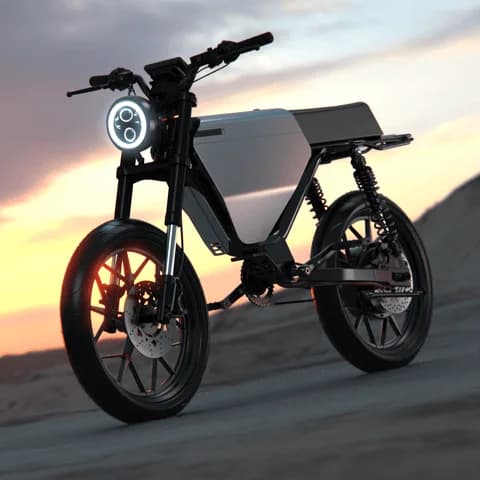
Verified product photo
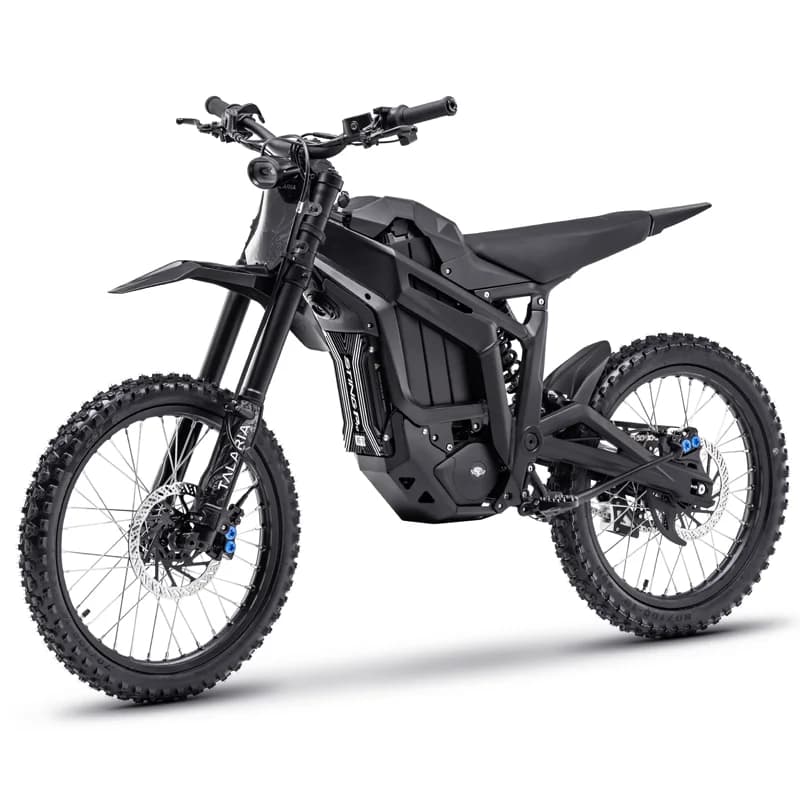
Verified product photo
Comparison table
Head-to-head spec winners
Awarded spec rows
5-0
Onyx RCR vs Talaria Sting MX5 Pro
| Spec | Onyx RCR | Talaria Sting MX5 Pro | Winner |
|---|---|---|---|
| Power | 15 kW peak | 13.4 kW peak | Onyx RCR+1.6 kW |
| Top speed | 65 mph | 59 mph | Onyx RCR+6 mph |
| Battery capacity | 3.6 kWh | 2.9 kWh | Onyx RCR+720 Wh |
| Real range | 45 mi | 35 mi | Onyx RCR+10 mi |
| Weight | 155 lb | 165 lb | Onyx RCR10 lb lighter |
| Brakes | Dual Hydraulic | Dual Hydraulic | TieSame Dual Hydraulic |
| Suspension | Full | Full | TieSame Full |
| Warranty | 12 mo | 12 mo | TieSame 12 mo |
| Delivered price | $4,699 street + shipping unknown | $4,990 street + shipping unknown | No winner awardedShipping unknown |
Power
- Onyx RCR
- 15 kW peak
- Talaria Sting MX5 Pro
- 13.4 kW peak
Top speed
- Onyx RCR
- 65 mph
- Talaria Sting MX5 Pro
- 59 mph
Battery capacity
- Onyx RCR
- 3.6 kWh
- Talaria Sting MX5 Pro
- 2.9 kWh
Real range
- Onyx RCR
- 45 mi
- Talaria Sting MX5 Pro
- 35 mi
Weight
- Onyx RCR
- 155 lb
- Talaria Sting MX5 Pro
- 165 lb
Brakes
- Onyx RCR
- Dual Hydraulic
- Talaria Sting MX5 Pro
- Dual Hydraulic
Suspension
- Onyx RCR
- Full
- Talaria Sting MX5 Pro
- Full
Warranty
- Onyx RCR
- 12 mo
- Talaria Sting MX5 Pro
- 12 mo
Delivered price
- Onyx RCR
- $4,699 street + shipping unknown
- Talaria Sting MX5 Pro
- $4,990 street + shipping unknown
Score breakdown
Power
/22 pts
Range
/20 pts
Chassis
/18 pts
Value
/15 pts
Support
/12 pts
Ergonomics
/8 pts
Versatility
/5 pts
The road bike and the trail bike
The Onyx RCR is essentially a light electric motorcycle for the street: a hub drive, a big 80V battery, moped-style ergonomics, and road-ready lights, built to commute and cover ground. The Talaria Sting MX5 Pro is Talaria's top 72V Sting — a chain-driven, off-road-focused dirt bike that sits below Talaria's full-size Komodo/Dragon tier. They land at similar prices, but they're answering different questions: the Onyx is "how do I get around on and off pavement with range and low maintenance?" and the MX5 Pro is "what's the best dirt bike for the money?"
The core matchup
| Onyx RCR | Talaria Sting MX5 Pro | |
|---|---|---|
| VoltRipper Score | 94 | 89 |
| Price | $4,699 | $4,990 |
| Peak power | 15 kW | 13.4 kW |
| Top speed | 65 mph | 59 mph (ships limited to 20) |
| Battery | 3,600 Wh (80V) | 2,880 Wh (72V) |
| Real-world range | ~45 mi | ~35 mi |
| Weight | 155 lb | 165 lb |
| Drivetrain | Hub (quiet, low-maintenance) | Chain (tunable, off-road) |
| Best at | Road & commuting | Trail & dirt |
| Street use | Lights on; needs registration | Needs a full street kit |
| Warranty | 12-month limited | 12-month |
Head-to-head, factor by factor
Range → Onyx, decisively. ~45 real miles vs ~35 is the Onyx's headline: a bigger 3,600 Wh pack built to cover ground. (Ignore Onyx's 130-mile marketing claim — claimed vs real explained — but ~45 real is genuinely more.) For commuting and longer rides, the Onyx goes farther.
Power & top speed → Onyx. 18 kW and 65 mph versus 13.4 kW and 59 mph. The Onyx is the quicker, faster bike, geared for road speeds. Just keep the limiter caveat honest: the RCR is delivered restricted too, and full 65+ mph performance still needs unlocking and appropriate off-road/legal use; the MX5 Pro's specific handicap is its 20 mph factory limit.
Trail capability & handling → MX5 Pro, decisively. This is the Talaria's home turf. Its chain drive is lighter-feeling, tunable, and efficient off-road, and its geometry is built for dirt. The Onyx's hub drive and moped-ish stance are a disadvantage on technical trails, where the MX5 Pro is far more at home. On paper the Onyx wins; in the dirt, the Talaria does.
Drivetrain → depends on use. The Onyx's hub drive is near-silent and nearly maintenance-free — ideal for commuting and street. The MX5 Pro's chain needs upkeep but is lighter, more efficient off-road, and endlessly tunable for trail performance. Right tool, different jobs.
Street-readiness → Onyx. The Onyx ships with road-ready lights and mainly needs registration (often as a moped, depending on your state); the MX5 Pro is an off-road bike that needs a full street kit to get close. If road use matters, the Onyx is far closer to legal. (Check your state's rules first — neither is turnkey.)
Price → Onyx, and this has reversed. $4,699 vs $4,990 — the Onyx is now $291 less, on its base configuration. It previously carried a premium over the Talaria. Both show stated 12-month warranty terms in our current data, so the Talaria's remaining advantage is the dirt-ready format rather than the price.
Weight → Onyx, narrowly. At 155 lb the Onyx is actually ~10 lb lighter than the 165 lb MX5 Pro — a mild surprise given its road-bike role. Both are manageable; neither has a decisive handling edge from weight alone.
Score → Onyx (94 vs 89). The Onyx's power, range, speed, and low weight earn it the higher Score. But read it right: the Score rewards its well-rounded spec package, not its off-road ability — for a trail rider, the lower-scoring MX5 Pro is the better bike. Buy the Score only if the Onyx's road-and-range strengths match your riding.
Which should you buy?
- Commuting, covering ground, road use, low maintenance, max range: Onyx RCR — the road-and-range bike, and the higher Score. (Full review →)
- Trails, dirt, technical riding, off-road tuning, lower price: Talaria Sting MX5 Pro — the real dirt bike. (Full review →)
- Weighing the Onyx against the trail benchmark instead? See Sur-Ron Light Bee X vs Onyx RCR — trail bike vs street commuter.
- Set on a trail bike and cross-shopping the MX5 Pro vs the Sur-Ron? See Light Bee X vs MX5 Pro.
Not sure which fits your riding? Run the Find Your Ride configurator.
The honest bottom line
The Onyx RCR is the more capable all-rounder on paper — more power, more speed, 30% more range, quieter, lower-maintenance, road-ready, and a higher Score — and for a commuter or range-focused rider it's the better buy. But the Talaria Sting MX5 Pro is the better dirt bike: chain-driven, more off-road capable, and warranty-backed — though it now costs $291 more rather than less. Don't buy the higher Score by default — buy the bike built for the riding you actually do. Commute and cover ground on the Onyx; hit the trails on the Talaria.
VoltRipper is independent — we don't sell Onyx, Talaria, or any bike, and our Score is based on verified specs, not who pays us. Affiliate disclosure is included on monetized pages, and we're spec-verified/data-driven rather than hands-on until first-hand testing exists.
FAQ
Is the Onyx RCR or the Talaria Sting MX5 Pro better?
It depends on where you ride. The Onyx RCR (Score 94) is the road-and-range bike — 18 kW, 65 mph, ~45 real miles, a quiet low-maintenance hub drive, and road-ready lights — built for commuting and covering ground. The Talaria Sting MX5 Pro (Score 89) is the trail bike — a chain drive for real off-road capability and tuning, now $291 dearer rather than cheaper, with the same stated 12-month warranty length in our current data. The Onyx out-specs it on paper and scores higher, but the MX5 Pro is the better dirt bike. Match the bike to where you'll actually ride.
Which is faster, the Onyx RCR or the Talaria MX5 Pro?
The Onyx RCR — 65 mph versus the MX5 Pro's 59 mph (once derestricted; the Talaria ships limited to 20 mph), from a bigger 18 kW / 80V system. The Onyx is also the longer-range bike (~45 real miles vs ~35). But top speed and range favor road use; for tight off-road riding, the MX5 Pro's lighter-feeling chain drive is the more useful tool.
Which is better for commuting?
The Onyx RCR, clearly. It's built as a light electric motorcycle for the road: road-ready lights, a quiet and nearly maintenance-free hub drive, the most real-world range (~45 miles), and a 65 mph top end. It still needs registration (usually as a moped, depending on your state), but it's far closer to ride-and-commute than the MX5 Pro, which is an off-road bike that needs a full street kit.
Which is better for trails and dirt?
The Talaria Sting MX5 Pro. Its chain drive is lighter-feeling, tunable, and better suited to technical off-road riding, and it's a purpose-built dirt bike. The Onyx's hub drive and moped-style geometry are optimized for smooth range and road manners, not for muscling through singletrack. For real trail riding, the MX5 Pro is the better tool even though the Onyx wins the spec sheet.
Sources
Specification sources
- Onyx RCROnyx Motors — RCR 80V 45AhChecked
- Talaria Sting MX5 ProTalaria Canada - Sting MX5 Pro specificationsChecked
- Sur-Ron Light Bee XATV Wholesale Outlet - 2026 Sur-Ron Light Bee X (72V/35Ah, 10 kW), $4,699 from $4,999Checked