Tracked price checks
Bikes in this guide
Sur-Ron
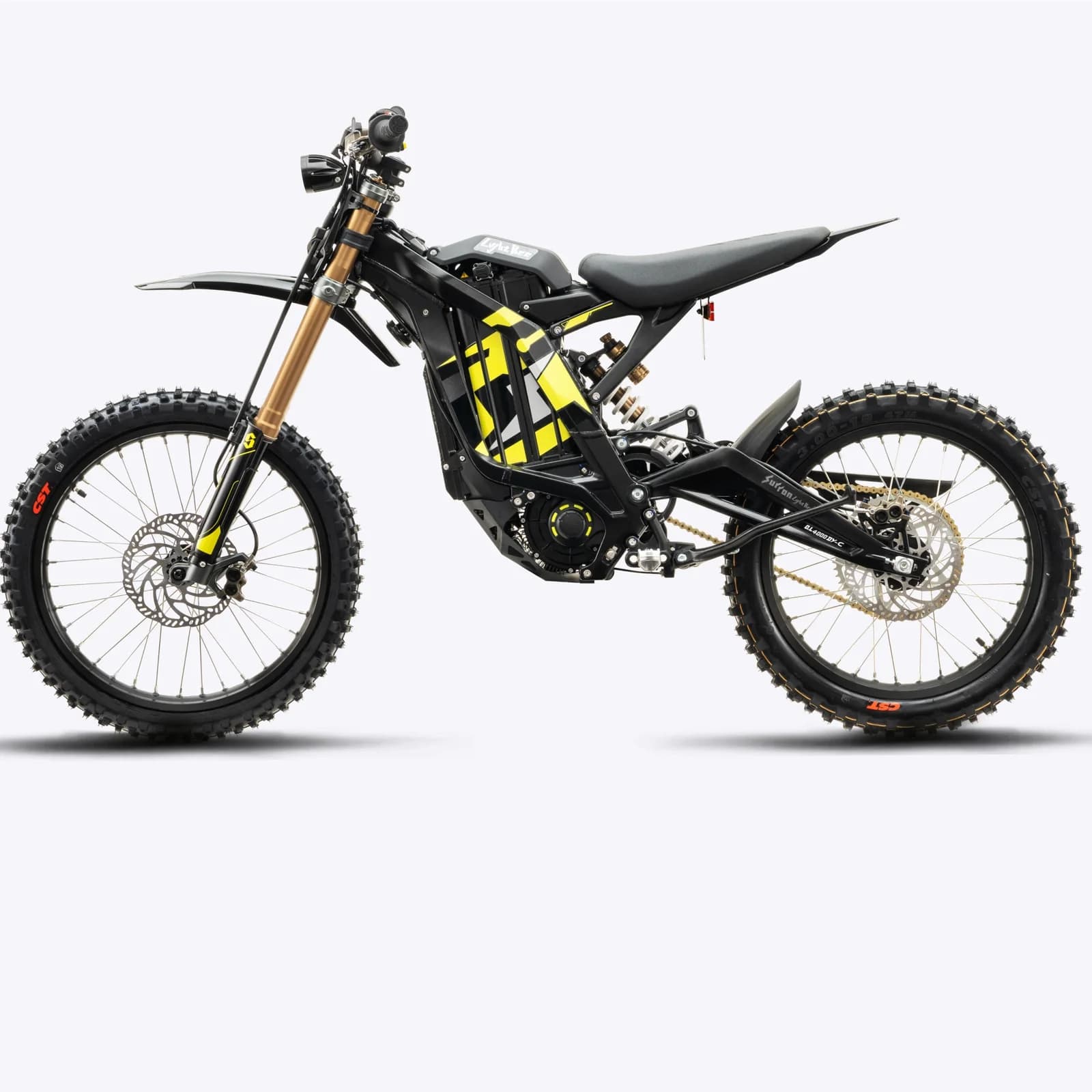
Light Bee X
Enormous aftermarket and parts ecosystem — the most-supported e-dirt-bike platform
Trade-off: Advertised range collapses at speed — plan for real-world miles well under the claim
We may earn a commission if you buy through this link, at no extra cost to you.
Check price at ATV Wholesale OutletOnyx
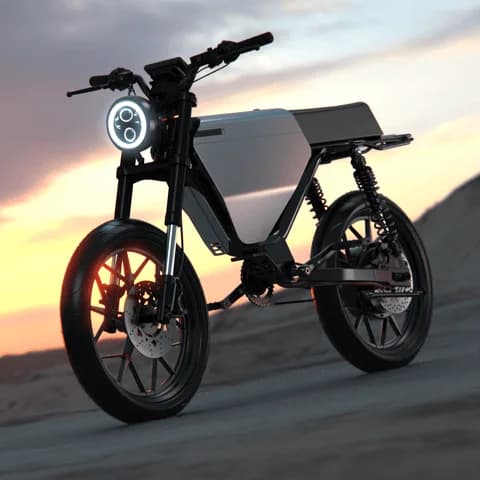
RCR
Moped-style comfort with a seat, lights, and a street kit — the most commuter-friendly bike here
Trade-off: Heavy (~155 lb) and moped-shaped — less capable in technical off-road than a true dirt bike
We may earn a commission if you buy through this link, at no extra cost to you.
Check price at Onyx Motors (official)The short answer
These two look similar on paper but are built for different jobs — this is a use decision, not a good-vs-bad one:
- Buy the Onyx RCR ($4,699, Score 94) if you want range and road manners — commuting, covering ground, a quiet low-maintenance hub drive, and the most real-world miles.
- Buy the Sur-Ron Light Bee X ($4,499, Score 89) if you want the trail benchmark — lighter, more flickable, the deepest aftermarket in the class, and a lower price.
The Onyx scores higher because it's more powerful and goes much farther. But for technical off-road riding, the lighter, better-supported Sur-Ron is still the better tool. Match the bike to where you'll actually ride.
Verified product photo
Verified product photo
Comparison table
Head-to-head spec winners
Awarded spec rows
1-4
Sur-Ron Light Bee X vs Onyx RCR
| Spec | Sur-Ron Light Bee X | Onyx RCR | Winner |
|---|---|---|---|
| Power | 10 kW peak | 15 kW peak | Onyx RCR+5 kW |
| Top speed | 50 mph | 65 mph | Onyx RCR+15 mph |
| Battery capacity | 2.5 kWh | 3.6 kWh | Onyx RCR+1.1 kWh |
| Real range | 30 mi | 45 mi | Onyx RCR+15 mi |
| Weight | 130 lb | 155 lb | Sur-Ron Light Bee X25 lb lighter |
| Brakes | Dual Hydraulic | Dual Hydraulic | TieSame Dual Hydraulic |
| Suspension | Full | Full | TieSame Full |
| Warranty | Not published | 12 mo | No winner awardedNeeds both published values |
| Delivered price | $4,499 street + shipping unknown | $4,699 street + shipping unknown | No winner awardedShipping unknown |
Power
- Sur-Ron Light Bee X
- 10 kW peak
- Onyx RCR
- 15 kW peak
Top speed
- Sur-Ron Light Bee X
- 50 mph
- Onyx RCR
- 65 mph
Battery capacity
- Sur-Ron Light Bee X
- 2.5 kWh
- Onyx RCR
- 3.6 kWh
Real range
- Sur-Ron Light Bee X
- 30 mi
- Onyx RCR
- 45 mi
Weight
- Sur-Ron Light Bee X
- 130 lb
- Onyx RCR
- 155 lb
Brakes
- Sur-Ron Light Bee X
- Dual Hydraulic
- Onyx RCR
- Dual Hydraulic
Suspension
- Sur-Ron Light Bee X
- Full
- Onyx RCR
- Full
Warranty
- Sur-Ron Light Bee X
- Not published
- Onyx RCR
- 12 mo
Delivered price
- Sur-Ron Light Bee X
- $4,499 street + shipping unknown
- Onyx RCR
- $4,699 street + shipping unknown
Score breakdown
Power
/22 pts
Range
/20 pts
Chassis
/18 pts
Value
/15 pts
Support
/12 pts
Ergonomics
/8 pts
Versatility
/5 pts
Why this is a real decision, not a spec-sheet win
The Onyx RCR is essentially a light electric motorcycle built for range and the road: hub drive, big battery, moped-ish ergonomics. The Sur-Ron Light Bee X is the trail benchmark the whole class is measured against: light, tunable, and endlessly supported. Neither is fully turnkey street legal, but the Onyx comes road-ready with lights and signals and mainly needs registration, while the Sur-Ron needs a fuller conversion — the Onyx is the one actually designed to commute on. Pick by the riding you do most.
The core matchup
| Sur-Ron Light Bee X | Onyx RCR | |
|---|---|---|
| VoltRipper Score | 89 | 94 |
| Price | $4,499 | $4,699 |
| Peak power | 10 kW | 15 kW |
| Top speed | 50 mph | 65 mph |
| Drivetrain | Chain | Hub (quiet, low-maintenance) |
| Battery | 2,520 Wh | 3,600 Wh |
| Real-world range | ~30 mi | ~45 mi |
| Weight | 130 lb | 155 lb |
| Best at | Technical trails | Range & commuting |
| Street legal | Conversion kit + reg. | Road-ready, needs reg. |
Head-to-head, factor by factor
Range → Onyx, decisively. ~45 real miles vs ~30 is the Onyx's headline: a bigger 3,600 Wh pack built to cover ground. (Ignore the 130-mile marketing claim — claimed vs real range explained here — but ~45 real is genuinely more.)
Power & top speed → Onyx. 18 kW and 65 mph versus 10 kW and 50 mph. The Onyx is the quicker, faster bike, geared for road speeds the Sur-Ron isn't built to sustain.
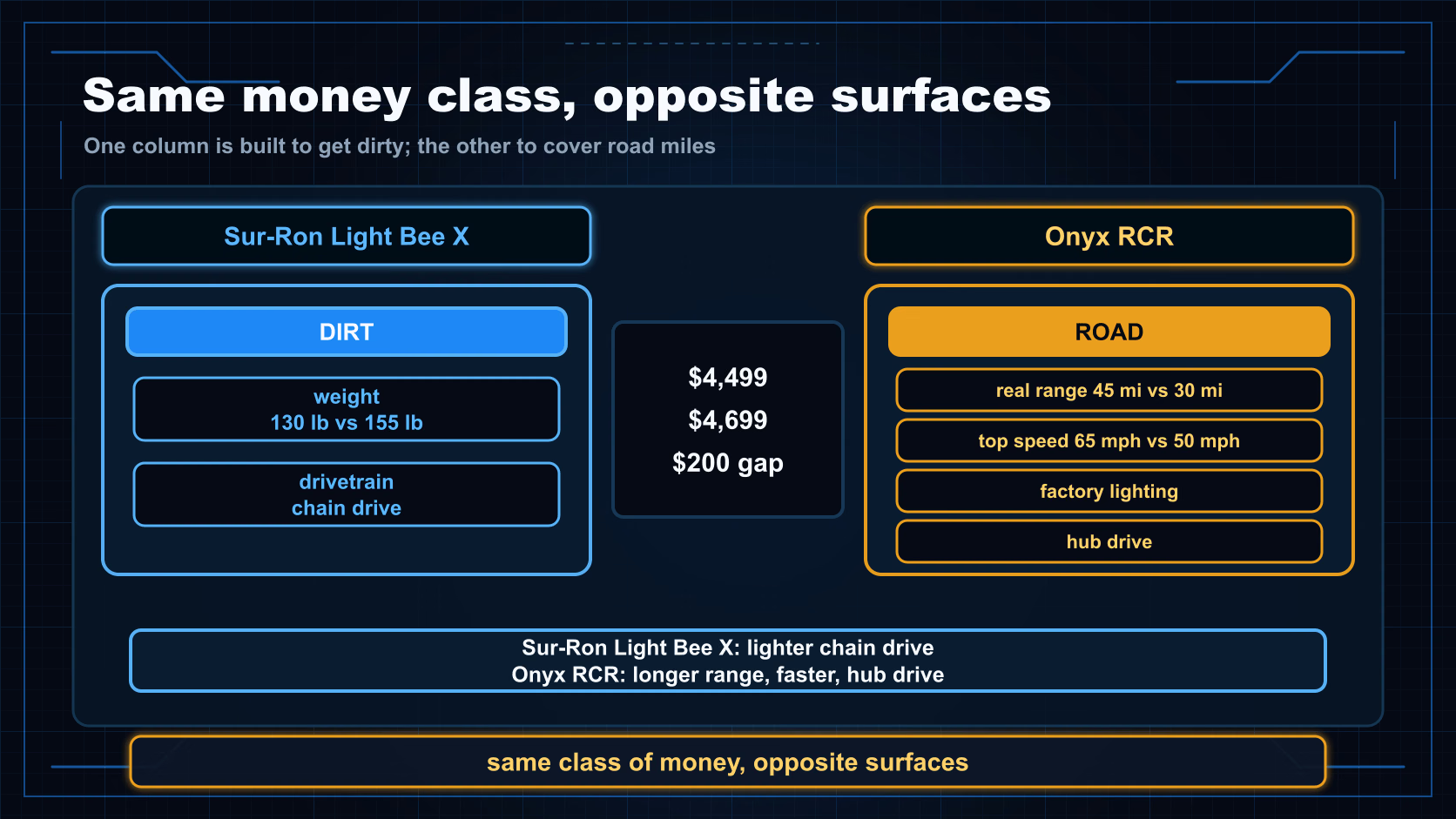
Trail capability & handling → Sur-Ron, decisively. At 130 lb it's 25 lb lighter and far more flickable in tight terrain, and its chain drive is the tunable trail standard. This is the Light Bee X's home turf — technical singletrack, jumps, play riding — where the Onyx's weight and hub drive are a disadvantage.
Drivetrain → depends on use. The Onyx's hub drive is quiet and nearly maintenance-free — perfect for commuting and street. The Sur-Ron's chain needs upkeep but is lighter, more efficient off-road, and infinitely tunable for trail performance. Right tool, different jobs.
Maintenance & quiet → Onyx. No chain to adjust or lube, and a near-silent hub — genuinely lower-hassle for a daily rider (and one of the quietest bikes in the class).
Support & aftermarket → Sur-Ron, decisively. This is the Light Bee X's trump card: the biggest parts catalog, dealer network, and owner community in electric dirt. If you want to mod, tune, or endlessly fix and upgrade, nothing matches it.
Price & value → level, and that is new. Both bikes are $4,699. The Onyx used to carry a premium; on its base configuration it no longer does, which removes the simplest reason to pick the Sur-Ron and turns this into a straight question of where you ride.
Which should you buy?
- Commuting, longer rides, road use, low maintenance: Onyx RCR — the range-and-road choice, and the higher Score. (Full review →)
- Technical trails, play riding, modding, lightest handling, best value: Sur-Ron Light Bee X — the trail benchmark. (Full review →)
- Weighing the Onyx against the pricier Sur-Ron step-up instead? See Onyx RCR vs Sur-Ron Ultra Bee — road-and-range versus trail-and-power.
- You mostly want range and comfort and don't need trail chops: also look at the Delfast Top 3.0, the biggest-battery touring bike — though it is discontinued with no purchasable path we can find, so used market only — or our longest-range picks (where the Onyx actually leads on real-world miles). Or see our best for commuting picks.
Not sure which fits your riding? Run the Find Your Ride configurator.
The honest bottom line
The Onyx RCR is the more capable all-rounder on paper — more power, more speed, 50% more range, quieter, lower-maintenance, and a higher Score — and for a commuter or range-focused rider it's the better buy. But the Sur-Ron Light Bee X remains the trail benchmark: lighter, endlessly supported, and simply better in technical terrain — and at the same money it no longer has to win on price. Don't buy the higher score by default — buy the bike built for the riding you actually do. Commute and cover ground on the Onyx; hit the trails on the Sur-Ron.
VoltRipper is independent — we don't sell Sur-Ron, Onyx, or any bike, and our Score is based on verified specs, not who pays us. Affiliate disclosure is included on monetized pages, and we're spec-verified/data-driven rather than hands-on until first-hand testing exists.
FAQ
Should I buy the Sur-Ron Light Bee X or the Onyx RCR?
It depends on what you'll ride. The Onyx RCR (Score 94) is the range-and-road bike — 18 kW, 65 mph, ~45 real miles, and a quiet hub drive, built for commuting and covering ground. The Sur-Ron Light Bee X (Score 89) is the pure-trail benchmark — 25 lb lighter, more flickable, and the deepest aftermarket in the class. The two now cost the same, so price no longer decides it; the Onyx scores higher overall, but the Sur-Ron is the better technical-trail tool.
Is the Onyx RCR street legal?
Neither ships fully turnkey, but their paths differ sharply. The Onyx RCR comes much closer — moped-style with lights — but still needs a DOT kit (turn signals, mirrors) plus registration (often as a moped, depending on your state). The Sur-Ron needs a fuller street-legal conversion kit AND registration. So the Onyx is much closer to ride-and-register, and the better of the two to commute on. Check your state rules in our street-legal guide before counting on either for road use.
Which has better range, the Sur-Ron or the Onyx?
The Onyx, clearly — about 45 real-world miles to the Sur-Ron's ~30, thanks to a bigger 3,600 Wh battery. One honest caveat: Onyx advertises up to 130 miles, which is a best-case marketing figure — plan for ~45 in real riding. Even so, it's a 50% range advantage over the Light Bee X, and range is the Onyx's whole point.
Which is better for trails?
The Sur-Ron Light Bee X. At 130 lb it's 25 lb lighter and far more flickable in technical terrain, its chain drive is the trail standard and endlessly tunable, and it has the deepest aftermarket for trail mods anywhere in the class. The Onyx's hub drive and extra weight are built for smooth range and road manners, not for muscling through singletrack.
Sources
Specification sources
- Sur-Ron Light Bee XATV Wholesale Outlet - 2026 Sur-Ron Light Bee X (72V/35Ah, 10 kW), $4,699 from $4,999Checked
- Onyx RCROnyx Motors — RCR 80V 45AhChecked