Tracked price checks
Bikes in this guide
Sur-Ron
Light Bee X
Enormous aftermarket and parts ecosystem — the most-supported e-dirt-bike platform
Trade-off: Advertised range collapses at speed — plan for real-world miles well under the claim
We may earn a commission if you buy through this link, at no extra cost to you.
Check price at ATV Wholesale OutletTalaria
Sting R MX4
Bigger 2,700 Wh (60V/45Ah) LG-cell pack than a stock Sur-Ron — more usable range
Trade-off: Ships factory-limited to 20 mph — needs derestriction to reach its ~40+ mph potential
We may earn a commission if you buy through this link, at no extra cost to you.
Check price at Luna CycleYozma
IN10
One of the cheapest ways into a real electric dirt bike — around $1,079 with full hydraulic brakes and suspension
Trade-off: No-name budget brand — minimal aftermarket, spare parts, or dealer/community support
We may earn a commission if you buy through this link, at no extra cost to you. As an Amazon Associate I earn from qualifying purchases.
Check Amazon priceThe short answer
Electric dirt bikes are more reliable than gas bikes, for the obvious reason: there is far less to go wrong. No engine, carburetor, valves, spark plug or oil system means most classic dirt-bike failures simply don't exist.
But we went looking for what does go wrong, across our whole catalog, and the answer was not what we expected. The most common problem in this category isn't mechanical. It's that nobody will help you fix it.
What actually goes wrong, ranked
We keep a documented trade-off list on every bike we track, sourced from manufacturer fine print, dealer listings and independent press. As of our August 2026 sweep that is 159 recorded trade-offs across the whole catalog. Grouped by theme, they fall out like this:
| What goes wrong | Bikes affected |
|---|---|
| Support, parts or dealer network | 23 of 52 |
| Real range well below the claim | 22 of 52 |
| Weight — harder to handle or transport than expected | 15 of 52 |
| Price or value against the competition | 13 of 52 |
| Not street legal, and can't be made so | 9 of 52 |
| Speed-limited from the factory | 8 of 52 |
| Charge time | 6 of 52 |
| No lights, signals or horn | 6 of 52 |
| Stock, availability or discontinuation risk | 6 of 52 |
Read the top of that table again. The single most common documented problem with an electric dirt bike is not the bike. It's what happens after you own it.
The support problem, specifically
Three things are going on, and they compound.
Most of this category is sold by companies with almost no service footprint. Our own parts-availability rating is deliberately coarse — strong, adequate, or poor — and across 52 bikes it lands at 6 strong, 40 adequate, 6 poor. Six bikes out of fifty-two have what we would call a genuinely strong parts and support position, and they are the names you already know. Everything else is a bet that the importer is still answering email in three years.
Some of it is worse than thin — it's conditional. The 79Bike Falcon Pro honors after-sales service only on bikes bought direct from 79Bike; buy the same machine from a dealer and you have bought the hardware without the support. That is not a defect, it's a policy, and it is the kind of thing that stays invisible until you need it.
And the category churns. Segway's official store now points X260 buyers at a newer model, which is end-of-line risk on a bike plenty of people are still buying. Brands in this space appear, get imported under two or three different names, and stop being imported, all inside the service life of the bike you bought.
The warranty blind spot
Here is the finding that should change how you shop, and it took a catalog-wide sweep to see it.
Forty-three bikes in our catalog publish no warranty term at all — more than eight in ten of everything we cover.
Not a short warranty. No published term. Of the nine that do publish one, most are twelve months, one is six, and one is twenty-four. When a manufacturer in this category doesn't state a warranty, the honest reading isn't "it must be standard" — it's that you are buying on the seller's goodwill and your credit card's dispute window.
Ask before you buy: what is the warranty, in months, in writing, and who honors it — the maker, the importer, or the dealer? If nobody will put a number in an email, that is your answer. Our warranty guide covers what to ask and what the answers mean.
Range: the problem everyone has and nobody calls a defect
Twenty-two of our fifty-two bikes carry an explicit trade-off note about real range falling short of the claim. That undersells how systematic it is.
Across the 31 bikes where we have both a manufacturer claim and a credible real-world figure, real range averages 59.4% of the claim. That is not a handful of bad actors — it is the whole category, and it's consistent enough that we use it as the default coefficient in our range calculator.
Treat it as arithmetic rather than a scandal: assume roughly 60% of the advertised number, then adjust for your weight, terrain and temperature. A bike advertised at 50 miles is a 30-mile bike for most riders, and a 20-mile bike in the cold. That is not a fault to be diagnosed. It's a spec sheet to be translated.
The five mechanical problem areas
These are the genuine hardware issues, in the order they actually cost people money.
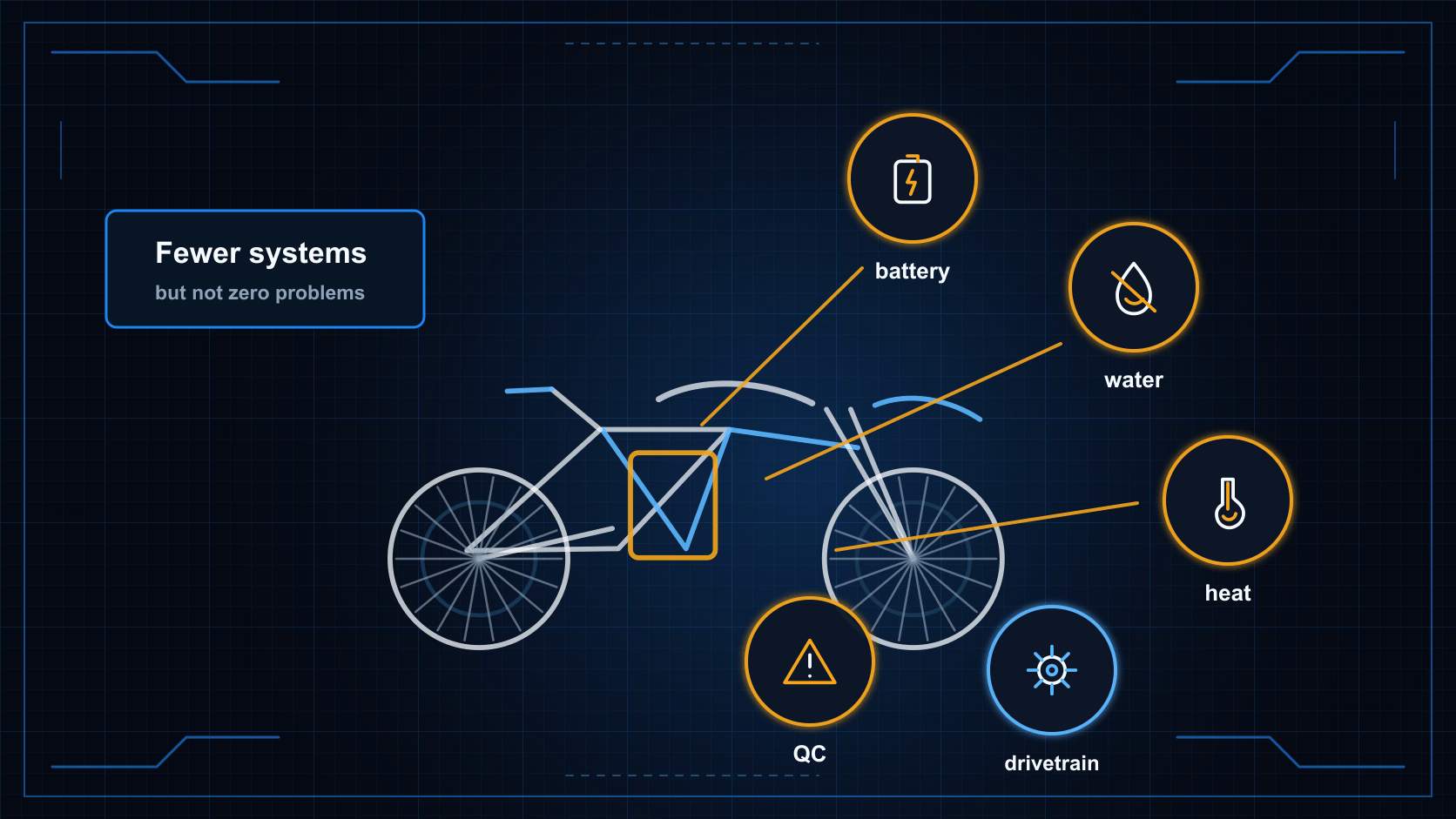
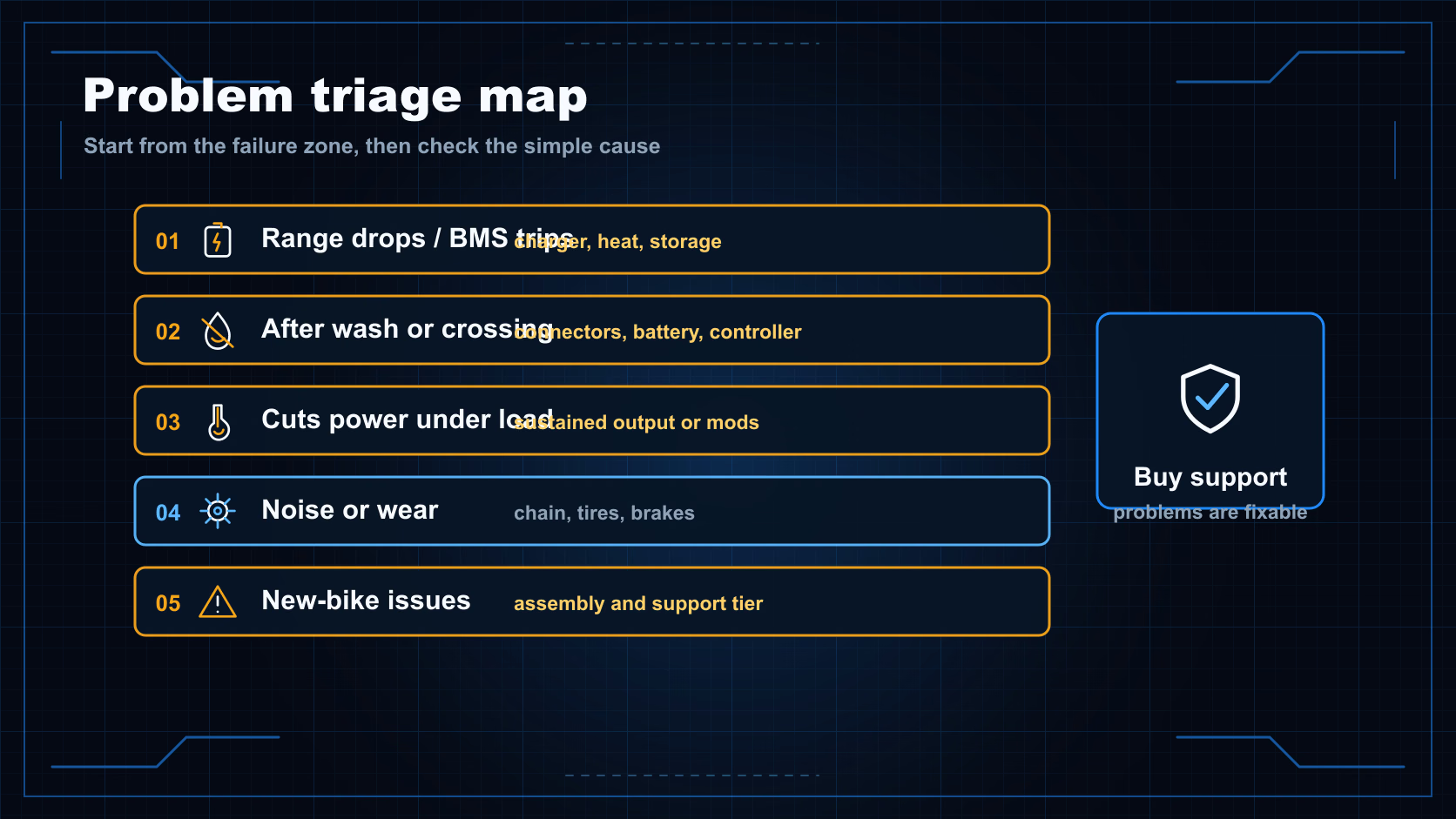
1. Water and electronics. The one that surprises people: these bikes are not waterproof. They shrug off rain and mud, but deep crossings, submersion and pressure washing push water into the battery, controller or connectors — the most common way owners cause real, expensive damage. Ride water cautiously, never submerge it, wash gently.
2. Battery and BMS. The most expensive component and the one that ages. Problems come from abuse, not normal use: heat, deep discharges, cheap chargers, physical damage. Treated properly it's a slow-fading wear item, not a failure point. Charging habits matter more than anything else you'll do — see the charging guide, including why you shouldn't charge one while you sleep.
3. Controller and motor heat. Under sustained high power — racing, long climbs, or a bigger aftermarket controller — the controller or motor can overheat and briefly cut power to protect itself. Much more likely after derestriction. Normal trail riding rarely triggers it.
4. Drivetrain wear. Chains stretch, sprockets wear, pads and tires wear. The same normal consumables as any bike. Not a reliability flaw — upkeep.
5. Budget-bike quality control. Below about $2,500, expect loose bolts, inconsistent assembly and optimistic specs on arrival. Check the bike over and torque everything before you ride it hard. This is also where the support problem above bites hardest, which is why we frame budget bikes as a low-risk try rather than a long-term keeper.
What our evidence is, and what it isn't
We should be precise about this, because reliability is exactly the topic where people overstate what they know.
We hold 103 claim-versus-reality checks across the catalog, and every one carries a source link. But 85 of those 103 are manufacturer caveats — cases where the maker's own fine print or spec footnote contradicts the headline number. Only nine are independent third-party measurements, eight are dealer listings, and one is an owner report.
That makes our evidence strong on what manufacturers quietly admit and thin on what breaks after two years, because we have not ridden these machines for two years and we won't pretend otherwise. For long-term durability on a specific model, an owners' forum will genuinely serve you better than we can. What we can tell you — and what this page is built on — is the shape of the category's problems, measured across all of it at once.
How to avoid the big ones
- Ask for the warranty in writing before you buy. More than eight in ten of the bikes we cover do not publish one. This is the cheapest question you will ever ask.
- Ask who honors service — maker, importer or dealer — and whether buying through a dealer changes it. Sometimes it does.
- Assume 60% of the claimed range, then adjust down for cold, weight and aggressive riding.
- Buy the proven tier if you're keeping it. Six bikes have genuinely strong parts support. If longevity matters more than price, buy from that six.
- Respect water and the battery — right charger, no submersion, gentle washing, charge attended.
- Check a budget bike over on arrival before you ride it hard.
The bottom line
The machines are fundamentally sound. Fewer moving parts genuinely does mean fewer failures, and the mechanical problems that do occur are mostly avoidable with basic care.
The risk in this category has moved off the bike and onto the company selling it. Support depth, published warranty terms and whether the importer still exists in three years are now the things most likely to cost you money — and they're the things almost no retailer page will discuss, because they aren't features you can put on a spec sheet.
Buy the bike for how it rides. Buy the brand for what happens when something breaks.
VoltRipper is independent — this is general reliability guidance, not model-specific diagnosis. Always follow your bike's owner's manual and consult its community for model-specific issues. Affiliate disclosure is included on monetized pages.
FAQ
Are electric dirt bikes reliable?
Generally yes — they have far fewer failure points than gas bikes (no engine, carburetor, valves, or oil system). The real issues to know are battery degradation, water reaching the electronics, overheating under sustained high power, normal drivetrain wear, and quality-control problems on cheap no-name bikes. Proven brands (Sur-Ron, Talaria) are reliable; budget bikes have more issues and thinner support.
What are common Sur-Ron problems?
The Sur-Ron is well-proven, so 'problems' are mostly ownership topics rather than defects: battery care, water sensitivity (the electronics aren't waterproof), controller heat after high-power modifications, and routine chain and brake upkeep. The big advantage is the deep aftermarket and community — nearly every issue is well-documented and fixable.
Can electric dirt bikes get wet?
They handle rain and mud fine, but they are not waterproof. Deep water crossings, submersion, and high-pressure washing can force water into the battery, controller, or connectors and cause real damage. Ride through water cautiously, don't submerge the bike, and wash it gently rather than blasting it.
Do electric dirt bike motors overheat?
They can under sustained high power — racing, long steep climbs, or a bigger aftermarket controller — and it's more likely after derestriction. Normal trail riding rarely causes it. Quality bikes manage heat better, and cooling upgrades help riders who push hard; for most people it's a non-issue.
Sources
Editorial sources
Specification sources
- Sur-Ron Light Bee XATV Wholesale Outlet - 2026 Sur-Ron Light Bee X (72V/35Ah, 10 kW), $4,699 from $4,999Checked
- Talaria Sting R MX4Talaria Canada - Sting R MX4 specificationsChecked
- Yozma IN10Yozma Sport — IN 10 product pageChecked