The short answer
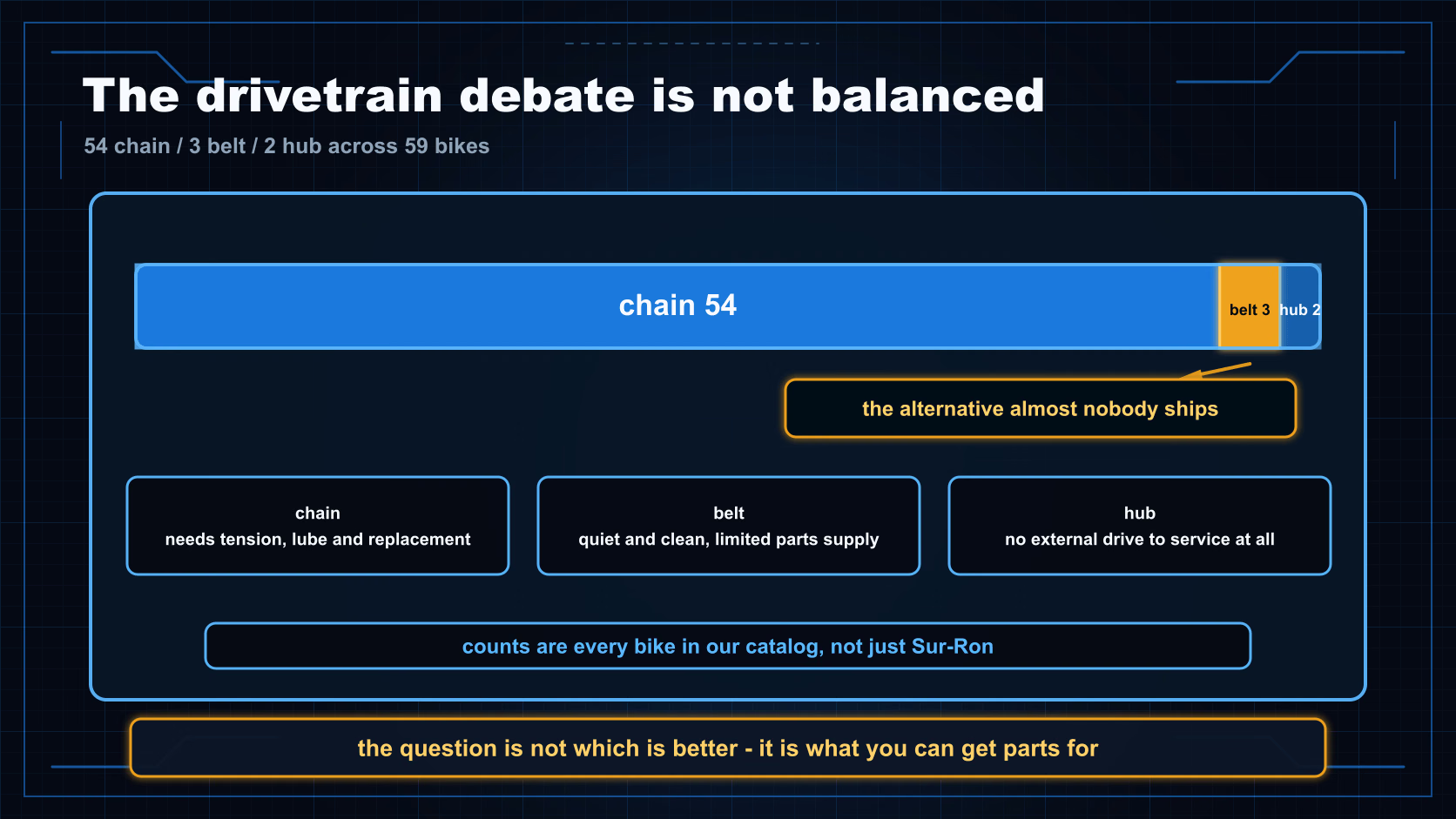
A belt-drive conversion is one of the few Sur-Ron upgrades that's genuinely better for some riders and worse for others — not a straight upgrade. On a Sur-Ron Light Bee X, a belt makes the bike quieter, cleaner, and nearly maintenance-free. But the kits are built for supermoto and light trail only — and if you jump or ride hard off-road, that limitation is the whole story.
So the honest answer isn't "yes" or "no" — it's which rider are you.
What a belt drive actually changes
Swapping the chain for a belt changes the day-to-day of owning the bike more than the performance:
- No lube, no mess. A belt runs dry — no chain wax, no black grease on your hands and your garage floor.
- Much quieter. Chain slap is one of the loudest things a Sur-Ron does; a belt is dramatically quieter, which matters for street and neighborhood riding.
- Far less maintenance. No re-lubing every few rides, no cleaning grinding paste off the links. You inspect it and keep tension, and that's most of it. (Compare the chain routine it replaces.)
- Cleaner look and feel. For a street/supermoto build, the belt just suits the bike.
For a commuter or supermoto rider, that combination — quiet, clean, low-maintenance — is a real quality-of-life upgrade.
The honest limitation nobody selling one leads with
Here's what the product pages bury: the Sur-Ron belt-drive kits are rated for supermoto and light trail only. Makers advise against jumps and heavy trail riding.
That's not marketing hedging — it's mechanical. A chain tolerates the sudden shock loads of jumps and hard, rocky trail; a belt is far less forgiving of that abuse and can skip or be damaged. If your riding is airtime and aggressive off-road, the chain's abuse tolerance is a feature you'd be giving up. Buy the belt for the riding it's built for, not the riding you wish it did.
Fitment: Light Bee X, and confirm your exact bike
The common belt-drive kit is for the Light Bee X — it is not a universal "Sur-Ron" part. The Ultra Bee is a different, belt-capable platform, and the other models are separate; a Light Bee kit does not carry over. A belt drive is a drivetrain conversion, so treat it like one: confirm the kit is sold for your exact bike and model year before buying. (Our parts compatibility guide covers why "it's a Sur-Ron part" never guarantees a fit.)
Who should convert — and who should keep the chain
- Convert if you're a street, commuter, or supermoto rider who wants quiet, clean, low-maintenance running and rides mostly pavement or mellow trail.
- Keep the chain if you jump, ride heavy or aggressive trail, or race off-road — the belt kits are explicitly not built for that, and the chain is the right tool.
- On the fence? If you're building a supermoto Light Bee, the belt fits the theme perfectly. If you're building a trail or jump bike, put the money into suspension and brakes instead and keep the chain.
The bottom line
A Sur-Ron belt drive is a quality-of-life upgrade for the right rider — quiet, clean, low-maintenance — and the wrong choice for a jumper or hard-trail rider, because the kits are supermoto/light-trail only. It's a use-case decision, not a straight upgrade. Match it to how you actually ride. Planning the rest of the build? The upgrades guide sets the order of operations, and if you keep the chain, the chain-maintenance guide keeps it quiet and efficient. Still choosing a bike? Run the Find Your Ride configurator.
VoltRipper is independent — we don't sell parts and our recommendations aren't pay-to-play. Follow the kit manufacturer's fitment, tension, and use-case guidance — belt-drive kits carry real ride-type limitations. Affiliate disclosure is included on monetized pages, and we're spec-verified/data-driven rather than hands-on until first-hand testing exists.
FAQ
Is a belt drive better than a chain on a Sur-Ron?
For the right rider, yes; for the wrong one, no. A belt drive is quieter, cleaner, and nearly maintenance-free — no lube, no chain slap, no greasy mess — which is genuinely better for street, commuter, and supermoto use. But the belt-drive kits for the Sur-Ron Light Bee X are rated for supermoto and light trail only; makers advise against jumps and heavy trail riding, where the shock loads can skip or damage a belt. So it's better if you ride pavement and mellow trail, and worse if you jump or ride hard off-road, where a chain's abuse tolerance still wins.
Does a belt drive fit any Sur-Ron?
The common aftermarket belt-drive kit fits the Sur-Ron Light Bee X. It is not a universal Sur-Ron part — the Ultra Bee (a different, belt-capable platform) and the other models are separate, and a Light Bee kit does not carry over to them. As with any part, confirm the kit is sold for your exact bike and model year before buying; a belt drive is a drivetrain conversion, not a bolt-on accessory.
How much maintenance does a belt drive save?
Most of the routine drivetrain chores. No chain lube, no chain cleaning, no chain-slap noise, and no re-tensioning ritual after every few rides — a belt runs clean and quiet with far less attention. You still inspect it and keep it at the right tension, and a belt is not indestructible, but for a rider who hates the every-few-rides chain routine, that's the main appeal. The trade is the upfront cost and the ride-type limitation, not ongoing hassle.
Should I convert my Sur-Ron to a belt drive?
Convert if you ride mostly street, commute, or supermoto, hate chain maintenance, and want a quieter, cleaner bike. Keep the chain if you jump, ride heavy or aggressive trail, or race off-road — the belt kits are explicitly not built for that, and a chain tolerates the abuse a belt won't. It's a use-case decision, not a straight upgrade: the belt is better at some things and worse at others, and honesty about which rider you are is the whole call.