Tracked price checks
Bikes in this guide
Talaria
Dragon
28 kW peak output, 10 kW nominal power, and a 5.2 kWh pack make it Talaria's premium big-battery full-size entry
Trade-off: Current credible source material does not confirm a US ship date, so real owner range and support history are not established
We may earn a commission if you buy through this link, at no extra cost to you.
Check price at Talaria CanadaTalaria
Komodo
32 kW peak output, 65 mph capability, and a 97.2V/45Ah pack make it Talaria's step above the Sting MX5 Pro
Trade-off: Current US dealer listing is off-road only; the L3e street trim should not be assumed for US buyers
We may earn a commission if you buy through this link, at no extra cost to you.
Check price at Ronster RidesSur-Ron
Ultra Bee
Big 4.4 kWh (74V/60Ah) pack, ~24.5 kW HP listings, and a 59 mph top end — a real step up from the Light Bee
Trade-off: Heavier (~195 lb) and more bike than a beginner needs
We may earn a commission if you buy through this link, at no extra cost to you.
Check price at Boca ScootersThe short answer
Talaria now sells two full-size 21/18 flagships that finish within a single point of each other — Komodo 91, Dragon 90 — and sit just $950 apart. They are not two versions of the same bike; they're two different bets:
- Buy the Talaria Komodo ($5,999, Score 91) if you want the most power and the best value — 32 kW peak, 754 N·m, higher 97.2V, $950 less, and orderable from dealers on a stated 5-10 day lead rather than a ship date nobody will confirm. It's the default pick for most buyers.
- Buy the Talaria Dragon ($6,949, Score 90) if you want the biggest battery and the most features — a larger 5.2 kWh pack, ABS, traction control, a Bluetooth TFT dash, and a higher 70 mph top-speed claim — and you'll pay the premium and wait out a pre-order to get them.
The Scores land within a point because our rubric weighs "more power for less money" (Komodo) and "more battery plus real rider aids" (Dragon) as roughly even. So this comes down to which of those two things you actually value.
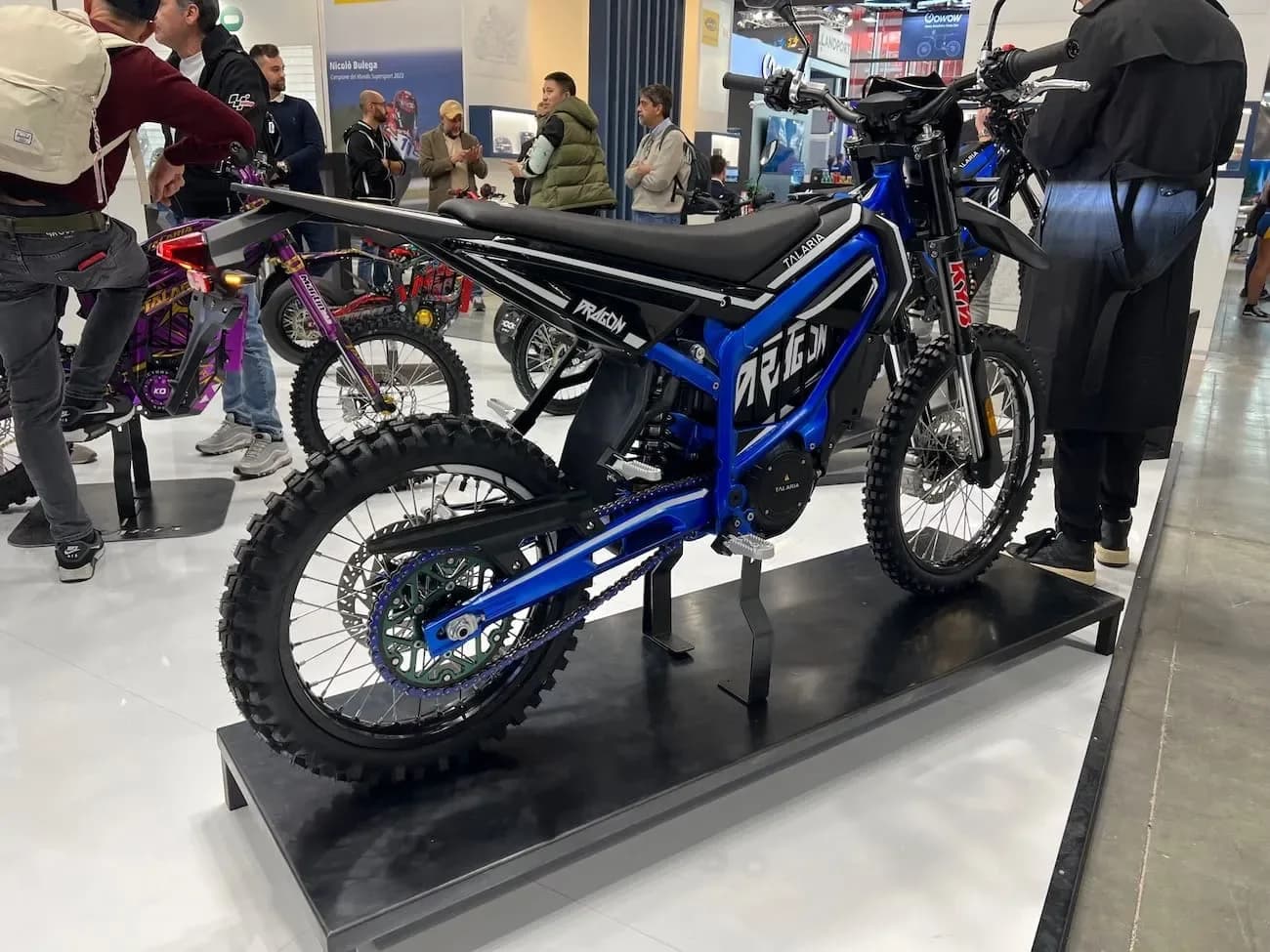
Verified product photo
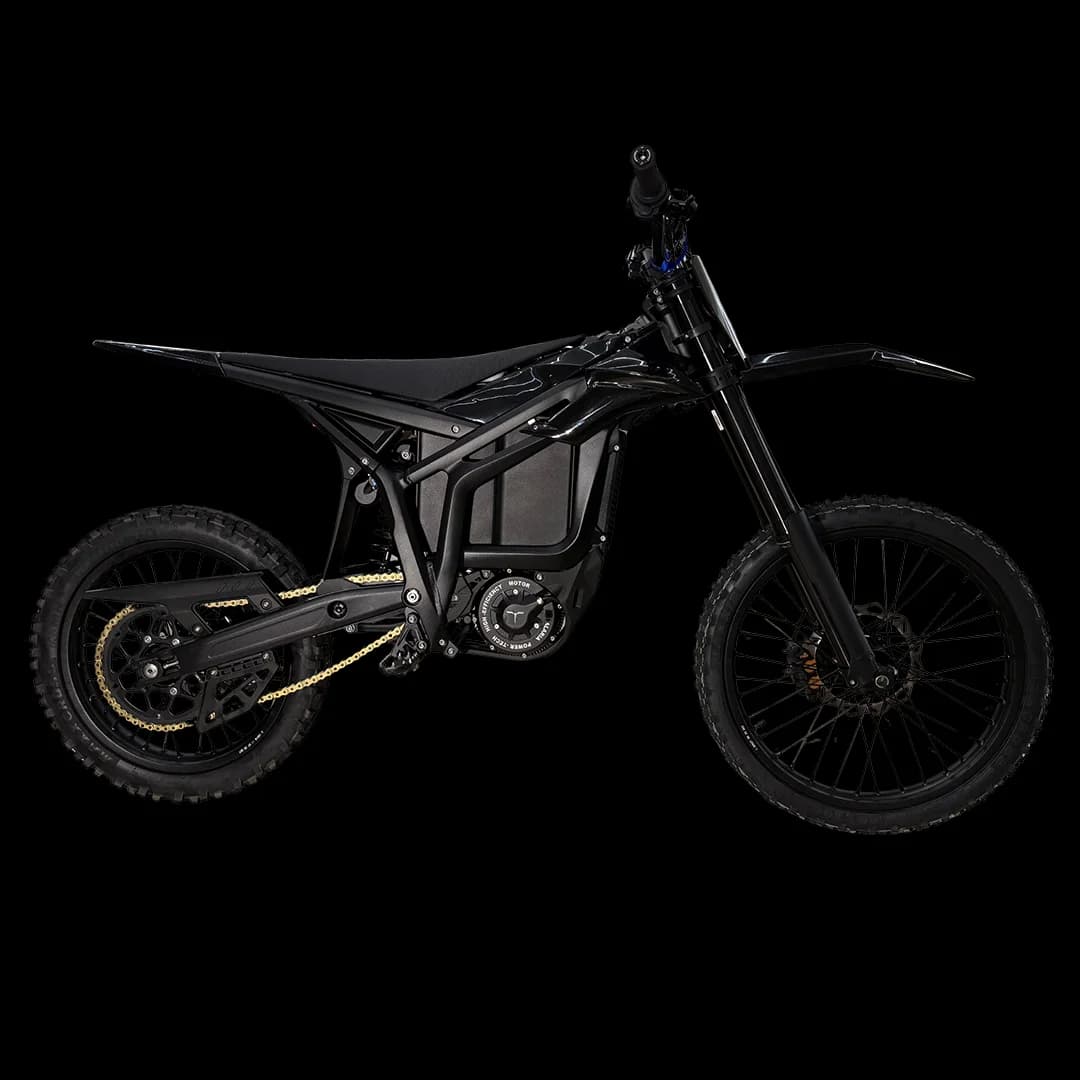
Verified product photo
Comparison table
Head-to-head spec winners
Awarded spec rows
2-2
Talaria Dragon vs Talaria Komodo
| Spec | Talaria Dragon | Talaria Komodo | Winner |
|---|---|---|---|
| Power | 28 kW peak | 32 kW peak | Talaria Komodo+4 kW |
| Top speed | 70 mph | 65 mph | Talaria Dragon+5 mph |
| Battery capacity | 5.2 kWh | 4.4 kWh | Talaria Dragon+826 Wh |
| Real range | Not published | Not published | No winner awardedNeeds both published values |
| Weight | 220 lb | 216 lb | Talaria Komodo4 lb lighter |
| Brakes | Dual Hydraulic | Dual Hydraulic | TieSame Dual Hydraulic |
| Suspension | Full | Full | TieSame Full |
| Warranty | Not published | 12 mo | No winner awardedNeeds both published values |
| Delivered price | $6,949 street + shipping unknown | $5,999 street + shipping unknown | No winner awardedShipping unknown |
Power
- Talaria Dragon
- 28 kW peak
- Talaria Komodo
- 32 kW peak
Top speed
- Talaria Dragon
- 70 mph
- Talaria Komodo
- 65 mph
Battery capacity
- Talaria Dragon
- 5.2 kWh
- Talaria Komodo
- 4.4 kWh
Real range
- Talaria Dragon
- Not published
- Talaria Komodo
- Not published
Weight
- Talaria Dragon
- 220 lb
- Talaria Komodo
- 216 lb
Brakes
- Talaria Dragon
- Dual Hydraulic
- Talaria Komodo
- Dual Hydraulic
Suspension
- Talaria Dragon
- Full
- Talaria Komodo
- Full
Warranty
- Talaria Dragon
- Not published
- Talaria Komodo
- 12 mo
Delivered price
- Talaria Dragon
- $6,949 street + shipping unknown
- Talaria Komodo
- $5,999 street + shipping unknown
Score breakdown
Power
/22 pts
Range
/20 pts
Chassis
/18 pts
Value
/15 pts
Support
/12 pts
Ergonomics
/8 pts
Versatility
/5 pts
Same class, opposite priorities
These bikes are genuinely close on the fundamentals. Both are full-size 21-inch front / 18-inch rear enduro platforms with long-travel suspension and hydraulic brakes; both weigh within 4 lb of each other (220 vs 216); both are expert-rated; both are off-road as sold; and they land a single point apart — Komodo 89, Dragon 88. What separates them is philosophy, not capability.
The Komodo pushes performance and price: it makes the most peak power and torque in the Talaria lineup and undercuts the Dragon by $950. The Dragon pushes capacity and electronics: it carries the largest battery Talaria offers and adds rider aids — ABS, traction control, a smart TFT dash — that no other Talaria, and few rivals at any price near this, include. One is the harder-pulling value bike; the other is the bigger-battery, more refined one.
The core matchup
| Talaria Dragon | Talaria Komodo | |
|---|---|---|
| VoltRipper Score | 90 | 91 |
| Price | $6,949 | $5,999 |
| Peak power | 28 kW | 32 kW |
| Torque | 630 N·m | 754 N·m |
| Voltage | 88.8V | 97.2V |
| Battery | 5,200 Wh (58.5Ah) | 4,374 Wh (45Ah) |
| Top speed (claim) | 70 mph | 65 mph |
| Range (low-speed claim) | 93 mi | 71.5 mi |
| Rider aids | ABS + traction control + TFT | None |
| Weight | 220 lb | 216 lb |
| Wheels | 21 / 18 | 21 / 18 |
| Skill level | Expert | Expert |
| Street legal | No (unconfirmed) | No |
| Availability | Pre-order (ship date unconfirmed) | Limited (dealer) |
Head-to-head, factor by factor
Power & torque → Komodo, clearly. The Komodo makes 32 kW peak to the Dragon's 28 kW and 754 N·m to the Dragon's 630 N·m, on a higher-voltage 97.2V system versus 88.8V. That's the surprise of this matchup: the cheaper bike is the more powerful one. If you're buying a full-size Talaria for straight-line drive and grunt, the Komodo out-pulls the more expensive Dragon.
Battery & range → Dragon. This is the Dragon's headline. It carries a 5,200 Wh (58.5Ah) pack to the Komodo's 4,374 Wh (45Ah) — about 19% more energy — the largest battery in the Talaria lineup. Its 93-mile low-speed range claim likewise tops the Komodo's 71.5. Both are optimistic eco-mode figures we leave unverified until owner or instrumented data exists, but the Dragon's bigger pack is a real, structural advantage for longer rides.
Top speed → Dragon. The Dragon claims 70 mph to the Komodo's 65 — a modest but real edge, and consistent with its higher-speed, more street-leaning character. (Treat both as manufacturer claims until instrumented testing exists.)
Rider aids & electronics → Dragon, decisively. The Dragon adds ABS, traction control, and a 4.3-inch Bluetooth TFT dash — none of which the Komodo offers. That's a genuine refinement and safety edge, and it points at mixed street-and-trail use. One honest caveat: hardcore off-road riders often want ABS and traction control switched off to slide and lock the rear, so these aids matter most if you value control on pavement and fast, loose terrain — less if you're racing tight woods. But as a feature set at this price, it's rare and real.
Price → Komodo. $5,999 vs $6,949 — $950 less. For a rider who doesn't need the Dragon's bigger battery and electronics, that's a meaningful saving on an already-expensive bike, and it's the Komodo's headline advantage alongside its power.
Availability & maturity → Komodo. The Komodo is a real product you can order, with dealer listings quoting a 5-10 day lead rather than an open-ended wait, and it has been on the market long enough to have a real (if still young) track record. The Dragon is an unproven pre-order with no confirmed US ship date and a rocky launch history — some coverage described it as a long-delayed, near-prototype model — which means no meaningful owner data, unproven production support, and a bike you're buying partly on faith. Shop the Dragon as a promising new release, not a known quantity.
Weight, geometry & skill → a wash. Both are full-size 21/18 enduros, within 4 lb (220 vs 216), both expert-rated. Neither is the flickable choice; both demand experience and strength. Don't let these decide it.
Street legality → a wash, and cautious. We score both off-road. The Komodo has an L3e street trim in some markets; the Dragon's ABS and lighting hint at street intent and some listings mention street-legal trims — but neither is a confirmed US DOT bike as we score it. Confirm the exact trim with a dealer and check your state's rules before counting on road use of either.
A shared buyer-beware: where you shop
Both bikes — the Dragon especially — attract a wave of fake and unauthorized `*.us.com`-style reseller sites, and Dragon prices in particular swing wildly online (roughly $4,900 to $7,600). Our figures reflect current, credible listings, but verify them: buy from a legitimate, established dealer, confirm the out-the-door price and exact trim in writing, and treat any too-good-to-be-true deal as the warning sign it usually is. This matters more on the unconfirmed Dragon pre-order than on the established Komodo. (How to spot a fake lookalike site →)
Which should you buy?
- You want the most power and the best value, and a bike you can buy today: Talaria Komodo. More peak power, more torque, higher voltage, $950 less, and shipping rather than a prototype. It's the right pick for the majority of full-size Talaria buyers. (Full review →)
- You specifically want the biggest battery, ABS and traction control, a TFT dash, and the higher top-speed claim — and you'll pay $950 more and wait on a pre-order: Talaria Dragon. (Full review →)
- Not sure a full-size 21/18 Talaria is even the right class? Both go up against the Sur-Ron Ultra Bee, which is ahead of the Komodo on 91 and the Dragon on 90, as well as lighter, better-supported, and the class benchmark (Komodo vs Ultra Bee →). Or see the full Talaria lineup.
Still weighing it? Run the Find Your Ride configurator.
The honest bottom line
The Talaria Komodo and Dragon finish a point apart — 91 and 90 — for opposite reasons, and that's the whole decision. The Komodo is the more powerful, cheaper, available-now bike: 32 kW, 754 N·m, 97.2V, $5,999, on dealer floors today. The Dragon is the bigger-battery, more-refined bike: a 5.2 kWh pack, ABS, traction control, a TFT dash, and a 70 mph claim, for $6,949 on pre-order. There is no "better" here — there's the value-and-power pick and the battery-and-features pick. Most buyers should take the Komodo and pocket the $950; take the Dragon only if its specific advantages are the ones you'll actually use, and buy it carefully from a real dealer.
VoltRipper is independent — we don't sell Talaria or any bike, and our Score is based on verified specs, not commissions. Affiliate disclosure is included on monetized pages, and we're spec-verified/data-driven rather than hands-on until first-hand testing exists. Real-world figures we can't verify (real range, exact US street trim) are left unstated rather than guessed.
FAQ
Talaria Dragon or Talaria Komodo — which should you buy?
For most full-size Talaria buyers, the Komodo. It's $950 cheaper ($5,999 vs $6,949), makes more peak power (32 vs 28 kW) and more torque (754 vs 630 N·m), and it's a shipping product with dealer listings rather than a prototype - confirm stock before you buy, we have not verified it - from dealers rather than on pre-order. The Komodo takes our board by a point, 89 to 88. Buy the Dragon only if you specifically want its bigger 5.2 kWh battery, its rider aids (ABS, traction control, a Bluetooth TFT dash), and its higher 70 mph top-speed claim — and you'll pay the premium and accept early-production uncertainty to get them.
Which is more powerful, the Talaria Dragon or the Komodo?
The Komodo, clearly. It makes 32 kW peak to the Dragon's 28 kW, 754 N·m of torque to the Dragon's 630 N·m, and runs a higher-voltage 97.2V system versus the Dragon's 88.8V. The Dragon is the newer, more feature-rich bike, but it is not the more powerful one — its advantages are battery size, top-speed claim, and electronics, not raw output. If peak power is your priority, the cheaper Komodo wins it.
Is the Talaria Dragon worth $950 more than the Komodo?
Only for a specific buyer. The Dragon's $950 premium buys a larger 5.2 kWh battery (vs ~4.4 kWh), ABS and traction control the Komodo doesn't offer, a Bluetooth TFT dash, and a higher 70 mph top-speed claim (vs 65). If you want maximum range, mixed street-and-trail rider aids, and the newest tech, that can be worth it. If you mostly want power and value, it isn't — the Komodo gives you more peak power for less money, and it's the smarter default.
What's the real difference between the Dragon and the Komodo?
They're both full-size 21/18 Talaria flagships, both ~216–220 lb, both expert-rated and off-road as sold, and they finish a single point apart — Komodo 89, Dragon 88 — so the difference is where each spends its money, not which is better. The Komodo spends it on raw performance and a lower price: more power, more torque, higher voltage, $5,999, and orderable today on a short lead time. The Dragon spends it on capacity and refinement: a bigger battery, ABS, traction control, a TFT dash, and a higher top-speed claim, for $6,949 on pre-order. A point apart, opposite priorities.
Sources
Specification sources
- Talaria DragonTalaria Canada - Dragon prototype specificationsChecked
- Talaria KomodoRonster Rides - Talaria Komodo dealer listingChecked
- Sur-Ron Ultra BeeVoro Motors — Surron Ultra Bee HP SW 24.5kW 74V 60AhChecked