Tracked price checks
Bikes in this guide
Stark
Varg EX
Road-legal Stark Varg enduro with up to 80 hp from a 360V system
Trade-off: Top speed and mile-based range are not published, so both stay unscored
We may earn a commission if you buy through this link, at no extra cost to you.
View official pageStark
Varg MX 1.2
The fastest electric motocrosser made — up to 80 hp from a 360V, 7.2 kWh system
Trade-off: Halo price (~$12k) — competes with premium gas MX, not trail e-bikes
We may earn a commission if you buy through this link, at no extra cost to you.
View official pageSur-Ron
Storm Bee
Full-size motorcycle performance — ~75 mph and a huge 5.7 kWh (104V/55Ah) pack
Trade-off: Heavy (~280 lb) and fast — an expert bike, not a beginner's
We may earn a commission if you buy through this link, at no extra cost to you.
View official pageSur-Ron
Ultra Bee
Big 4.4 kWh (74V/60Ah) pack, ~24.5 kW HP listings, and a 59 mph top end — a real step up from the Light Bee
Trade-off: Heavier (~195 lb) and more bike than a beginner needs
We may earn a commission if you buy through this link, at no extra cost to you.
Check price at Boca ScootersThe short answer
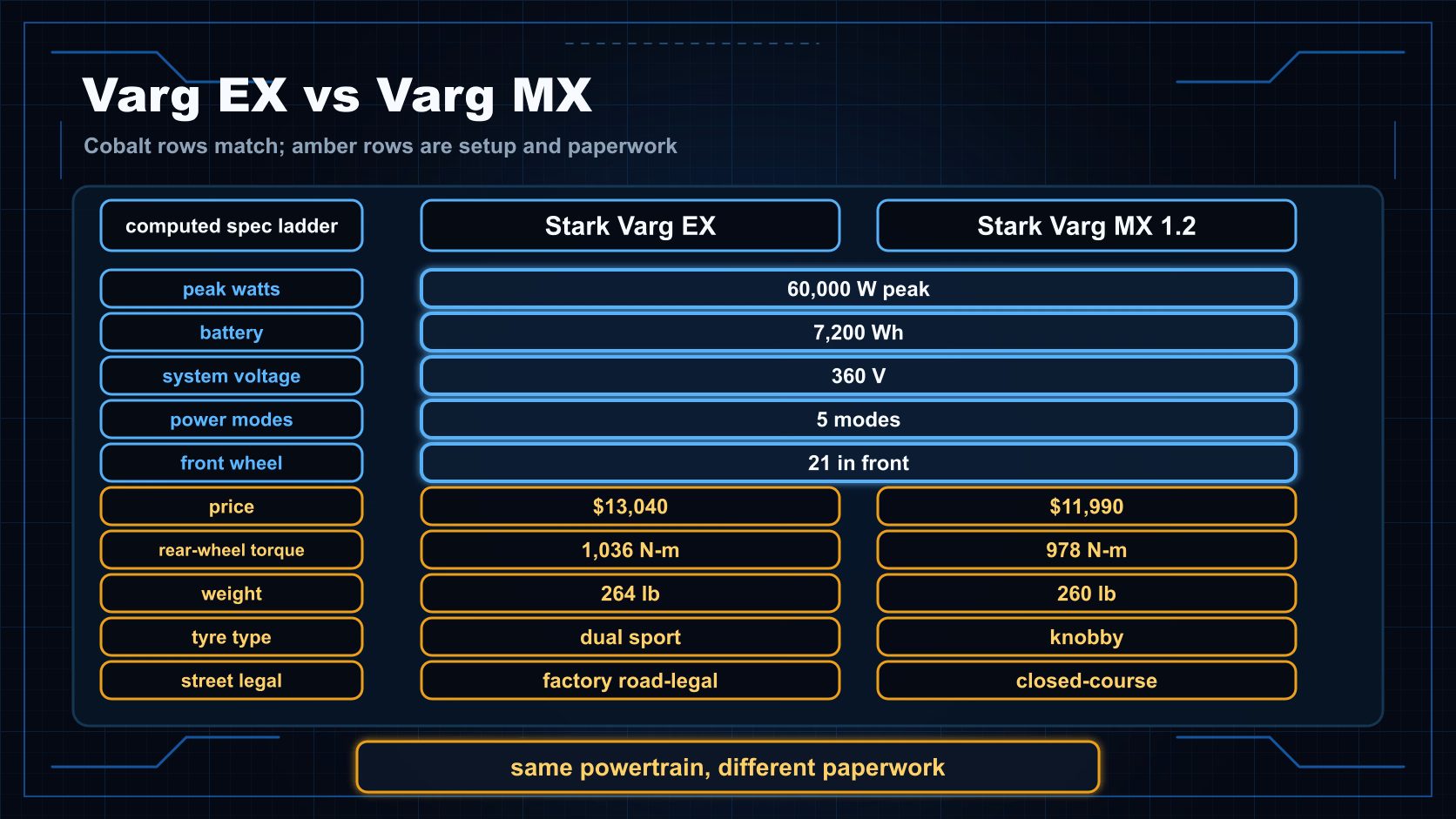
These are the same motorcycle with different paperwork and different tyres, and $1,050 between them.
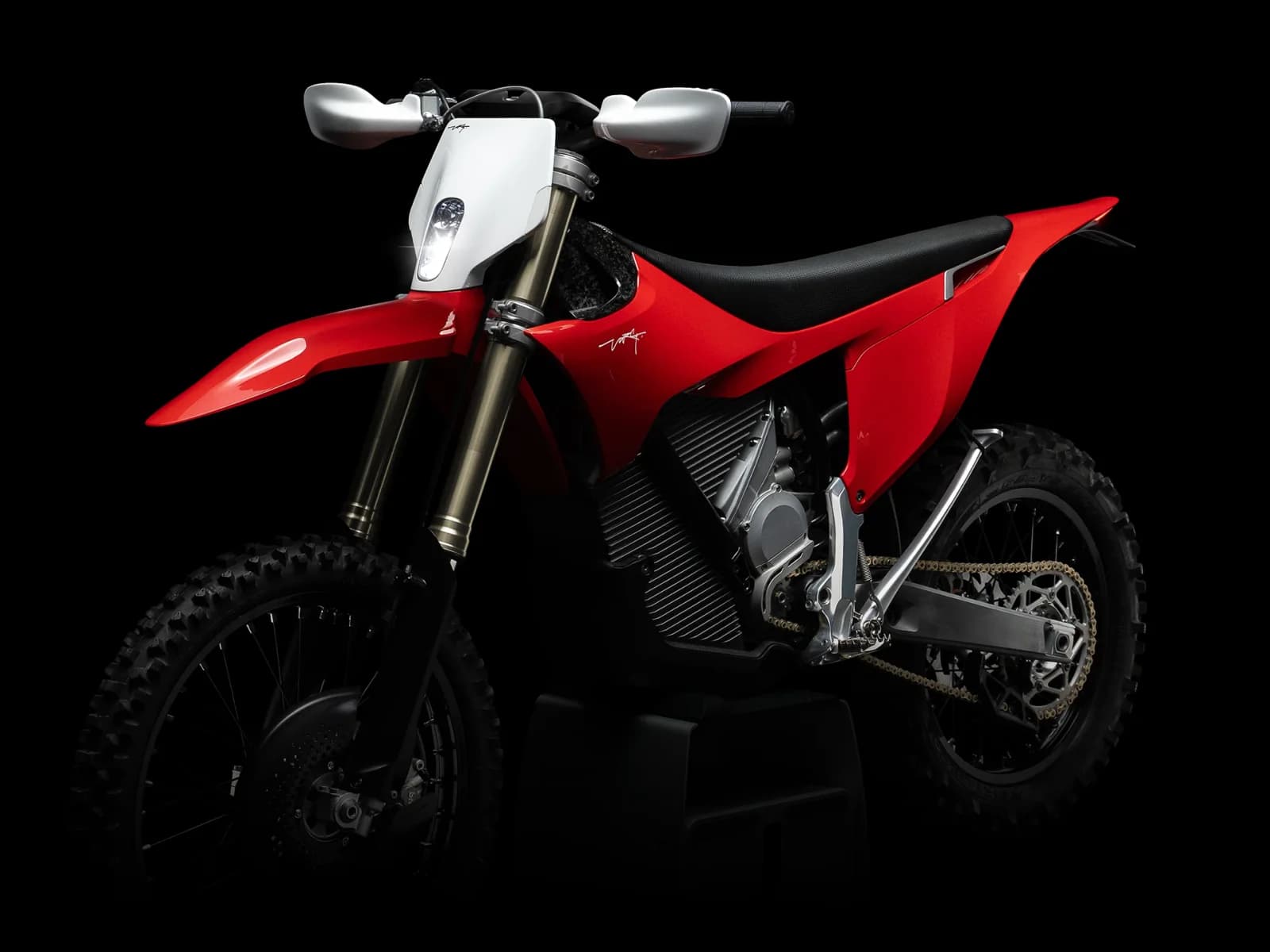
- Buy the Varg EX ($13,040, Score 97) if you need road legality. It ships as the road-legal variant with factory lighting and dual-sport tyres.
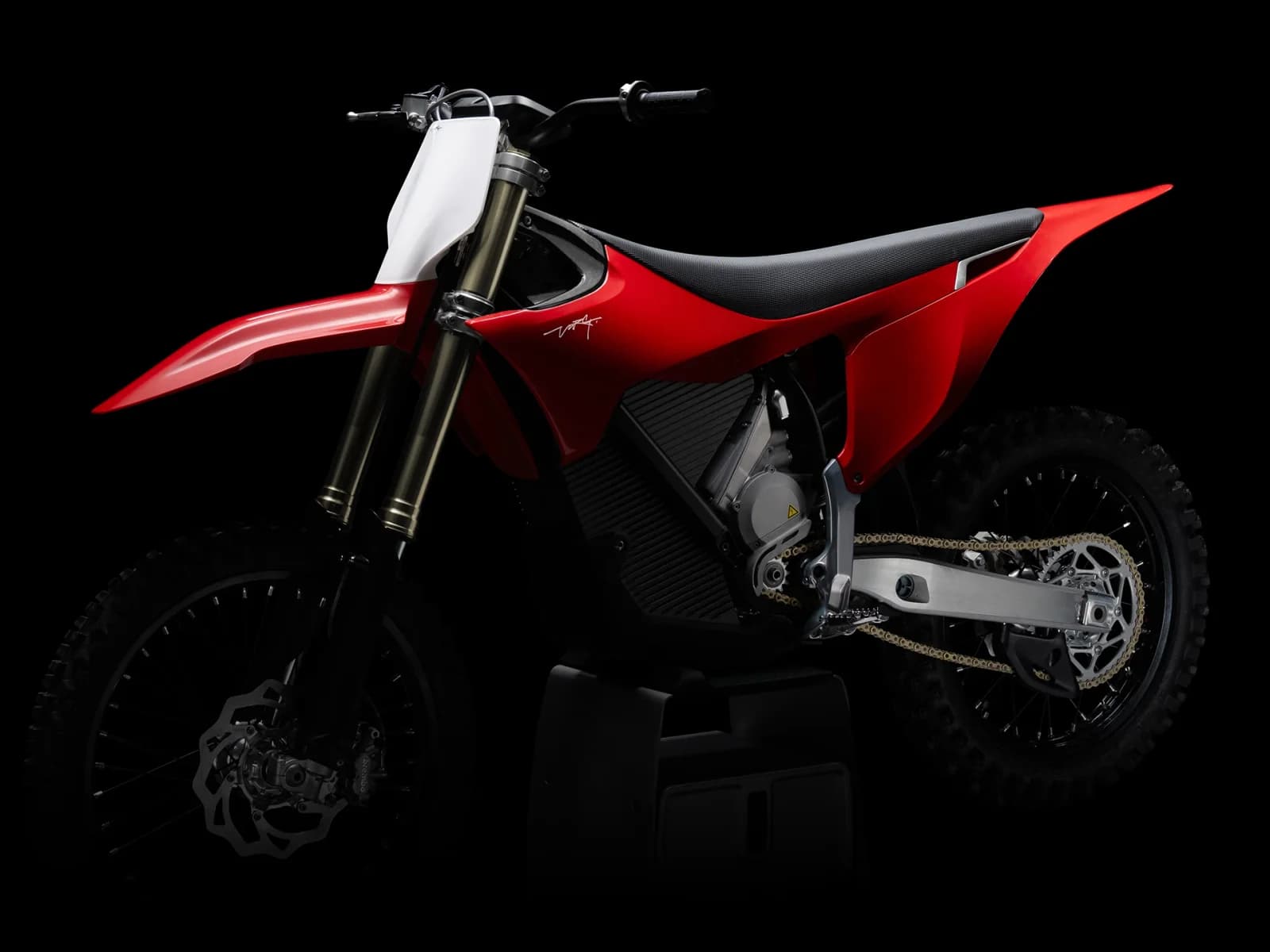
- Buy the Varg MX 1.2 ($11,990, Score 95) if you ride closed-course and never need a plate. Identical powertrain, knobbies, $1,050 less.
Do not agonise over performance. Same 60 kW, same 7.2 kWh, same 360V, same five modes, same two-hour charge, same 21-inch front wheel. The decision is legality, and legality is the one thing you cannot bolt on afterwards.
Verified product photo
Verified product photo
Comparison table
Head-to-head spec winners
- Real range not published by listed sources
- Top speed not published by listed sources
Awarded spec rows
0-2
Stark Varg EX vs Stark Varg MX 1.2
| Spec | Stark Varg EX | Stark Varg MX 1.2 | Winner |
|---|---|---|---|
| Power | 60 kW peak | 60 kW peak | TieSame 60 kW |
| Top speed | Not published | 68 mph | No winner awardedNeeds both published values |
| Battery capacity | 7.2 kWh | 7.2 kWh | TieSame 7.2 kWh |
| Real range | Not published | 35 mi | No winner awardedNeeds both published values |
| Weight | 264 lb | 260 lb | Stark Varg MX 1.24 lb lighter |
| Brakes | Dual Hydraulic | Dual Hydraulic | TieSame Dual Hydraulic |
| Suspension | Full | Full | TieSame Full |
| Warranty | Not published | Not published | No winner awardedNeeds both published values |
| Delivered price | $13,439 delivered ($13,040 + $399 shipping) | $12,389 delivered ($11,990 + $399 shipping) | Stark Varg MX 1.2$1,050 less |
Power
- Stark Varg EX
- 60 kW peak
- Stark Varg MX 1.2
- 60 kW peak
Top speed
- Stark Varg EX
- Not published
- Stark Varg MX 1.2
- 68 mph
Battery capacity
- Stark Varg EX
- 7.2 kWh
- Stark Varg MX 1.2
- 7.2 kWh
Real range
- Stark Varg EX
- Not published
- Stark Varg MX 1.2
- 35 mi
Weight
- Stark Varg EX
- 264 lb
- Stark Varg MX 1.2
- 260 lb
Brakes
- Stark Varg EX
- Dual Hydraulic
- Stark Varg MX 1.2
- Dual Hydraulic
Suspension
- Stark Varg EX
- Full
- Stark Varg MX 1.2
- Full
Warranty
- Stark Varg EX
- Not published
- Stark Varg MX 1.2
- Not published
Delivered price
- Stark Varg EX
- $13,439 delivered ($13,040 + $399 shipping)
- Stark Varg MX 1.2
- $12,389 delivered ($11,990 + $399 shipping)
Score breakdown
Power
/22 pts
Range
/20 pts
Chassis
/18 pts
Value
/15 pts
Support
/12 pts
Ergonomics
/8 pts
Versatility
/5 pts
What is actually identical
This is unusual enough to state plainly. Across the two bikes:
- Peak power — 60,000 W (80 hp) each. Both app-adjustable from 10 hp upward.
- Battery — 7,200 Wh each, on a 360V system.
- Charge time — about 2 hours each.
- Power modes — five each.
- Front wheel — 21 in on both, the full-size dirt-bike standard.
- Brakes — dual hydraulic, drivetrain — chain, suspension — full, on both.
- Skill level — expert. Neither is a bike to learn on, and 80 hp is 80 hp regardless of the badge.
When two bikes share this much, the spec sheet stops being the interesting document and the intended use starts being the whole story.
The core matchup
| Stark Varg EX | Stark Varg MX 1.2 | |
|---|---|---|
| VoltRipper Score | 97 | 95 |
| Price | $13,040 | $11,990 |
| Peak power | 60,000 W (80 hp) | 60,000 W (80 hp) |
| Continuous power | not published | 20,000 W |
| Battery | 7,200 Wh | 7,200 Wh |
| System voltage | 360V | 360V |
| Rear-wheel torque | 1,036 N·m | 978 N·m |
| Top speed | not published | 68 mph |
| Range (claimed / real) | not published | 50 / 35 mi |
| Weight | 264 lb | 260 lb |
| Seat height | 38.0 in | 37.8 in |
| Front wheel | 21 in | 21 in |
| Tyres | Dual-sport | Knobby |
| Street legal | Road-legal variant, factory lights | No — closed-course |
| Power modes | 5 | 5 |
Head-to-head, factor by factor
Legality → EX, and this is the entire comparison. The EX is built as the road-legal variant with factory lighting. The MX is not, and no amount of money turns a closed-course bike into a registered one without a conversion and a state that permits it. If you want to ride to the trail instead of trailering to it, this is the $1,050.
Tyres → depends on where you ride. Dual-sport rubber on the EX is the honest match for a bike that sees pavement; the MX's knobbies are the honest match for a track. This one is cheap to change and should not drive the decision.
Torque → EX, slightly. 1,036 N·m at the rear wheel against 978 — about 6% more, from the same motor, which tells you the two are geared differently. Stark's own page states the EX's figure as 764 ft-lb; we convert to N·m for consistency across our catalog.
Weight and stature → MX, marginally. 260 lb against 264, and 37.8 inches of seat against 38.0. Four pounds and two tenths of an inch are not a reason to choose either bike, but the direction makes sense: the EX carries road equipment.
Spec-sheet completeness → MX, decisively, and it is the strangest thing here. The cheaper bike publishes a continuous power figure (20,000 W), a top speed (68 mph), and a claimed range (50 miles) — and we hold a real-world 35 miles for it. On the EX, all three are blank. We verified this against Stark's own product page rather than taking it second-hand: the EX's table lists no top speed, and gives riding time — "up to 6 hours" — instead of a distance.
That gap matters more than it looks. A continuous figure is what tells you the power a bike can hold rather than flash; without one, the 60 kW headline has nothing to measure it against (why peak and continuous differ →). It is the more expensive bike that asks you to take more on trust.
A note on the numbers you will find elsewhere. Several sites quote the EX at a mode-limited 60 mph, or at 129 km/h. Those trace to the Factory Edition and Alpha variants, not the $13,040 bike this page compares. Stark sells several EX configurations under closely related names, and the specs do not transfer between them — so we leave the field blank rather than borrow a number from a bike you might not be buying.
Value → MX. $1,050 less for the same powertrain. Stark charges $399 US shipping on both, so the gap survives delivery intact: the EX is $13,040 (~$13,439 delivered) against the MX's $11,990 (~$12,389 delivered). If legality is genuinely irrelevant to your riding, there is no performance argument for the EX.
Which should you buy?
- You need a plate → Stark Varg EX ($13,040, Score 97). The road-legal variant is the only version of this machine you can register, and that is worth the gap on its own.
- You ride closed-course only → Stark Varg MX 1.2 ($11,990, Score 95). Same bike, knobbies, and it will actually tell you how fast it goes and how far.
- This is more money than your riding justifies → Sur-Ron Storm Bee ($8,999, Score 96), which gives up power and gains the deepest support network in the class. (Varg EX vs Storm Bee →)
- You want the sensible middle → Sur-Ron Ultra Bee ($6,499, Score 94), which is most riders and no insult.
Not sure which fits your size and riding? Run the Find Your Ride configurator.
The honest bottom line
Buy the paperwork, not the performance. There is no version of this comparison where one bike out-rides the other in a way you would feel — they are the same 60 kW, the same 7.2 kWh, and the same chassis architecture. The $1,050 buys factory lighting and a registration path, and that is either worth everything to you or worth nothing.
What we would flag before you spend either amount: the more expensive bike has the emptier spec sheet. Stark will tell you the MX's continuous power, top speed and range, and tells you none of the three for the EX. That is not a reason to avoid it — it is a superb motorcycle and it earns our highest Score — but it is a reason to buy it on legality and reputation rather than on paper, and to confirm the exact variant in writing before you pay.
And confirm your state first. Road-legal from the factory is a starting point, not a guarantee — see our state-by-state legality guide.
VoltRipper is independent — we don't sell Stark or any bike, and our Score is based on verified specs, not who pays us. Specs on this page were checked against Stark Future's own product pages on 2026-08-17. Affiliate disclosure is included on monetized pages, and we're spec-verified/data-driven rather than hands-on until first-hand testing exists. Nothing here is legal advice: confirm street-legal status with your own state before riding on public roads.
FAQ
Should I buy the Stark Varg EX or the Varg MX 1.2?
Buy on legality, not on performance, because the performance is the same. Both make 60 kW / 80 hp from the same 360V powertrain and the same 7.2 kWh battery, both charge in about 2 hours, and both give you five power modes. The EX ($13,040) is built as the road-legal variant with factory lighting and dual-sport tyres; the MX 1.2 ($11,990) is closed-course with knobbies. If you ride anywhere that requires a plate, the $1,050 buys the only thing you cannot add later. If you only ever ride tracks and private land, the MX is the same machine for less.
What is the difference between the Stark Varg EX and the Varg MX?
Less than the price gap suggests. Same 60 kW peak, same 7.2 kWh pack, same 360V system, same five power modes, same 2-hour charge, and both run a 21-inch front wheel. The real differences are road legality and factory lighting on the EX, dual-sport tyres against the MX's knobbies, 4 lb of weight (264 against 260), and 1,036 N·m of rear-wheel torque on the EX against 978 on the MX.
What is the Stark Varg EX's top speed?
Stark does not publish one, and we will not invent it. We checked Stark's own product page: the spec table lists no top speed and gives riding time — 'up to 6 hours' — rather than a distance range. The Varg MX 1.2, which costs $1,050 less, publishes 68 mph and a 50-mile claim. Third-party sites quote 60 mph mode-limited figures for the EX, but those trace to the Factory Edition and Alpha variants rather than the $13,040 bike, so we leave the field blank.
Is the Stark Varg EX street legal?
It is built as the road-legal variant with factory lighting, which is exactly what separates it from the closed-course MX. That is a different starting point from any conversion-kit bike — but road-legal from the factory still does not mean plate-it-anywhere. Registration is a state matter, and the requirements differ enough that you should confirm your own state's rules before spending $13,040.
Why does the Varg EX score higher than the Varg MX?
97 against 95, and legality is most of the gap. Our Score rewards versatility and usable ownership alongside capability, and a bike you can register is usable in more places than one you cannot. The EX also makes slightly more rear-wheel torque. It is not a two-point verdict on which is the better machine — they are the same machine — it is a two-point verdict on how many riders each one suits.
Which Stark Varg is faster?
Unanswerable from published data, which is itself the point. Only the MX publishes a top speed — 68 mph. The two share a powertrain, but gearing, tyres and the EX's road equipment all move that number, so borrowing the MX's 68 mph for the EX would be a guess wearing a decimal point. On acceleration the EX actually holds the torque advantage, 1,036 N·m against 978 at the rear wheel.
Sources
Specification sources
- Stark Varg EXStark Future - VARG EX product pageChecked
- Stark Varg MX 1.2Stark Future — Varg MXChecked
- Sur-Ron Storm BeeSur-Ron USA - Storm BeeChecked
- Sur-Ron Ultra BeeVoro Motors — Surron Ultra Bee HP SW 24.5kW 74V 60AhChecked