Tracked price checks
Bikes in this guide
Onyx
RCR
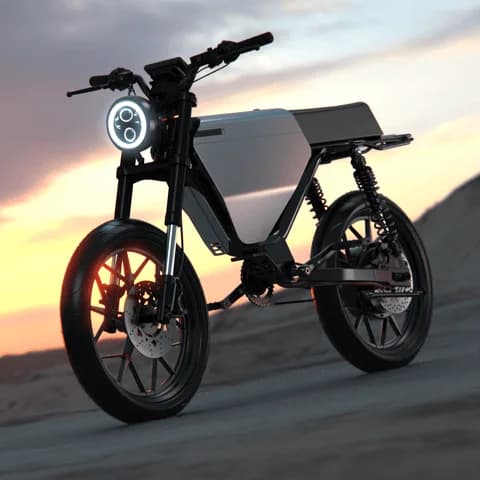
Moped-style comfort with a seat, lights, and a street kit — the most commuter-friendly bike here
Trade-off: Heavy (~155 lb) and moped-shaped — less capable in technical off-road than a true dirt bike
We may earn a commission if you buy through this link, at no extra cost to you.
Check price at Onyx Motors (official)Sur-Ron
Ultra Bee
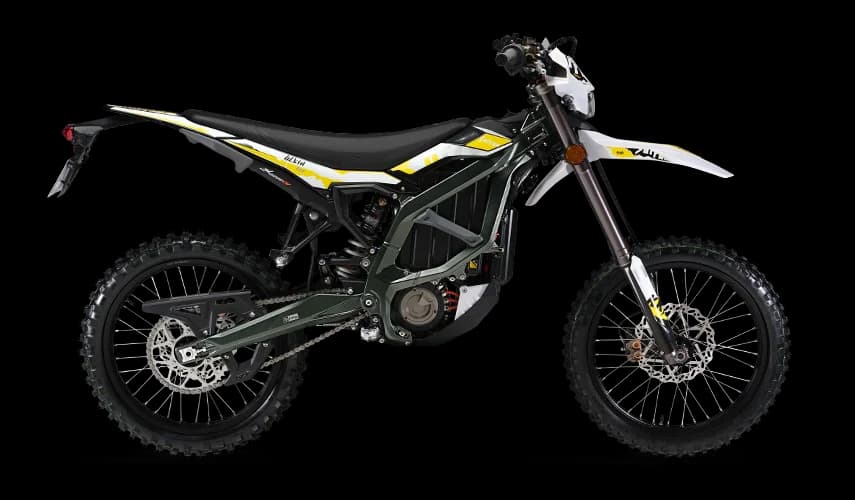
Big 4.4 kWh (74V/60Ah) pack, ~24.5 kW HP listings, and a 59 mph top end — a real step up from the Light Bee
Trade-off: Heavier (~195 lb) and more bike than a beginner needs
We may earn a commission if you buy through this link, at no extra cost to you.
Check price at Boca ScootersSur-Ron
Light Bee X
Enormous aftermarket and parts ecosystem — the most-supported e-dirt-bike platform
Trade-off: Advertised range collapses at speed — plan for real-world miles well under the claim
We may earn a commission if you buy through this link, at no extra cost to you.
Check price at ATV Wholesale OutletThe short answer
Two of the highest-scoring bikes we track, built around opposite priorities:
- Buy the Onyx RCR ($4,699, Score 94) if you want road, range, and low maintenance — a moped-style dual-sport with factory lights, a chainless hub drive, a faster top speed, a lighter and lower-seated chassis, and $1,800 in your pocket.
- Buy the Sur-Ron Ultra Bee ($6,499, Score 94) if you want trail capability and the ecosystem — more peak power, a chain mid-drive built for dirt, a bigger battery, and the deepest aftermarket and resale in the class.
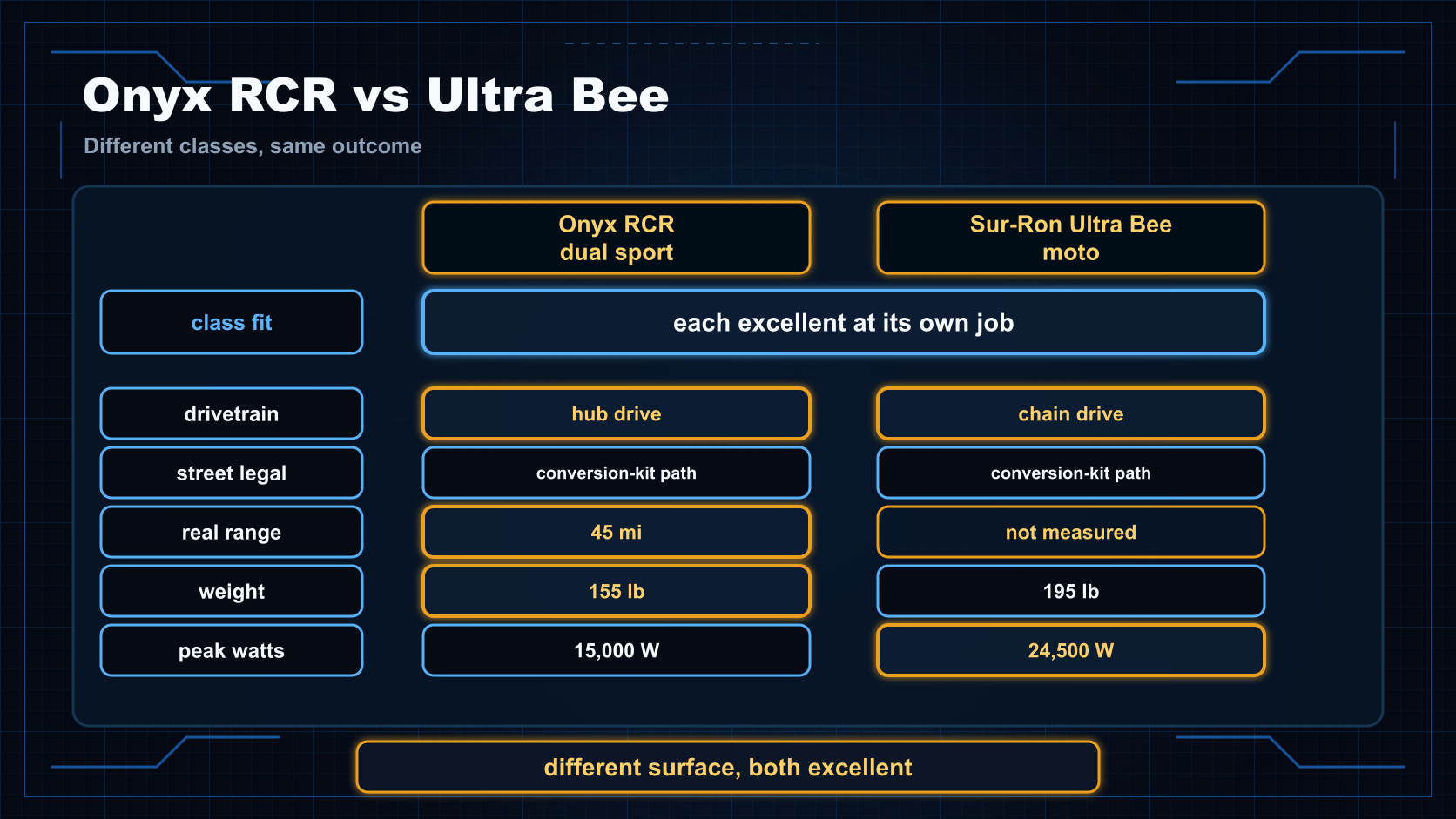
Both sit near the top of our board — 94 each, in different classes — because each is excellent at its own job. The question isn't which is "better," it's whether you're buying a road-and-range bike or a trail-and-power one.
Verified product photo
Verified product photo
Comparison table
Head-to-head spec winners
Awarded spec rows
2-2
Onyx RCR vs Sur-Ron Ultra Bee
| Spec | Onyx RCR | Sur-Ron Ultra Bee | Winner |
|---|---|---|---|
| Power | 15 kW peak | 24.5 kW peak | Sur-Ron Ultra Bee+9.5 kW |
| Top speed | 65 mph | 59 mph | Onyx RCR+6 mph |
| Battery capacity | 3.6 kWh | 4.4 kWh | Sur-Ron Ultra Bee+840 Wh |
| Real range | 45 mi | Not published | No winner awardedNeeds both published values |
| Weight | 155 lb | 195 lb | Onyx RCR40 lb lighter |
| Brakes | Dual Hydraulic | Dual Hydraulic | TieSame Dual Hydraulic |
| Suspension | Full | Full | TieSame Full |
| Warranty | 12 mo | Not published | No winner awardedNeeds both published values |
| Delivered price | $4,699 street + shipping unknown | $6,499 street + shipping unknown | No winner awardedShipping unknown |
Power
- Onyx RCR
- 15 kW peak
- Sur-Ron Ultra Bee
- 24.5 kW peak
Top speed
- Onyx RCR
- 65 mph
- Sur-Ron Ultra Bee
- 59 mph
Battery capacity
- Onyx RCR
- 3.6 kWh
- Sur-Ron Ultra Bee
- 4.4 kWh
Real range
- Onyx RCR
- 45 mi
- Sur-Ron Ultra Bee
- Not published
Weight
- Onyx RCR
- 155 lb
- Sur-Ron Ultra Bee
- 195 lb
Brakes
- Onyx RCR
- Dual Hydraulic
- Sur-Ron Ultra Bee
- Dual Hydraulic
Suspension
- Onyx RCR
- Full
- Sur-Ron Ultra Bee
- Full
Warranty
- Onyx RCR
- 12 mo
- Sur-Ron Ultra Bee
- Not published
Delivered price
- Onyx RCR
- $4,699 street + shipping unknown
- Sur-Ron Ultra Bee
- $6,499 street + shipping unknown
Score breakdown
Power
/22 pts
Range
/20 pts
Chassis
/18 pts
Value
/15 pts
Support
/12 pts
Ergonomics
/8 pts
Versatility
/5 pts
A commuter dual-sport meets a trail step-up
The Onyx RCR is the odd one out in the class, and that's the point: it isn't really a dirt bike, it's a moped-style dual-sport built to commute, cover ground, and handle light trails with almost no maintenance. The Sur-Ron Ultra Bee is the enthusiast step-up from a Light Bee — more of everything for real off-road riding, backed by the ecosystem that makes Sur-Ron worth owning. One is designed for the road and the long way home; the other for the trailhead.
The core matchup
| Onyx RCR | Sur-Ron Ultra Bee | |
|---|---|---|
| VoltRipper Score | 94 | 94 |
| Price | $4,699 | $6,499 |
| Peak power | 15 kW | 24.5 kW |
| Top speed | 65 mph | 59 mph |
| Battery | 3,600 Wh (80V) | 4,440 Wh (74V) |
| Real-world range | ~45 mi | not measured at hard pace |
| Weight | 155 lb | 195 lb |
| Seat height | 32.5 in | 35.8 in |
| Drivetrain | Chainless hub | Chain mid-drive |
| Factory lights | Yes | No |
| Support & resale | Newer, ok | Deepest in class |
Head-to-head, factor by factor
Top speed → Onyx. About 65 mph versus 59 — and here's the twist: the Onyx does it with less peak power (18 vs 24.5 kW). Its 80V hub drive is geared for a higher top end, while the Ultra Bee's mid-drive puts its power into trail torque. If you want the higher cruising speed, the Onyx has it.
Power & off-road capability → Ultra Bee. The Ultra Bee makes 24.5 kW through a chain mid-drive — the layout real dirt bikes use, with better power delivery over rough ground and endless tunability. On technical trails, jumps, and climbs, it's the far more capable machine. The Onyx's hub motor adds unsprung weight and is happier on pavement and fire roads than in the rough.
Commuting & maintenance → Onyx, decisively. Factory lights, a real seat, a chainless hub drive with almost nothing to maintain, 40 lb less weight (155 vs 195), a lower 32.5-inch seat, and one of the best real-world ranges we track (~45 mi). It's the closest thing to road-ready in the class (still a kit-and-register job — check your state's rules). For errands, commuting, and covering ground, nothing here beats it.
Battery & range → we can't call it, and you should be suspicious of anyone who does. The Ultra Bee's pack is bigger on paper (4,440 vs 3,600 Wh). The Onyx has a hard-riding figure we stand behind at ~45 mi; the Ultra Bee has no hard-pace measurement at all. We previously called this for the Onyx on the theory that its lighter, more efficient hub drive beat the bigger battery — that was a comparison between a measurement and an estimate, and we've pulled it. If range is your deciding factor, the Onyx is the one with a number behind it.
Price → Onyx. $4,699 vs $6,499 — $1,800 less, for the faster, lighter, street-ready bike. On value it makes a strong case, provided you don't need the Ultra Bee's off-road capability.
Support, aftermarket & resale → Ultra Bee, decisively. This is the whole case for the Sur-Ron: a decade-deep parts catalog, the biggest owner community, proven reliability, and the deepest used demand in electric dirt. The Onyx is newer and thinner here — you're more self-reliant for service and spares.
Score → level, 94 each — and in different classes. Read that correctly: it is not saying the two are interchangeable. The Onyx is scored as a dual-sport and the Ultra Bee as a moto, so each 94 says the bike does its own class's job excellently, not that the two were measured against each other. What the Score cannot capture either way is Sur-Ron's unmatched trail ecosystem, so for a trail-and-power rider the Ultra Bee may well be the better buy regardless of the matching number.
Which should you buy?
- Commuting, covering ground, low maintenance, and a lower price: Onyx RCR — the road-and-range dual-sport, faster on top end and the closest to street-ready. (Full review →)
- Serious trail riding, more power, and the deepest ecosystem: Sur-Ron Ultra Bee — the real off-road step-up, even though the two are level on Score. (Full review →)
- Want the proven trail benchmark for less? Cross-shop the Sur-Ron Light Bee X — see Light Bee X vs Onyx RCR and Ultra Bee vs Light Bee X.
Not sure whether you're a road rider or a trail rider at heart? Run the Find Your Ride configurator.
The honest bottom line
The Sur-Ron Ultra Bee is the better *dirt bike* — more power, a chain mid-drive built for the rough, a bigger battery, and an ecosystem nothing else matches, which keeps it near the top of our board. But the Onyx RCR is the better *road-and-range bike* — faster on top end, 40 lb lighter, lower-seated, chainless and low-maintenance, street-ready with a kit, $1,800 cheaper, and level with it on Score. Buy the Ultra Bee to ride trails and lean on the Sur-Ron network for years; buy the Onyx to commute, cover ground, and keep maintenance near zero. Be honest about which rider you are, and the choice is easy.
VoltRipper is independent — we don't sell Onyx, Sur-Ron, or any bike, and our Score is based on verified specs, not who pays us. Affiliate disclosure is included on monetized pages, and we're spec-verified/data-driven rather than hands-on until first-hand testing exists.
FAQ
Is the Onyx RCR or the Sur-Ron Ultra Bee better?
They score the same on our board — Onyx RCR 94, Ultra Bee 94 — but in different classes and for opposite jobs. The Onyx RCR is the road-and-range pick: a moped-style dual-sport with factory lights, a chainless hub drive, a faster top speed, and a lower price. The Sur-Ron Ultra Bee is the trail-and-power step-up: more peak power, a chain mid-drive built for dirt, a bigger battery, and the deepest aftermarket and resale in the class. Buy the Onyx to commute and cover ground; buy the Ultra Bee to ride serious trails and tap the Sur-Ron ecosystem.
Which is faster, the Onyx RCR or the Sur-Ron Ultra Bee?
The Onyx, surprisingly — about 65 mph versus the Ultra Bee's 59, even though it makes less peak power (18 vs 24.5 kW). Its 80V hub drive is geared for a higher top end, while the Ultra Bee's chain mid-drive is geared for trail torque and acceleration. It's a clean example that peak power doesn't equal top speed — gearing does.
Which is better for commuting or street use?
The Onyx RCR, clearly. It ships with factory lights, a comfortable seat, and a chainless hub drive that needs almost no maintenance — plus it's 40 lb lighter (155 vs 195), has a lower 32.5-inch seat, and posts one of the best real-world ranges in our catalog (~45 mi). It still needs a light/signal kit and registration to be road-legal, but it's the closest thing to road-ready. The Ultra Bee has no factory lights and a taller, heavier trail build.
Which is the better off-road and trail bike?
The Sur-Ron Ultra Bee. Its chain mid-drive delivers power more like a real dirt bike and is endlessly tunable, it makes more peak power (24.5 kW), carries a bigger battery, and rides on the deepest trail aftermarket in the class. The Onyx's hub drive and moped-style ergonomics are built for pavement and light trail, not technical dirt — it's the wrong tool for jumps and rough singletrack.
Sources
Specification sources
- Onyx RCROnyx Motors — RCR 80V 45AhChecked
- Sur-Ron Ultra BeeVoro Motors — Surron Ultra Bee HP SW 24.5kW 74V 60AhChecked
- Sur-Ron Light Bee XATV Wholesale Outlet - 2026 Sur-Ron Light Bee X (72V/35Ah, 10 kW), $4,699 from $4,999Checked