Tracked price checks
Bikes in this guide
Sur-Ron
Light Bee X
Enormous aftermarket and parts ecosystem — the most-supported e-dirt-bike platform
Trade-off: Advertised range collapses at speed — plan for real-world miles well under the claim
We may earn a commission if you buy through this link, at no extra cost to you.
Check price at ATV Wholesale OutletOnyx
RCR
Moped-style comfort with a seat, lights, and a street kit — the most commuter-friendly bike here
Trade-off: Heavy (~155 lb) and moped-shaped — less capable in technical off-road than a true dirt bike
We may earn a commission if you buy through this link, at no extra cost to you.
Check price at Onyx Motors (official)Talaria
Sting MX5 Pro
72V/2.88 kWh Samsung-cell platform is a real power and range step up from the 60V Sting and X3 family
Trade-off: Ships limited to 20 mph, so the high-speed numbers assume derestriction and local-law risk
We may earn a commission if you buy through this link, at no extra cost to you.
Check price at Luna CycleIt's one of the most common — and most consequential — points of confusion for new buyers: is a Sur-Ron (or Talaria, or Stark) an e-bike? The short answer is no, and getting this wrong can mean tickets, an uninsured crash, or a bike you legally can't ride where you planned. Here's the real difference, and why it matters.
The short answer
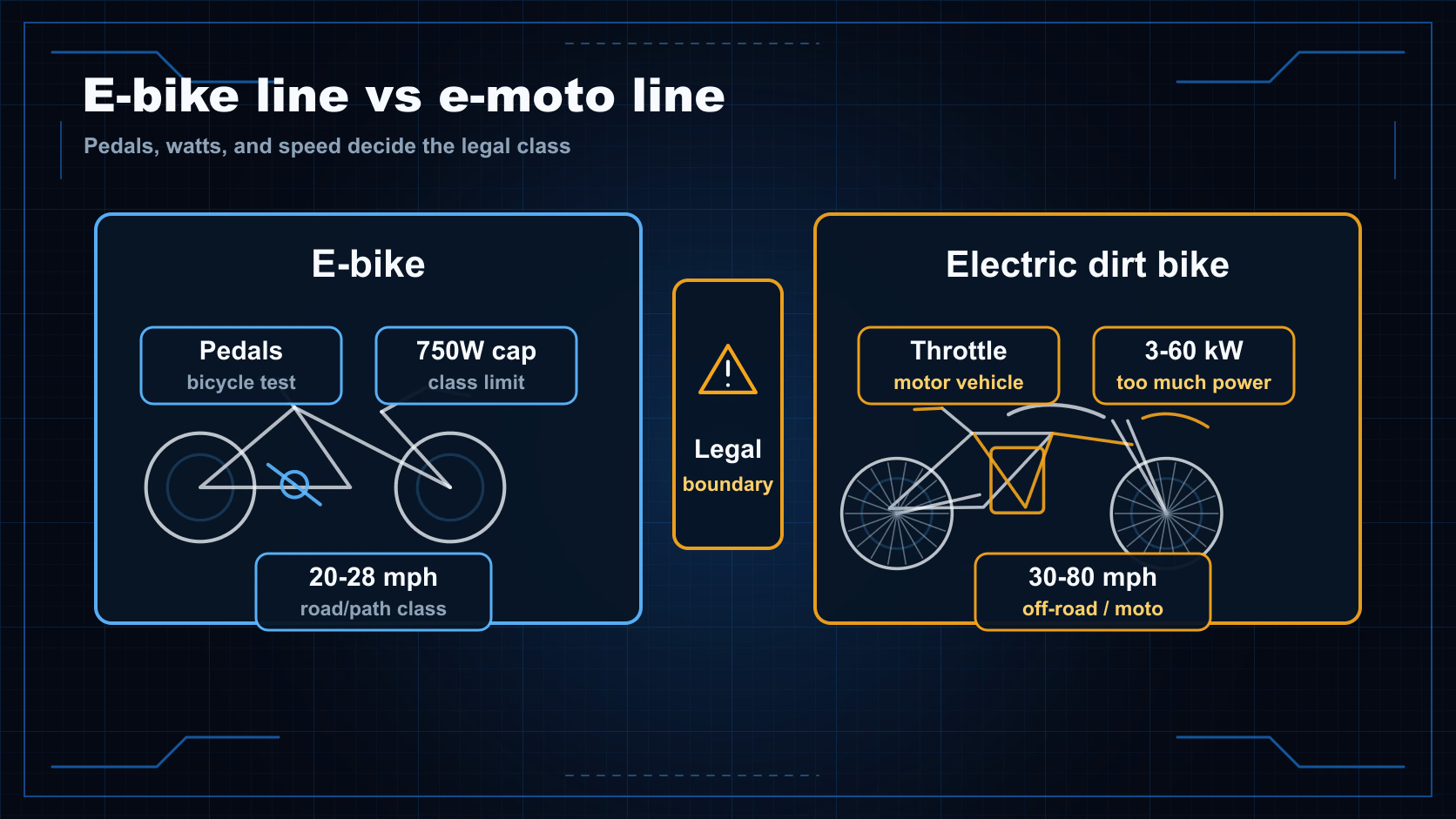
An e-bike is a bicycle — pedal-assisted, capped around 750W and 20-28 mph, legal in bike lanes with no license or registration. An electric dirt bike is a light motorcycle — throttle-only, 30-80 mph, on 3-60 kW of power. It's far too fast and powerful to be an e-bike, so the law treats it as a motor vehicle: ride it off-road on legal land, or register a street-legal model for the road. Pedals or marketing don't change that.
The core difference
| E-Bike | Electric Dirt Bike | |
|---|---|---|
| What it is | Electric bicycle | Light electric motorcycle |
| Power | ~250-750W | 3,000-60,000W (3-60 kW) |
| Top speed | 20-28 mph (class-capped) | 30-80 mph |
| Propulsion | Pedal-assist (or limited throttle) | Throttle-only |
| Legal class | Bicycle | Motorcycle / off-road vehicle |
| Bike lanes & paths | Yes (by class) | No |
| License / registration | None (most states) | Motorcycle registration for road use |
A Sur-Ron Light Bee makes about 10 kW and hits 50 mph. An e-bike tops out around 750W and 28 mph. That's not a small difference in degree — it's a difference in kind. One is a bicycle; the other is a motorcycle that happens to look like a big bicycle.
The legal line (this is the part that matters)
In the US, an e-bike generally has to meet three tests to count as a bicycle: operable pedals, a motor at or under ~750W, and a top motor-assisted speed of 20 mph (Class 1/2) or 28 mph (Class 3). Meet those and you're a bicycle — bike lanes, paths, no registration.
Electric dirt bikes fail all three by a wide margin. They're throttle-only, they make many times 750W, and they go far faster than 28 mph. So they fall out of the bicycle category entirely and into motorcycle / off-highway vehicle territory. That means:
- No bike lanes, no multi-use paths, no sidewalks — those are for bicycles.
- Off-road use on legal OHV land, private property, or tracks, or
- Motorcycle registration, plate, license, and insurance to use a street-legal-capable model (like the Onyx RCR or a converted Sur-Ron) on public roads.
Exactly what's required varies by state — see our street-legal guide for the details where you ride.
The "it has pedals" gray area
Some electric dirt bikes ship with — or offer — bolt-on pedals, and some sellers lean on "e-bike" language. Don't take the bait. Pedals don't reclassify a 40-mph, multi-kilowatt machine as a bicycle; the power and speed limits still apply, and the bike is still legally a motorcycle or off-road vehicle. Riding one in a bike lane or unregistered on the road because "it has pedals" is a great way to get a ticket, void your insurance, or worse. Enforcement looks at what the bike does, not what it's wearing.
So which one do you actually want?
- You want to commute on roads, bike lanes, and paths, license-free → an e-bike, or a genuinely street-legal light e-moto you'll register (the Onyx RCR is the closest e-dirt-bike to that role — see our commuting picks).
- You want off-road performance — trails, tracks, real dirt-bike capability → an electric dirt bike like a Sur-Ron Light Bee X or Talaria MX5 Pro. Just plan to ride it on legal off-road land or register it properly for the street.
They're built for different jobs. An e-bike is transportation; an electric dirt bike is a performance off-road machine. Buying the wrong one for your riding — or assuming a dirt bike is "just a fast e-bike" — is the mistake this guide exists to prevent.
The bottom line
A Sur-Ron is not an e-bike, and neither is any other real electric dirt bike. E-bikes are pedal-assist bicycles capped around 750W and 20-28 mph, legal in bike lanes with no paperwork. Electric dirt bikes are light motorcycles doing 30-80 mph — off-road machines that need motorcycle registration for road use, no matter what they're marketed as or whether they have pedals. Know which one you're buying, ride it where it's legal, and if road use matters, start with our street-legal guide. Not sure which fits your riding? Our Find Your Ride configurator can help.
VoltRipper is independent and reader-supported — we may earn a commission on purchases through our links, at no extra cost to you. This guide is general education, not legal advice; classification and rules vary by state and locality — always confirm your local law before riding on public roads or paths. Affiliate disclosure is included on monetized pages.
FAQ
Is a Sur-Ron an e-bike?
No. Despite e-bike-adjacent marketing and optional bolt-on pedals, a Sur-Ron is a light electric motorcycle: throttle-only, 45-60+ mph, and 10 kW-plus of power — far beyond any e-bike class limit (which cap around 750W and 20-28 mph). Legally it's an off-road motorcycle, not a bicycle. You can't ride it in bike lanes or on multi-use paths, and using it on public roads requires motorcycle registration.
What's the difference between an electric dirt bike and an e-bike?
An e-bike is a pedal-assist (or limited-throttle) bicycle capped around 750W and 20-28 mph, road-legal in bike lanes with no license or registration in most states. An electric dirt bike — Sur-Ron, Talaria, Stark — is a throttle-only light motorcycle doing 30-80 mph on 3-60 kW. It's far too fast and powerful to qualify as an e-bike, so it's legally a motor vehicle: off-road, or motorcycle-registered for the street.
Can I ride an electric dirt bike in a bike lane?
No. Electric dirt bikes aren't e-bikes — they're motorcycles or off-road vehicles, and riding one in a bike lane or on a shared-use path is illegal in virtually every jurisdiction, regardless of what the seller calls it or whether it has pedals. Ride them off-road on legal land, or register a street-legal model for the road. Check your state's rules first.
Why do some electric dirt bikes have pedals?
Usually to try to look like e-bikes and skirt registration — but adding pedals doesn't change the legal reality. A 40-mph, multi-kilowatt throttle bike exceeds every e-bike power and speed limit, so it's still classified as a motorcycle or off-road vehicle. Don't rely on bolt-on pedals for legal cover; enforcement and insurers look at the bike's actual power and speed, not its accessories.
Sources
Specification sources
- Sur-Ron Light Bee XATV Wholesale Outlet - 2026 Sur-Ron Light Bee X (72V/35Ah, 10 kW), $4,699 from $4,999Checked
- Onyx RCROnyx Motors — RCR 80V 45AhChecked
- Talaria Sting MX5 ProTalaria Canada - Sting MX5 Pro specificationsChecked