Between $200 and $500 you stop buying items and start buying systems. The boots at this price are built to be rebuilt. The chest protection is Level 2 rather than Level 1. The carrier changes not what the bike is but where it can be ridden. These are presents that get used for five years.
They are also the presents most likely to go wrong, because at this price almost everything needs either a measurement or a conversation. So: what to buy blind, and what to agree first.
Buy blind, confidently
The gift that changes where they can ride
Most people in this class own a bike and a car and no way to connect them, which quietly limits them to riding whatever is within range of home. A hitch carrier fixes that for less than a trailer and without storing one.
Check two numbers before you buy, not one. The carrier's rated capacity, and the tongue weight rating of their vehicle's hitch — which is usually the binding constraint. A 130 lb Light Bee plus a 50 lb carrier hanging two feet behind the bumper loads a hitch far harder than 180 lb sitting on it.
Serious lighting
The Rigid is the Flood pattern, which is the right single bar for a trail bike: a 50-degree spread that lights the corners. The Spot version of the same bar throws 462 metres down a straight and leaves everything either side black, which is a truck's optic, not a trail bike's. All three of these are wired lights and none of these bikes has a spare 12V circuit, so factor in a DC-DC converter and a fuse — or buy a self-contained light in a lower band.
The chain tools that outlast the bike
The only lock on our list rated for the attack these bikes actually attract. It weighs 15.25 lb, which is the point: it is a lock you leave where the bike is stored, not one you carry.
Agree the fit first
Boots
The Tech 3 at $269.95 is the value CE-rated boot most riders should own. The Tech 5 at $399.95 adds a better closure and more support. Neither is a safe blind buy: fit is model-specific, and a rider who takes a 10 in one brand may take a 9.5 or 11 in another. Ask, or make it a trip.
Chest and back, at Level 2
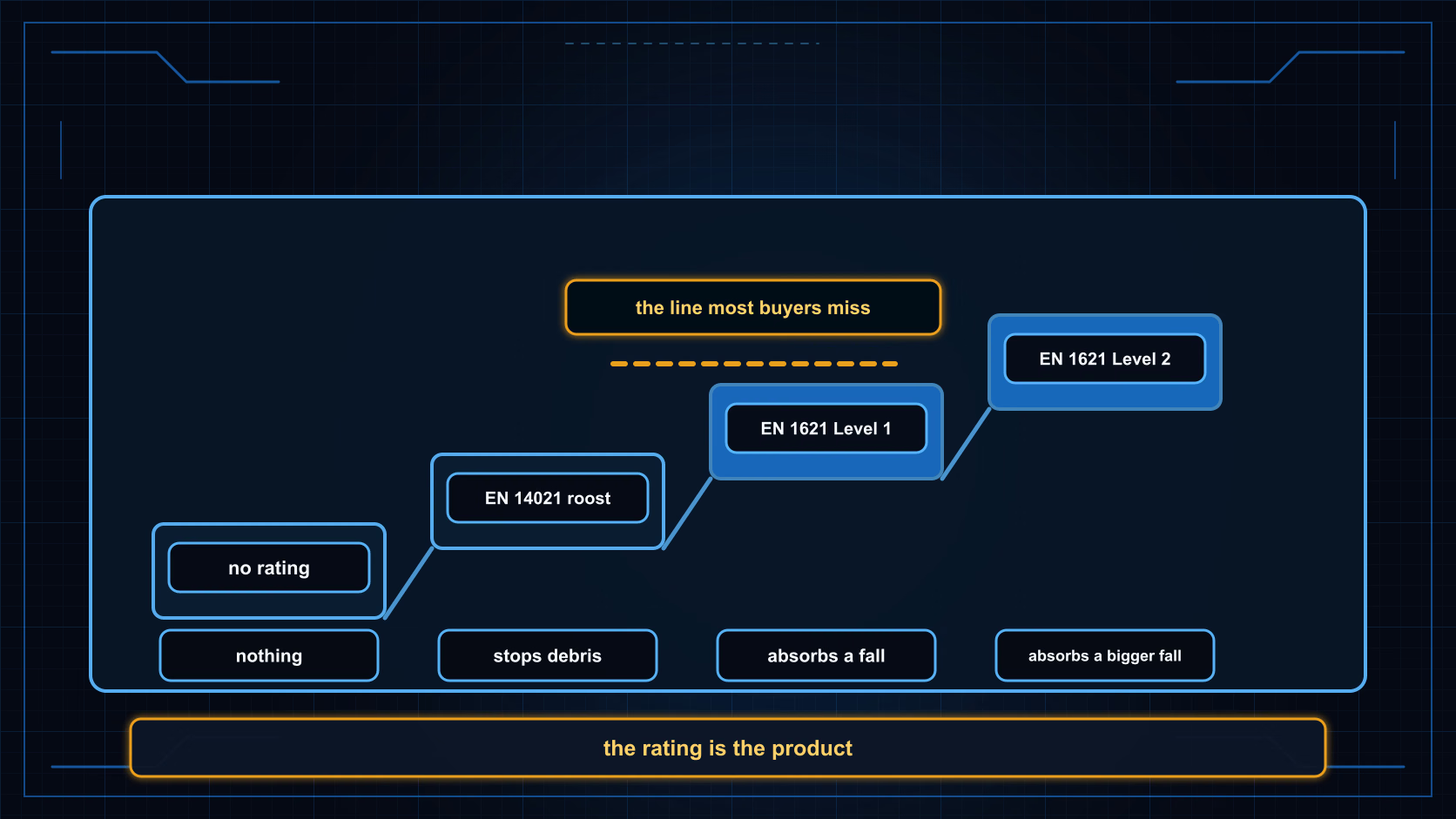
The step from the sub-$200 band is the rating. Level 2 transmits less force to the body than Level 1 in the standard test, generally by being thicker. For trail riding Level 1 is defensible; for a rider who races or rides fast in trees, this is where the money should go.
Neck braces — a conversation, not a surprise
Two honest things. There is no neck-specific efficacy standard, so a CE mark here certifies general protective-equipment compliance and is not evidence that the device prevents neck injury. And a brace has to work with the specific helmet — the shell has to clear it in a way that varies by model.
Many fast riders wear one and would not ride without it. That is a real position, not marketing. But it belongs in a conversation before it belongs in wrapping paper.
For a young rider
A certified youth helmet is the single best $229.95 you can spend on a child who rides. Measure their head circumference before ordering, and fit it snug now — a helmet bought to grow into does not protect in the year you bought it.
What is deliberately not on this list
- A whole bike. Even the cheapest real machine sits above this band, and a bike is a freight
delivery with a crate and an assembly job, not a wrapped present. See the crate problem for how people handle it.
- A fast charger or a spare battery. Voltage class, connector, and battery-management behaviour all
vary by model and revision. This is the category where guessing is a fire risk.
- Knee braces. Rigid braces are fitted devices in the $599 range and above, sized to a specific leg.
A soft knee guard is a different product at a fifth of the price, and the two get confused constantly — the difference is explained in knee guards versus knee braces.
The bottom line
At this price, buy the missing system rather than an upgrade to something they already have. A carrier if they cannot transport the bike, boots if they ride in trainers, Level 2 armour if they have outgrown Level 1, a real lock if the bike sleeps outside. And settle every fit question by asking — at $400 a guess is not a gift, it is a return.
For the band below, see gifts under $200. For the full picture by recipient, start at the 2026 gift guide.
VoltRipper is independent and spec-verified. Prices are what we verified at the retailer on the date shown and move quickly in the last quarter of the year — confirm before you buy.
FAQ
What is the best dirt bike gift between $200 and $500?
It depends on what they already own. For a rider with a helmet and no boots, the Alpinestars Tech 3 at $269.95 is the gap worth closing. For a rider who rides fast or races, the Leatt 6.5 Pro chest protector at $349 is Level 2 impact protection rather than the Level 1 sold below $200. For a rider with no way to transport the bike, a hitch carrier at $219.99 changes where they can ride at all.
Is a neck brace worth buying?
It is a personal choice and should be presented as one. No neck-specific efficacy standard exists, so a CE mark on a neck brace certifies general protective equipment compliance, not proof that it prevents neck injury. Many fast riders and most racers wear one. Fit is critical and it must work with their specific helmet, which makes it a poor surprise and a good agreed purchase.
What is the difference between Level 1 and Level 2 chest protection?
The amount of force that reaches the body in a standard test. EN 1621 Level 2 transmits less than Level 1 and generally means more material and more bulk. For trail riding Level 1 is a reasonable choice; for racing or for a rider who crashes at speed, Level 2 is the reason to spend the extra money.
Can I buy boots as a gift at this price?
Only with their exact size, and ideally their current boot's brand and size, because fit does not carry across manufacturers. At $270 to $400 a boot that does not fit is an expensive and awkward return. If in doubt, buy the carrier, the chest protection or the lights and make boots a shopping trip.