Tracked price checks
Bikes in this guide
E-Ride Pro
SS 2.0
12 kW peak and a 60 mph top speed — big power for $4,599
Trade-off: Claimed range only holds at low steady speed; expect ~35 mi ridden hard
We may earn a commission if you buy through this link, at no extra cost to you.
Check price at E-Ride Pro (official)E-Ride Pro
SS 3.0
15.8 kW peak output and 62 mph top speed put it above the SS 2.0 and Light Bee class
Trade-off: Real trail range still needs verified owner or test data; claimed range is a low-speed figure
We may earn a commission if you buy through this link, at no extra cost to you.
Check price at VoroMotorsSur-Ron
Light Bee X
Enormous aftermarket and parts ecosystem — the most-supported e-dirt-bike platform
Trade-off: Advertised range collapses at speed — plan for real-world miles well under the claim
We may earn a commission if you buy through this link, at no extra cost to you.
Check price at ATV Wholesale OutletThe short answer
These are the same bike a generation apart — and the answer has changed twice in 2026, because the price gap between them has all but disappeared:
- Buy the E-Ride Pro SS 3.0 ($4,699, Score 92) for most riders now — a 3.6 kWh pack (25% more range), ~32% more peak power (15.8 kW), reverse, and an app, for only $100 more than the older bike.
- Buy the E-Ride Pro SS 2.0 ($4,599, Score 88) if weight is what you're optimizing for — at 139 lb it's 28 lb lighter than the SS 3.0, and it's intermediate-rated rather than expert-rated. That's a real advantage for a smaller or less experienced rider, and it's now the main reason to choose it.
The twist that made this comparison interesting is now sharper than we first wrote it: these two bikes have the same top speed. Both are 60 mph on E-Ride's own figures — we previously listed the SS 3.0 at 62, which was our transcription error, not a spec change. Its gains are battery, features and Score. Not speed, at all. That mattered enormously when it cost $1,000 more. It matters much less now that it barely costs more at all.
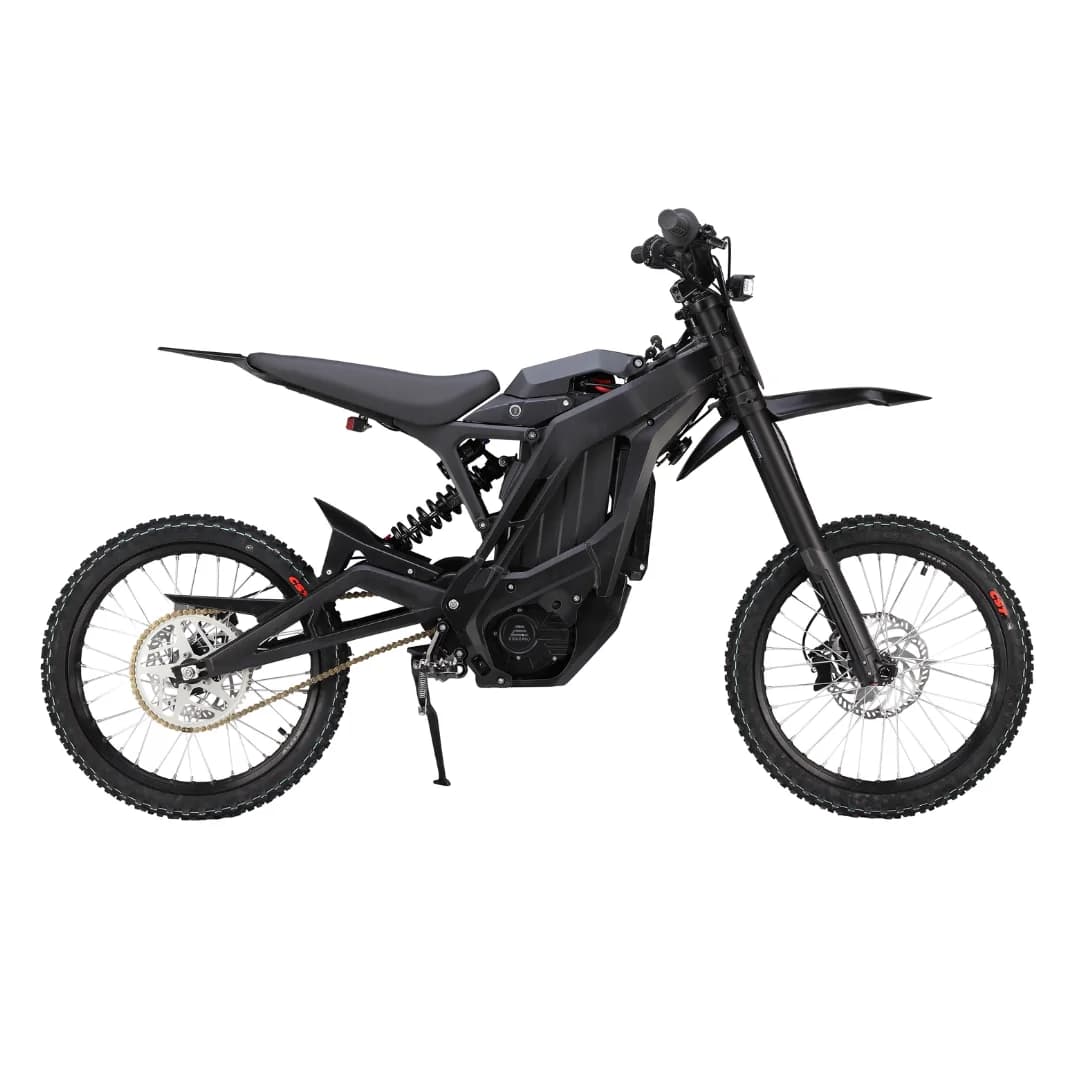
Verified product photo
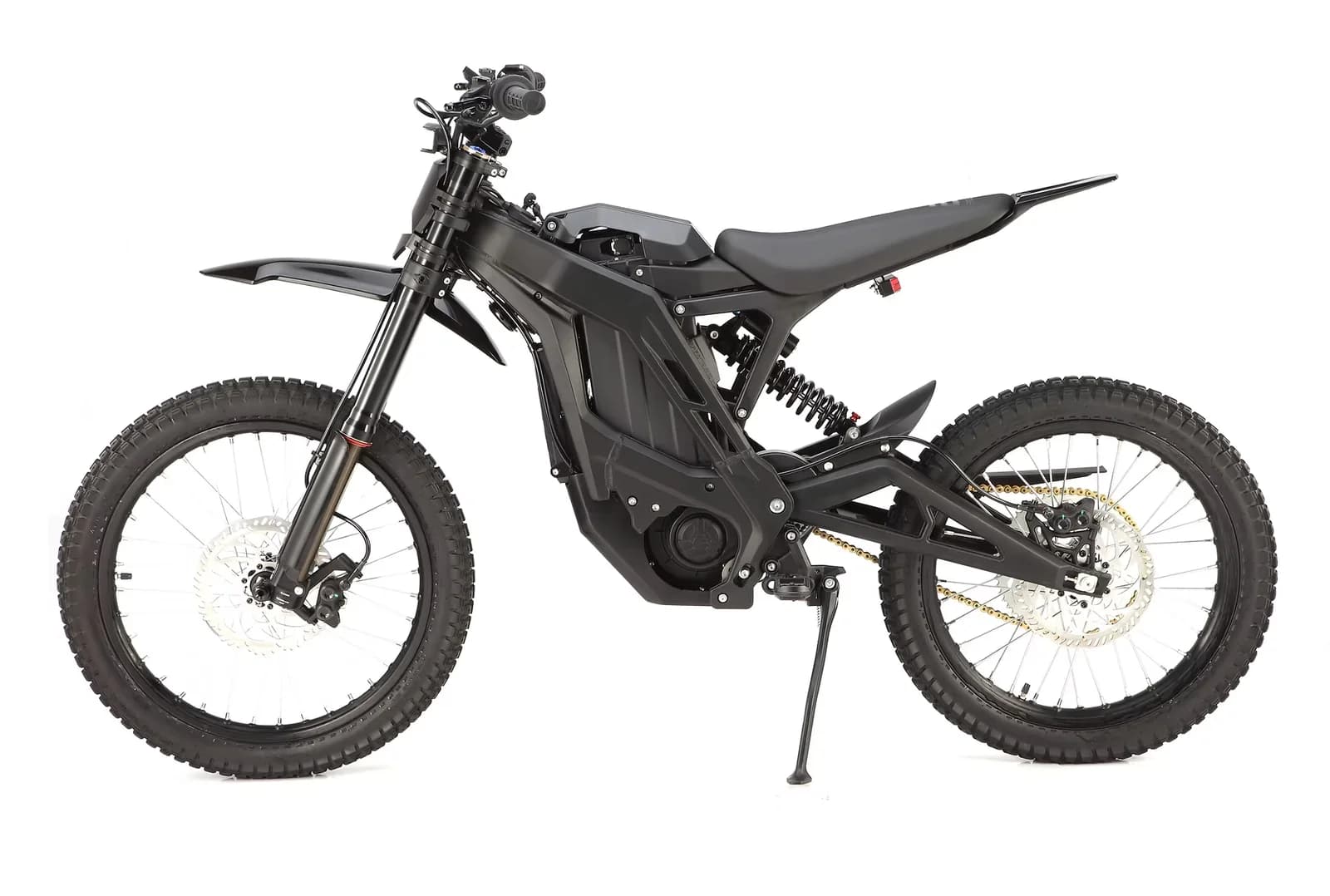
Verified product photo
Comparison table
Head-to-head spec winners
Awarded spec rows
2-2
E-Ride Pro SS 2.0 vs E-Ride Pro SS 3.0
| Spec | E-Ride Pro SS 2.0 | E-Ride Pro SS 3.0 | Winner |
|---|---|---|---|
| Power | 12 kW peak | 15.8 kW peak | E-Ride Pro SS 3.0+3.8 kW |
| Top speed | 60 mph | 60 mph | TieSame 60 mph |
| Battery capacity | 2.9 kWh | 3.6 kWh | E-Ride Pro SS 3.0+720 Wh |
| Real range | 35 mi | Not published | No winner awardedNeeds both published values |
| Weight | 139 lb | 167 lb | E-Ride Pro SS 2.028 lb lighter |
| Brakes | Dual Hydraulic | Dual Hydraulic | TieSame Dual Hydraulic |
| Suspension | Full | Full | TieSame Full |
| Warranty | Not published | Not published | No winner awardedNeeds both published values |
| Delivered price | $4,899 delivered ($4,599 + $300 shipping) | $4,999 delivered ($4,699 + $300 shipping) | E-Ride Pro SS 2.0$100 less |
Power
- E-Ride Pro SS 2.0
- 12 kW peak
- E-Ride Pro SS 3.0
- 15.8 kW peak
Top speed
- E-Ride Pro SS 2.0
- 60 mph
- E-Ride Pro SS 3.0
- 60 mph
Battery capacity
- E-Ride Pro SS 2.0
- 2.9 kWh
- E-Ride Pro SS 3.0
- 3.6 kWh
Real range
- E-Ride Pro SS 2.0
- 35 mi
- E-Ride Pro SS 3.0
- Not published
Weight
- E-Ride Pro SS 2.0
- 139 lb
- E-Ride Pro SS 3.0
- 167 lb
Brakes
- E-Ride Pro SS 2.0
- Dual Hydraulic
- E-Ride Pro SS 3.0
- Dual Hydraulic
Suspension
- E-Ride Pro SS 2.0
- Full
- E-Ride Pro SS 3.0
- Full
Warranty
- E-Ride Pro SS 2.0
- Not published
- E-Ride Pro SS 3.0
- Not published
Delivered price
- E-Ride Pro SS 2.0
- $4,899 delivered ($4,599 + $300 shipping)
- E-Ride Pro SS 3.0
- $4,999 delivered ($4,699 + $300 shipping)
Score breakdown
Power
/22 pts
Range
/20 pts
Chassis
/18 pts
Value
/15 pts
Support
/12 pts
Ergonomics
/8 pts
Versatility
/5 pts
Same platform, one generation apart
Both bikes are the same 72V, swappable-battery, full-suspension, chain-drive E-Ride Pro SS, and both do about 60 mph. The SS 3.0 is the newer, more complete generation: a bigger battery, more power headroom, reverse, and an app, tuned toward the expert end. The SS 2.0 is the previous step — lighter and cheaper, and rated for intermediate riders. So the decision isn't "fast vs slow"; it's "how much range, weight, and feature set do you want for your money?"
The core matchup
| E-Ride Pro SS 2.0 | E-Ride Pro SS 3.0 | |
|---|---|---|
| VoltRipper Score | 88 | 92 |
| Price | $4,599 (+$300 shipping) | $4,699 (+$300 shipping) |
| Peak power | 12 kW | 15.8 kW |
| Top speed | 60 mph | 60 mph |
| Battery | 2,880 Wh (72V / 40Ah) | 3,600 Wh (72V / 50Ah) |
| Range (claimed) | ~50 mi | ~62 mi |
| Weight | 139 lb | 167 lb |
| Reverse / app | No | Yes |
| Skill level | Intermediate | Expert |
| Swappable pack | Yes | Yes |
Head-to-head, factor by factor
Top speed → a genuine tie. 60 mph each, on E-Ride's own published figures. If speed is your only metric, these bikes are not close to each other — they are identical. That used to be a $1,000 argument for the SS 2.0. At today's prices it just means you shouldn't pay more for the SS 3.0 expecting a faster bike — its advantages are real, but they're not about how fast it goes.
Power → SS 3.0, modestly. The SS 3.0 makes 15.8 kW peak to the SS 2.0's 12 kW — about 32% more (not the doubling you see in some base-vs-Pro jumps). It pulls a bit harder and holds speed better under load, and it adds 520 N·m of torque, but the gap is incremental, not transformative.
Battery & range → SS 3.0, clearly. The biggest real upgrade: a 3,600 Wh pack (72V/50Ah) versus 2,880 Wh (40Ah) — 25% more energy — with a 64-mile claim to the SS 2.0's 50. Both are optimistic low-speed figures (plan well under them on the trail), but the SS 3.0's bigger battery is the clearest reason to pay more, especially since both let you carry a charged swappable spare.
Weight & fit → SS 2.0, decisively. At 139 lb the SS 2.0 is 28 lb lighter than the 167 lb SS 3.0 — a real difference in how the bike flicks, picks up, and manages at a stop. Combined with its intermediate rating (vs the SS 3.0's expert), the SS 2.0 is the more approachable and manageable of the two. For a newer or smaller rider, that lighter chassis matters more than a bigger battery.
Features → SS 3.0. The SS 3.0 adds reverse and app support on top of the shared swappable pack and full suspension — genuinely useful conveniences (reverse in particular helps on a 139–167 lb bike you have to muscle around). A clear, if minor, SS 3.0 edge.
Price → SS 2.0, but only just. Sticker is $4,599 vs $4,699 — $100 less. E-Ride states a $300 shipping charge on both, so unusually it changes nothing here: the SS 2.0 lands at $4,899 delivered and the SS 3.0 at $4,999 delivered — the same $100 gap. Compare delivered totals anyway — a shipping line often does erase a headline discount, and the only reason it does not this time is that both bikes carry the identical charge. Note also that dealer listings we checked (VORO and REVRides, both $4,999 on the SS 3.0) were out of stock, so E-Ride's own store is the realistic place to buy — at the official price, which is now the lowest of the three. The SS 2.0 does carry a published 265-lb official rider limit, useful if you fit under that ceiling.
Score → SS 3.0 (92 vs 88), and now the price agrees. The SS 3.0 earns the higher Score on power, battery, and features — it's the more complete bike, and one of the highest-scoring picks under $5k. When it cost $1,000 more, that 4-point gap didn't justify the premium for most riders. At a ~$100 delivered difference it clearly does. The SS 2.0's remaining edge is weight, not value.
Which should you buy?
- Most riders — max range, reverse, an app, more power, the higher Score: E-Ride Pro SS 3.0 — the more complete bike, and now barely more expensive delivered. (Full review → · vs the Light Bee X →)
- Lighter chassis, intermediate rating, 28 lb less to manage: E-Ride Pro SS 2.0 — the pick if weight and approachability outrank range and features. (Full review →)
- Neither, at these prices? Reasonable. The Rawrr Mantis X Pro ($3,899, Score 89) now undercuts both while out-scoring the SS 2.0 — see the under-$4,000 picks.
- Shopping the whole sub-$5k tier? The SS 3.0 goes up against two other strong value picks — the Apollo RFN Ares and the Altis Sigma — see Altis Sigma vs Apollo RFN Ares vs E-Ride Pro SS 3.0.
Not sure which fits your size, skill, and riding? Run the Find Your Ride configurator.
The honest bottom line
Most "should I buy the newer model?" decisions come down to speed. This one doesn't: the SS 3.0 is not faster at all — both are 60 mph. What the upgrade actually buys is a 25% bigger battery, reverse, an app, ~32% more power, and a higher Score — real gains, but ones you have to want, because they come with 28 more pounds and an expert rating.
For a year, the honest answer was "buy the SS 2.0 and keep the $1,000." Two 2026 price moves ended that. With the SS 2.0 at $4,599 plus $300 shipping — about $4,899 delivered against the SS 3.0's $4,999 delivered — you are no longer keeping meaningful money by buying the older, lower-scoring bike. So the recommendation flips: buy the SS 3.0 unless you specifically want the lighter, intermediate-rated chassis, which is now the SS 2.0's real and only argument.
And if the price move has soured you on both, that's a fair reaction. The Rawrr Mantis X Pro at $3,899 out-scores the SS 2.0, undercuts both, and is worth a look before you commit.
VoltRipper is independent — we don't sell E-Ride or any bike, and our Score is based on verified specs, not commissions. Affiliate disclosure is included on monetized pages, and we're spec-verified/data-driven rather than hands-on until first-hand testing exists.
FAQ
Is the E-Ride Pro SS 3.0 worth the extra money over the SS 2.0?
As of August 2026, for most riders yes — because the gap has all but gone. It closed twice and for opposite reasons: the SS 2.0 rose from $3,999 to $4,599 in July 2026, then E-Ride dropped the SS 3.0 from $4,999 to $4,699 in August. Both carry the same stated $300 shipping, so it cancels rather than tipping the comparison: $4,899 against $4,999 delivered, $100 either way you measure it. For that $100 the SS 3.0 (Score 92) adds about 32% more peak power (15.8 vs 12 kW), a 25% bigger battery (3.6 vs 2.88 kWh), reverse, and an app. The SS 2.0 (Score 88) is still 28 lb lighter (139 vs 167 lb) and intermediate-rated rather than expert-rated, so buy it if weight and approachability matter more to you than range and features.
What's the difference between the E-Ride Pro SS 2.0 and SS 3.0?
Same 72V, swappable-pack, full-suspension platform, and the same top speed (60 mph each). The SS 3.0 upgrades are a bigger battery (3.6 vs 2.88 kWh, so more range), about 32% more peak power (15.8 vs 12 kW), 520 N·m of torque, reverse, and app support. The trade-offs: it weighs 28 lb more (167 vs 139 lb) and is rated for expert rather than intermediate riders. It also used to cost $1,000 more — but after the SS 2.0 rose to $4,599 in July 2026 and the SS 3.0 fell to $4,699 in August, the difference is now $100, on the sticker and delivered alike.
Which E-Ride Pro is lighter and more beginner-friendly?
The SS 2.0 — at 139 lb it's 28 lb lighter than the 167 lb SS 3.0, and we rate it intermediate rather than expert. Combined with its nearly identical top speed, that makes the SS 2.0 the more approachable and manageable of the two — and since the two now cost about the same delivered, weight is the clearest reason left to choose it. Both are still genuine 60+ mph light e-motos, not beginner toys, so a true novice should start either in a low power mode.
Are the E-Ride Pro SS 2.0 and SS 3.0 street legal?
No — both ship as off-road machines with no factory street path, so they can't be ridden legally on roads, sidewalks, or bike paths as sold. Road use would require a conversion kit where your state allows it, plus registration and insurance. Plan on private land or OHV parks.
Sources
Specification sources
- E-Ride Pro SS 2.0E-Ride Pro - Pro SS 2.0 official product pageChecked
- E-Ride Pro SS 3.0E-Ride Pro - Pro SS 3.0 official product pageChecked
- Sur-Ron Light Bee XATV Wholesale Outlet - 2026 Sur-Ron Light Bee X (72V/35Ah, 10 kW), $4,699 from $4,999Checked