There is a specific reason hydration matters more on these bikes than on the gas equivalent, and it is not the riding.
A gas rider is reminded to stop by noise, heat, vibration and a fuel tank. An e-moto rider gets none of that. The bike is quiet, it does not tire you with vibration, and the only gauge is a battery percentage that has nothing to do with how much water you have drunk. Rides get longer and more technical before anyone notices, which is exactly the appeal and exactly the problem.
The feature that decides everything: bounce
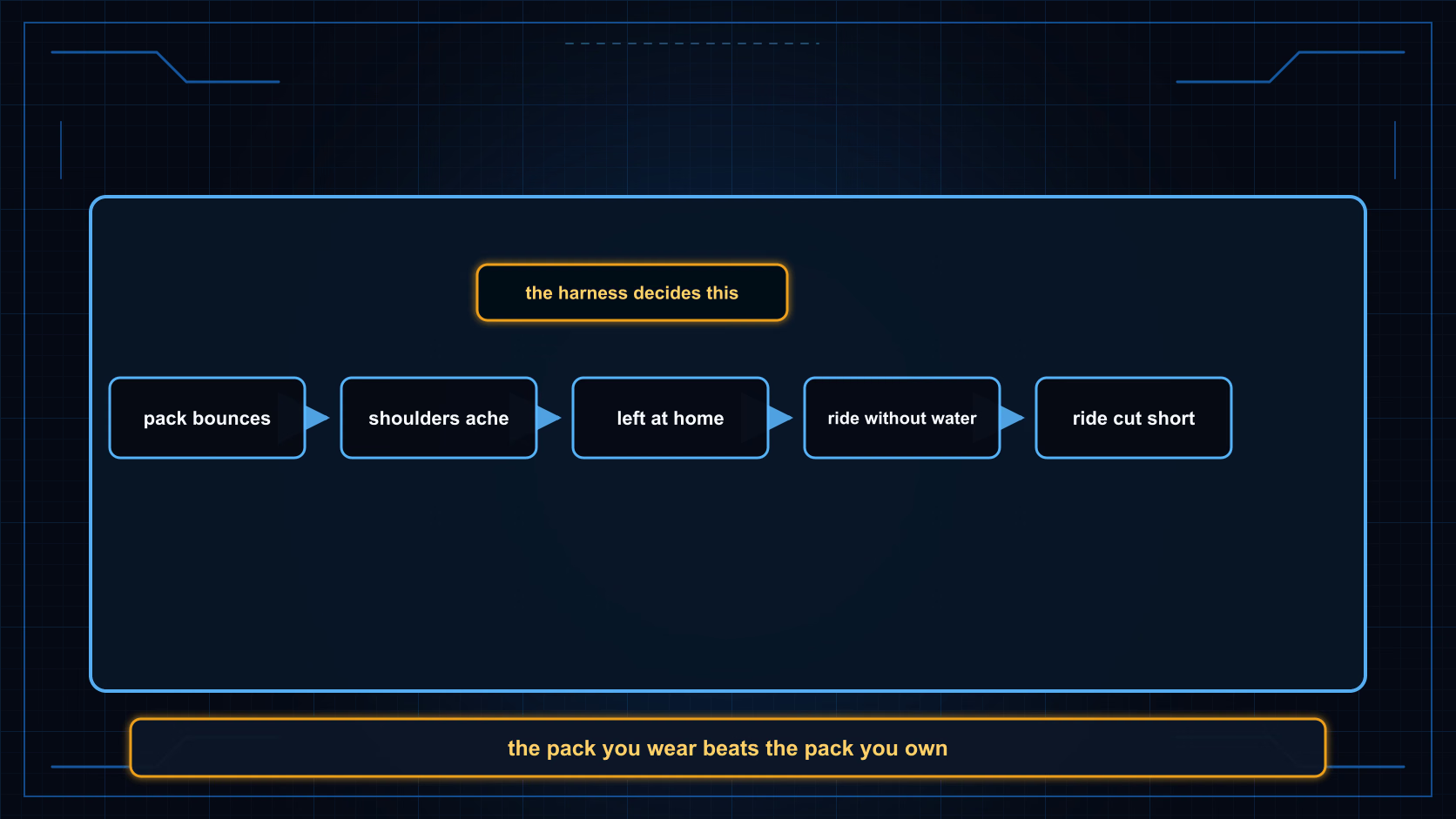
Almost every hydration pack that gets abandoned is abandoned for the same reason. It bounces, the shoulders ache, and after three rides it stays in the garage.
Harness design decides this, not capacity or brand. A two-strap bicycle-style pack lets the load swing away from the back on rough ground and then arrive a moment later, which on a dirt bike is constant. Four-point moto harnesses cross the chest and clip low, holding the reservoir against the spine so it moves with the rider.
If you only check one thing before buying, check how the harness attaches.
The two we track
USWE's four-point harness is the reason to buy this one. It is the anti-bounce design in the category, and the Adventure Fit version is cut for a longer torso and to work over armour. Three litres, adjustable across a wide range, and genuinely one-size for most adults — which also makes it a rare piece of gear you can buy for someone else.
The value option at $49.95 with a 70 oz reservoir, which is roughly two litres — enough for most trail rides. A conventional harness rather than a four-point one, so it is the right pick if the budget decides and the wrong one if you have already abandoned a bouncing pack.
What size, honestly
Two to three litres covers most trail riding. That is what both packs above carry.
Bigger is not better here. Water is heavy, it sits high on the back, and a larger reservoir mostly encourages carrying more than the ride needs. If you regularly ride beyond what a three-litre pack covers, carry a bottle in addition rather than moving to a bigger pack — the weight sits lower and you can refill from it.
What else goes in it
The pack is also the only storage most of these bikes have, which quietly makes it a tool bag.
A CO2 inflator and tyre irons are the difference between fixing a flat and walking out. Both are small enough to live permanently in a pack, which is the only way they are ever with you when needed.
For a rider who prefers a waist pack or wants a dry bag on the bike instead:
Fitting it, before you need it
Try it over the armour you actually wear. A pack sized on bare shoulders can sit wrong over a chest protector, and a back protector changes where the reservoir rides. This is the most common fit mistake and it is entirely avoidable.
Set the hose so it reaches without turning your head. On a dirt bike you drink while moving, and a hose routed under an arm rather than over the shoulder is a hose you stop using.
Rinse it after every ride and dry it open. A reservoir left sealed and damp grows things. This is why packs get replaced far more often than they wear out.
The bottom line
Buy the four-point harness if you can, because bounce is what determines whether a pack gets worn. Two to three litres is the right size for almost all trail riding. Put a CO2 inflator and tyre irons in it permanently. And fit it over your armour before you decide it fits.
For the rest of what to carry, see the tool kit.
VoltRipper is independent and spec-verified. Prices are what we verified at the retailer on the date shown — confirm before you buy.
FAQ
Do I need a hydration pack on an electric dirt bike?
More than on a gas bike of the same size, for a practical reason: quiet running and no fuel stop means rides get longer before anyone notices. A gas rider is reminded to stop by noise, vibration and a tank. An e-moto rider is reminded by the battery, which does not correlate with how much water they have drunk.
What size hydration pack for dirt bike riding?
For most trail rides, 2 to 3 litres of water is the right range, which is what both packs we track carry. A larger reservoir adds weight high on the back and encourages carrying more than you need. If you ride longer than the pack, carry a second bottle rather than a bigger pack.
Why do hydration packs bounce, and does it matter?
It matters more than any other feature, because bounce is why packs get left at home. A two-strap bicycle-style harness lets the load swing on rough ground. Four-point moto harnesses, which cross the chest and clip low, keep the reservoir against the back so it moves with the rider instead of after them.
Can I wear a hydration pack over body armour?
Yes, and you should try it that way before buying. A pack sized on bare shoulders can sit wrong over a chest protector, and a back protector changes where the reservoir rides. Fit it over the armour you actually wear.