Tracked price checks
Bikes in this guide
Sur-Ron
Ultra Bee
Big 4.4 kWh (74V/60Ah) pack, ~24.5 kW HP listings, and a 59 mph top end — a real step up from the Light Bee
Trade-off: Heavier (~195 lb) and more bike than a beginner needs
We may earn a commission if you buy through this link, at no extra cost to you.
Check price at Boca ScootersE-Ride Pro
SS 3.0
15.8 kW peak output and 62 mph top speed put it above the SS 2.0 and Light Bee class
Trade-off: Real trail range still needs verified owner or test data; claimed range is a low-speed figure
We may earn a commission if you buy through this link, at no extra cost to you.
Check price at VoroMotorsSur-Ron
Light Bee X
Enormous aftermarket and parts ecosystem — the most-supported e-dirt-bike platform
Trade-off: Advertised range collapses at speed — plan for real-world miles well under the claim
We may earn a commission if you buy through this link, at no extra cost to you.
Check price at ATV Wholesale OutletThe short answer
This is a step-up-versus-value question, and the benchmark holds it — the Ultra Bee takes the Score by two points (94 to 92), and its ecosystem is exactly what a Score can't fully capture:
- Buy the Sur-Ron Ultra Bee ($6,499, Score 94) if you want the class benchmark — more than 50% more power, a bigger battery, a street-legal kit path, intermediate-friendly manners, and the deepest ecosystem in electric dirt.
- Buy the E-Ride Pro SS 3.0 ($4,699, Score 92) if you want the smart value — $1,800 less, 28 lb lighter, a higher top speed, and features the Ultra Bee doesn't have: a swappable battery and an app.
The Ultra Bee takes the Score on power and ecosystem; the SS3 answers on price, weight and features. Neither wins on the other's ground. Both are genuinely good — this is about whether you're buying the number or the ecosystem.
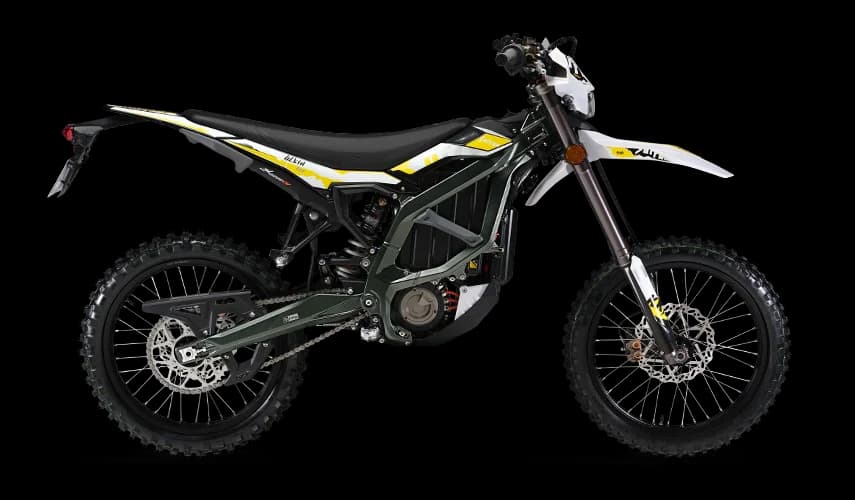
Verified product photo
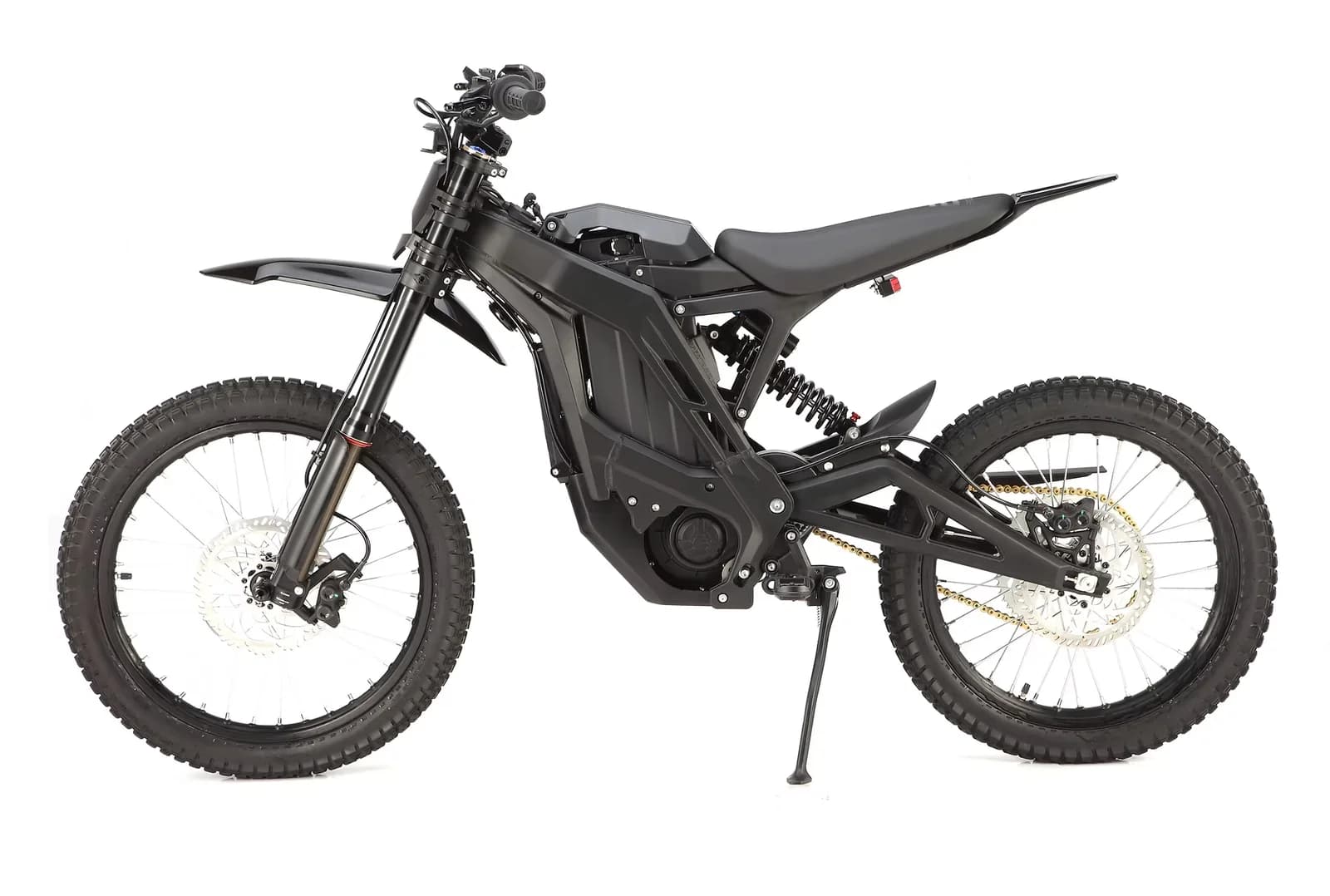
Verified product photo
Comparison table
Head-to-head spec winners
Awarded spec rows
2-2
Sur-Ron Ultra Bee vs E-Ride Pro SS 3.0
| Spec | Sur-Ron Ultra Bee | E-Ride Pro SS 3.0 | Winner |
|---|---|---|---|
| Power | 24.5 kW peak | 15.8 kW peak | Sur-Ron Ultra Bee+8.7 kW |
| Top speed | 59 mph | 60 mph | E-Ride Pro SS 3.0+1 mph |
| Battery capacity | 4.4 kWh | 3.6 kWh | Sur-Ron Ultra Bee+840 Wh |
| Real range | Not published | Not published | No winner awardedNeeds both published values |
| Weight | 195 lb | 167 lb | E-Ride Pro SS 3.028 lb lighter |
| Brakes | Dual Hydraulic | Dual Hydraulic | TieSame Dual Hydraulic |
| Suspension | Full | Full | TieSame Full |
| Warranty | Not published | Not published | No winner awardedNeeds both published values |
| Delivered price | $6,499 street + shipping unknown | $4,999 delivered ($4,699 + $300 shipping) | No winner awardedShipping unknown |
Power
- Sur-Ron Ultra Bee
- 24.5 kW peak
- E-Ride Pro SS 3.0
- 15.8 kW peak
Top speed
- Sur-Ron Ultra Bee
- 59 mph
- E-Ride Pro SS 3.0
- 60 mph
Battery capacity
- Sur-Ron Ultra Bee
- 4.4 kWh
- E-Ride Pro SS 3.0
- 3.6 kWh
Real range
- Sur-Ron Ultra Bee
- Not published
- E-Ride Pro SS 3.0
- Not published
Weight
- Sur-Ron Ultra Bee
- 195 lb
- E-Ride Pro SS 3.0
- 167 lb
Brakes
- Sur-Ron Ultra Bee
- Dual Hydraulic
- E-Ride Pro SS 3.0
- Dual Hydraulic
Suspension
- Sur-Ron Ultra Bee
- Full
- E-Ride Pro SS 3.0
- Full
Warranty
- Sur-Ron Ultra Bee
- Not published
- E-Ride Pro SS 3.0
- Not published
Delivered price
- Sur-Ron Ultra Bee
- $6,499 street + shipping unknown
- E-Ride Pro SS 3.0
- $4,999 delivered ($4,699 + $300 shipping)
Score breakdown
Power
/22 pts
Range
/20 pts
Chassis
/18 pts
Value
/15 pts
Support
/12 pts
Ergonomics
/8 pts
Versatility
/5 pts
Benchmark vs value challenger
The Ultra Bee is the bike everything else in the ~$5–6k step-up class is measured against, on the strength of a strong powertrain plus the things a spec sheet doesn't show — Sur-Ron's aftermarket depth, dealer network, and resale. The SS 3.0 is the value challenger that has drawn level: it undercuts the Ultra Bee by $1,800, matches it on the fundamentals (72V-class, 19-inch wheels, full suspension), beats it on a couple of features, and finishes two points back on our Score, 92 to 94. The question isn't which is "better" on paper — it's whether the Ultra Bee's advantages justify the premium for you.
The core matchup
| Sur-Ron Ultra Bee | E-Ride Pro SS 3.0 | |
|---|---|---|
| VoltRipper Score | 94 | 92 |
| Price | $6,499 | $4,699 |
| Peak power | 24.5 kW | 15.8 kW |
| Battery | 4,440 Wh (60Ah) | 3,600 Wh (50Ah) |
| Top speed | 59 mph | 60 mph |
| Weight | 195 lb | 167 lb |
| Swappable battery | No | Yes |
| App | No | Yes |
| Street path | Kit | No |
| Skill level | Intermediate | Expert |
| Ecosystem | Deepest in class | Newer, thinner |
Head-to-head, factor by factor
Power & battery → Ultra Bee. The Ultra Bee makes 24.5 kW peak to the SS3's 15.8 kW — more than 50% more — and carries a 4,440 Wh (60Ah) pack to the SS3's 3,600 Wh (50Ah), about 23% bigger. It's the stronger, longer-legged machine, with more grunt and more range headroom for hard riding.
Top speed → level. The SS3 claims 60 mph to the Ultra Bee's 59 — a single mile per hour, which is inside the noise of how either figure was measured. We previously called this for the SS3 on a 62 mph figure that was our own transcription error. Treat top speed as a wash and decide on power delivery, support and price.
Weight → SS3, meaningfully. The SS3 is 167 lb to the Ultra Bee's 195 lb — 28 lb lighter. That's a real difference in flickability, picking the bike up, and loading it. The Ultra Bee's weight buys its bigger battery and beefier build, but the SS3 is the more manageable bike at a standstill.
Features → SS3. In a genuine reversal, the cheaper bike out-features the benchmark: the SS3's battery is swappable and it has an app; the Ultra Bee's battery is fixed and it has no app. If a removable pack (carry a spare, charge indoors) or connectivity matters to you, the SS3 wins this outright.
Approachability → Ultra Bee. Another reversal: we rate the Ultra Bee intermediate and the SS3 expert. The Ultra Bee's refined, well-sorted power delivery makes its extra output easier to manage than the SS3's more demanding tune. (Seat height runs the other way — the SS3's 32.7-inch seat is lower than the Ultra Bee's 35.8 inches — so shorter riders should sit on both.) Net: the Ultra Bee is the friendlier bike to ride, the SS3 the easier to reach the ground on.
Street path → Ultra Bee. The Ultra Bee is kit-legal — a documented conversion path exists where your state allows. The SS3 is off-road only as sold. Neither is turnkey street-legal, but the Ultra Bee is the more realistic road candidate. (Check your state's rules first.)
Ecosystem & support → Ultra Bee, decisively. This is the Ultra Bee's moat, and the main thing keeping it two points ahead of the SS3. Sur-Ron has the deepest aftermarket, the widest dealer network, and the deepest used demand in electric dirt; E-Ride Pro is a newer, smaller brand with thinner parts availability and support. Over years of ownership, upgrades, and resale, that gap compounds — which is exactly why the Score's verdict isn't the whole story here.
Price → SS3. $4,699 vs $6,499 — $1,800 less. That's a real chunk of budget the SS3 leaves for gear, spares, or simply staying in your price range.
Score → Ultra Bee (94 vs 92). Read the two points correctly: the SS3's value, lighter weight, higher top speed, swappable battery and app get it very close, but they do not quite offset the Ultra Bee's power, street path, approachability and ecosystem in the balanced Score. Two points is narrow enough that price should decide it for a lot of riders — and 92 is an excellent result for a bike costing $1,800 less.
Which should you buy?
- You want the class benchmark, the ecosystem, more power, and a street-kit path — and the budget is there: Sur-Ron Ultra Bee. (Full review → · vs the Light Bee X →)
- You want most of the capability plus a swappable battery and an app, 28 lb lighter, for $1,800 less: E-Ride Pro SS 3.0. (Full review → · vs the Talaria MX5 Pro →)
- On a tighter budget? The Sur-Ron Light Bee X delivers the Sur-Ron ecosystem for less than either.
Not sure how much bike you actually need? Run the Find Your Ride configurator.
The honest bottom line
The Sur-Ron Ultra Bee is still worth the premium for a lot of riders — the class benchmark, with more than 50% more power, a bigger battery, a street-kit path, intermediate-friendly manners, and an ecosystem no value brand can match yet. It earns its 94, and it takes the Score. But the E-Ride Pro SS 3.0 lands two points back at 92 for $1,800 less — lighter, slightly faster, and it actually out-features the Ultra Bee with a swappable battery and an app. Buy the Ultra Bee if you want the most power and plan to keep and support it for years; buy the SS3 if you want a genuinely strong, feature-rich machine and $1,800 back. The benchmark wins the number; the challenger wins the receipt — and which of those you are buying is the whole decision.
VoltRipper is independent — we don't sell Sur-Ron, E-Ride Pro, or any bike, and our Score is based on verified specs, not commissions. Affiliate disclosure is included on monetized pages, and we're spec-verified/data-driven rather than hands-on until first-hand testing exists.
FAQ
Sur-Ron Ultra Bee or E-Ride Pro SS 3.0 — which should you buy?
It's genuinely close, but the Sur-Ron Ultra Bee ($6,499, Score 94) takes it from the E-Ride Pro SS 3.0 ($4,699, Score 92). The SS3 counters the Sur-Ron with $1,800 in savings, 28 lb less weight, a slightly higher top speed, and features the Ultra Bee lacks — a swappable battery and an app. The Ultra Bee answers with more than 50% more peak power (24.5 vs 15.8 kW), a bigger battery, a street-legal kit path, intermediate-friendly manners, and the deepest aftermarket, dealer, and resale ecosystem in electric dirt — the things a Score can't fully capture. Buy the SS3 for value and features; buy the Ultra Bee for power and the ecosystem.
Is the Sur-Ron Ultra Bee worth $1,800 more than the E-Ride Pro SS 3.0?
It depends what you weight. On our Score the Ultra Bee comes out ahead, 94 to 92 — so if you go purely by the number, yes. And the rest of its case is real too: more than 50% more power, a bigger battery, a documented street-kit path, an easier-to-ride intermediate tune, and Sur-Ron's unmatched parts, dealer, and resale network. That last point matters most over years of ownership and is exactly what the Score can't fully capture. If you want the most power and the deepest ecosystem, the premium can be worth it; if the $1,800 is better spent elsewhere and you want a swappable battery and app, the SS3 delivers most of the experience for $1,800 less, two Score points behind.
Which is more powerful and has the bigger battery, the Ultra Bee or the SS3?
The Sur-Ron Ultra Bee on both counts: 24.5 kW peak to the SS3's 15.8 kW — more than 50% more — and a 4,440 Wh (60Ah) battery to the SS3's 3,600 Wh (50Ah), about 23% bigger. Oddly, the SS3 still edges the Ultra Bee on claimed top speed (62 vs 59 mph), likely a gearing choice, but the Ultra Bee is the more powerful machine with more range headroom.
Does the E-Ride Pro SS 3.0 have any real advantages over the Ultra Bee?
Yes, several. It's $1,800 cheaper, 28 lb lighter (167 vs 195 lb), slightly faster on paper (62 vs 59 mph), and it actually out-features the pricier Ultra Bee in two ways: its battery is swappable (the Ultra Bee's is not) and it has an app (the Ultra Bee doesn't). What it can't match is the Ultra Bee's power, street-kit path, intermediate-friendly delivery, and Sur-Ron's ecosystem. Even so, on our latest Score those advantages still leave it two points short of the Ultra Bee (92 to 94) — and a Score can't fully price in the Sur-Ron ecosystem either.
Sources
Specification sources
- Sur-Ron Ultra BeeVoro Motors — Surron Ultra Bee HP SW 24.5kW 74V 60AhChecked
- E-Ride Pro SS 3.0E-Ride Pro - Pro SS 3.0 official product pageChecked
- Sur-Ron Light Bee XATV Wholesale Outlet - 2026 Sur-Ron Light Bee X (72V/35Ah, 10 kW), $4,699 from $4,999Checked