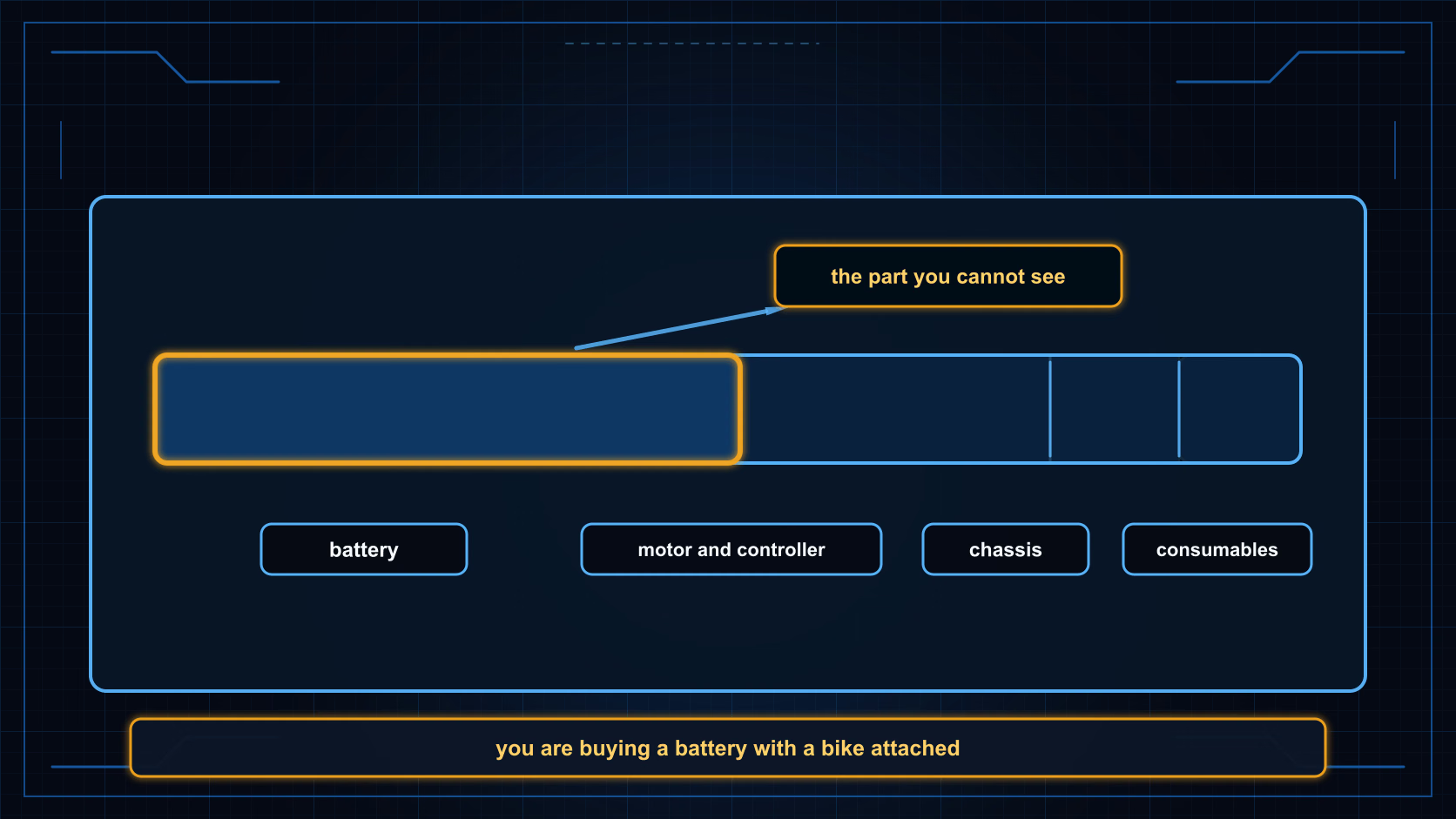
Buying a used e-moto is mostly buying a used battery. The pack is the largest single component cost by a wide margin, it is the one part you cannot assess by looking at it, and on the popular platforms a replacement runs roughly $1,600 to $2,000 — which on a $2,500 bike is most of the purchase price again.
Everything below is ordered accordingly.
First: the battery
There is no reliable consumer state-of-health readout on most bikes in this class, so you are reading behaviour rather than a number.
Ask how old the pack is, not how old the bike is. Packs get replaced; bikes get resold. A three-year-old bike with a one-year-old pack is a better buy than the reverse, and the seller should be able to say which they have.
Have it fully charged before you arrive — and be suspicious if the seller cannot manage that. A seller who meets you with a half-charged bike may simply be disorganised, or may be hiding how quickly it falls.
Watch the first two minutes of riding. A healthy pack loses charge roughly in proportion to use. A tired one drops several bars almost immediately as the voltage sags under the first real load, then appears to stabilise.
Then ride it hard, briefly. Full throttle from low speed is what exposes a weak pack: if the bike cuts power, stutters, or the display drops sharply while still showing charge remaining, the pack cannot deliver current even if it holds voltage at rest. That is a failing pack regardless of how it looks at idle.
Ask whether it has ever been stored flat or left on charge for months. Both age a lithium pack faster than mileage does.
Look at the pack itself if you can. Swelling, corrosion at the connectors, heat discolouration or any evidence of a repair are all reasons to walk away rather than negotiate — this is a fire-risk component, not a wear item.
Second: which bike is this, actually
This class has a specific and expensive trap. Makers bump power and battery on visually unchanged bikes while keeping the model name, and old stock keeps selling alongside the new version.
A previous-generation bike and a current one can look identical in photographs, differ substantially in voltage and power, and be advertised under exactly the same name.
Confirm the model year and the pack voltage against the manufacturer's current specification page, not against the seller's description. If the seller does not know the year, treat the bike as the older generation and price it that way.
Third: the things you can see
Frame and welds — look at the head tube, the swingarm pivot and around the motor mounts for cracks or paint lifting at a weld. These bikes get jumped and landed by riders learning to jump and land.
Wheels and bearings — spin each wheel, listen, and rock it side to side at the rim. Play means bearings, which are cheap to fix and a useful negotiating point.
Suspension — look for oil weeping down the fork legs. Frequently that is grit under the seal rather than a failed seal, and a $7.95 tool fixes it, so it is not a reason to walk. Bouncing the front end should feel damped rather than springy.
Brakes — check pad thickness and lever feel. Spongy usually means air or old fluid, both cheap.
Chain and sprockets — a chain that lifts off the rear sprocket at the back, or sprocket teeth hooked into a wave shape, means the whole drivetrain is due. Budget for the set, not the chain.
Controller and wiring — look for tape repairs, added connectors, or a controller that is not the original. Modified controllers are common on these bikes and they are the fastest way to a warranty refusal and a shortened motor life.
Fourth: the paperwork and the story
Ask what has been replaced and when. A rider who has changed the chain, the pads and a set of bearings is a rider who maintained the bike.
Ask whether it has ever been derestricted, and treat a yes as neutral rather than damning — most of these bikes are, and it matters mainly because it tells you how it has been ridden.
Check where they bought it. A bike bought from an unauthorized storefront may be genuine and may still have no manufacturer warranty to transfer, which affects what you are buying. Our dealer verification guide covers how to tell.
What to bring
Not to service it on the spot, but because a seller who is relaxed about you actually checking things is telling you something, and a seller who is not is telling you something else.
The numbers that should shape the price
A replacement pack on the popular full-size platforms runs roughly $1,600 to $2,000. If the battery is questionable, that number is the negotiation — not a percentage off the asking price.
A full drivetrain — chain and both sprockets — is a few hundred dollars. A set of pads and a fluid change is under $50 in parts.
Everything except the battery is affordable. That is why the pack gets four checks above and the chassis gets one line.
The bottom line
Charge it fully, ride it hard for two minutes, and watch what the display does under load. Confirm the model year against the manufacturer rather than the advert. Everything else on a bike this simple is cheap to fix, which means the battery and the generation are the whole purchase.
If you are looking at a bike whose maker has stopped selling it, the discontinued buying guide has the framework for whether the closeout is worth it.
VoltRipper is independent and spec-verified — we do not sell bikes and we have not inspected any individual used machine. Treat this as a checklist rather than a substitute for a mechanic.
FAQ
What should I check when buying a used electric dirt bike?
The battery first, because it is most of the value and the only major component you cannot inspect visually. Ask for the age of the pack, charge it fully in front of you, ride it until the display drops meaningfully, and watch whether the voltage sags under throttle. Then check the generation, the frame and the service history.
How do I know if the battery is still good?
There is no consumer test that gives a state-of-health percentage on most of these bikes, so you are looking for behaviour rather than a number. A healthy pack holds charge overnight, does not drop several bars in the first minute of riding, and does not cut power under full throttle when the display still shows charge remaining. Any of those is a warning.
What does a replacement battery cost?
For the popular full-size platforms, between roughly $1,600 and $2,000 for the packs we track. On a used bike selling for $2,500 that is most of the purchase price again, which is why the pack is the whole negotiation rather than a detail.
What is the generation trap on used electric dirt bikes?
Makers in this class bump power and battery on visually unchanged bikes while keeping the model name. A 2021 Light Bee and a current one look nearly identical and are not the same machine. Always confirm the model year and the pack voltage against the manufacturer's current specification rather than trusting the name in the advert.