Search almost any brand in this class and the first page of results will include storefronts describing themselves as the official US site for that brand. Some of them are. Several are not, and there is nothing in the search result that tells you which is which.
This is a bigger problem here than in most categories for three reasons. The brands are young and their own US web presence is often thin. The bikes cost $3,000 to $6,000, paid up front, frequently by transfer. And a domain containing a brand name plus "usa" or "official" costs about ten dollars and is available to anyone.
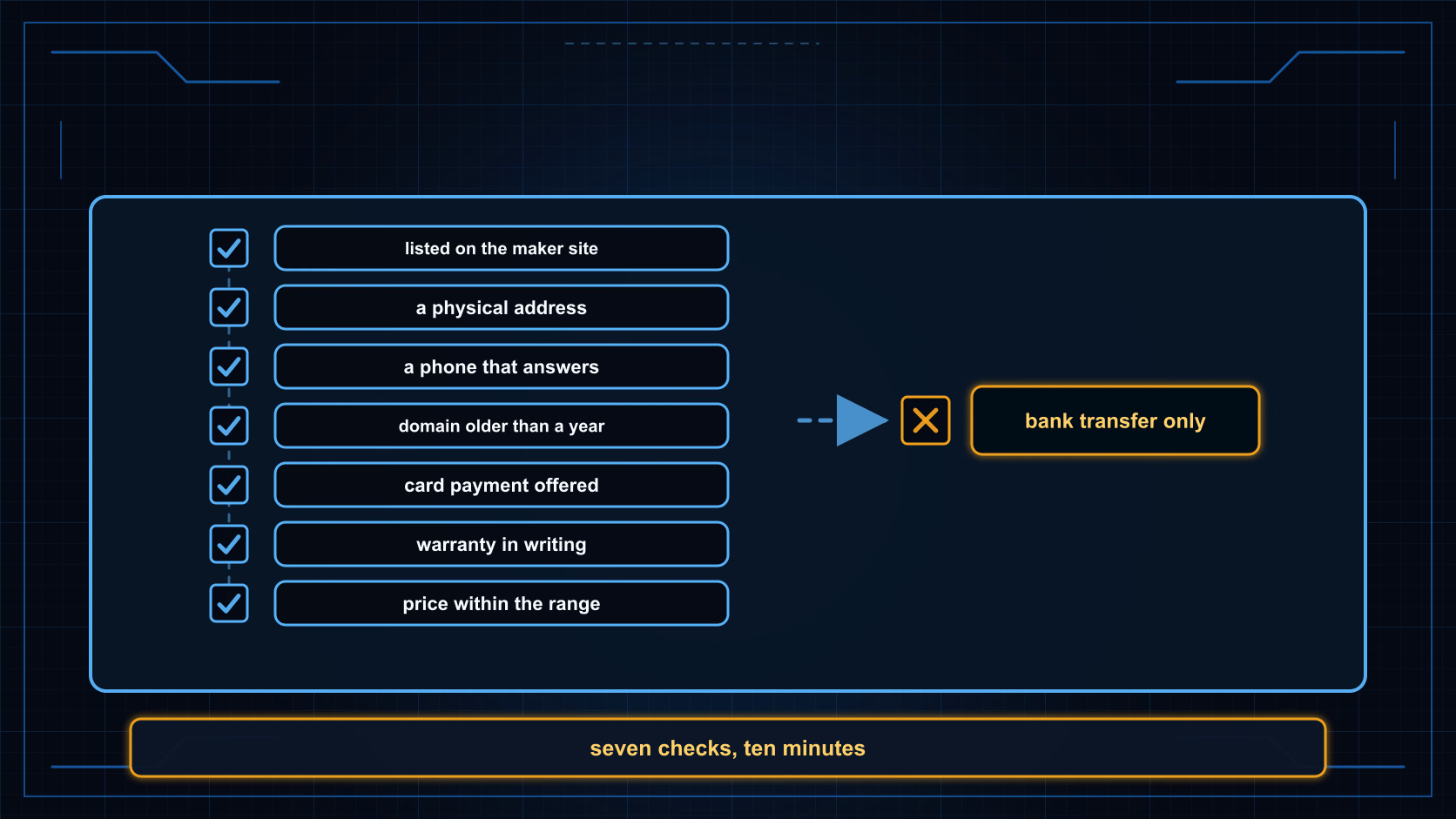
Here are seven checks. Together they take about ten minutes and they settle it.
1. Start at the manufacturer, not at the search results
Every serious brand in this class publishes a dealer list, a store locator or an official shop. Go there first and work outwards. If a seller is not on the manufacturer's own list, it is not an authorized dealer, whatever its domain says.
This single check resolves most cases, and it is the one people skip because the search result looked official enough.
Where to start: Sur-Ron US, Segway's own store, and the equivalent page for whichever brand you are buying. If you cannot find a dealer list at all, that itself tells you the brand's US channel is informal — which is worth knowing before you pay.
2. A physical address, and one that exists
A real dealer has a building. Look for a street address in the footer or on a contact page, then put it into a map. A unit in an industrial estate is fine and normal. A residential address, a mail-forwarding suite, or no address at all is not.
3. A phone number that a human answers
Call it before you buy. This is the fastest test in the list and almost nobody does it. Ask something that requires knowledge — which generation of the bike they are shipping, whether the pack is the 60 V or 72 V version, what the warranty covers. A dealer will answer immediately; a drop-shipper will not.
4. How old is the domain?
A brand-new domain selling a $5,000 vehicle is worth pausing over. Public WHOIS records give you a creation date in seconds. Hidden registration details on a commercial storefront are a legitimate signal to weigh — legitimate businesses generally do not conceal who they are.
Age is not proof of anything on its own. A domain registered three months ago, with no address, taking bank transfer, is a pattern.
5. How can you pay?
Card payment gives you a chargeback route. Bank transfer does not. A seller that only accepts transfers, or that offers a discount for using one, is asking you to give up the protection that makes online buying safe.
Treat "bank transfer only" as close to disqualifying on a purchase this size, whatever else checks out.
6. Is the warranty in writing, and whose is it?
Ask directly: is the manufacturer warranty valid on this bike, and who administers it?
Most brands in this class honour warranty only through authorized channels. A grey-market bike may be entirely genuine and still have no warranty at all, which is a real cost even when nothing is wrong with the machine. Some sellers offer their own in-house warranty instead — that can be fine, and it is a different product from a manufacturer warranty. Get the answer in writing before paying.
7. Does the listing match the manufacturer's own specification?
This is where the category's specific trap lives.
Makers in this class bump power and battery on visually unchanged bikes while old stock sells alongside under the same name. A listing quoting last generation's voltage, or the previous top speed, is either selling old stock as current or has copied its copy from somewhere else. Both are reasons to ask.
Check the listing's headline figures against the manufacturer's own current model page. If they disagree, ask which one you are being sold, and get the model year in writing.
Two patterns worth naming
Pre-orders for bikes that never shipped. Storefronts in this class take deposits on announced models that were later cancelled or never released. Before paying a deposit, confirm the model appears on the manufacturer's own current line-up — not on a news article, and not on the seller's page.
Prices well outside the range everyone else is charging. Genuine dealers discount and genuine clearance exists, so a low price alone proves nothing. A low price combined with no address, transfer payment, and a bike everyone else has sold out is a pattern rather than a bargain.
If you have already paid
Contact your card issuer first if you paid by card — chargeback windows are finite and start from the transaction, not from when you noticed. If you paid by transfer, contact your bank immediately; the odds are worse but speed matters. Report the site to the FTC, and to the manufacturer, which generally does want to know about storefronts trading on its name.
The bottom line
The one check that matters most is the first: does the manufacturer list this seller? If yes, most of the rest follows. If no, you are buying a grey-market bike, which may be entirely genuine and will probably have no warranty — and you should at least be choosing that knowingly rather than because a domain name had "official" in it.
If you want a shortcut, our bike pages list the sellers we have verified for each machine, with the date we checked them.
VoltRipper is independent. We name the sellers we have verified rather than publishing a blocklist, because a seller's status can change and an out-of-date accusation is its own kind of harm.
FAQ
How do I know if a Sur-Ron or Talaria dealer is legitimate?
Start at the manufacturer, not the search results. Every major brand in this class publishes a dealer list or a store locator, and a seller that is not on it is not authorized regardless of what its domain name says. Then check for a physical address, a phone that a human answers, and whether the site takes card payment rather than only bank transfer.
Why do so many fake official stores rank for these brands?
Because domain names containing a brand plus a country or the word official are cheap, the category is growing fast, and the manufacturers' own US presence is often thin. A domain that reads like a brand's official site is a marketing choice available to anyone, and search engines do not verify authorisation.
What is the risk of buying from an unauthorized dealer?
In the best case you get a real bike with no manufacturer warranty, because most brands honour warranty only through authorized channels. In worse cases you get a previous-generation bike sold as current, a machine that never arrives, or a deposit on a model that was never released. Parts and service support are the ongoing cost.
Is a cheap price a reliable warning sign?
Not on its own, because genuine dealers discount and genuine clearance exists. It is a warning sign in combination — a price well below every other seller, on a site with no address, taking bank transfer, for a bike marked in stock everywhere else as sold out. Treat price as one signal among seven, not the test.