Tracked price checks
Bikes in this guide
E-Ride Pro
SS 3.0
15.8 kW peak output and 62 mph top speed put it above the SS 2.0 and Light Bee class
Trade-off: Real trail range still needs verified owner or test data; claimed range is a low-speed figure
We may earn a commission if you buy through this link, at no extra cost to you.
Check price at VoroMotorsSegway
Xaber 300
Established brand with a real US dealer network, app ecosystem, and smart-vehicle features rare in this class
Trade-off: New model, so aftermarket parts and owner knowledge are nascent versus Sur-Ron and Talaria
We may earn a commission if you buy through this link, at no extra cost to you.
Check price at SegwaySur-Ron
Light Bee X
Enormous aftermarket and parts ecosystem — the most-supported e-dirt-bike platform
Trade-off: Advertised range collapses at speed — plan for real-world miles well under the claim
We may earn a commission if you buy through this link, at no extra cost to you.
Check price at ATV Wholesale OutletThe short answer
Two closely-matched ~$5k dirt bikes — both 72V, 19-inch, full-suspension, app-connected, off-road only — three Score points apart (SS3 92, Xaber 89), split between value and power:
- Buy the E-Ride Pro SS 3.0 ($4,699, Score 92) if you want value and battery — $600 less, 20 lb lighter, a 14% bigger swappable battery, and a higher top speed.
- Buy the Segway Xaber 300 ($5,299, Score 89) if you want power and refinement — about 33% more peak power, more torque, a premium Marzocchi/4-piston chassis, an intermediate-friendly tune, and Segway's dealer network.
The SS3 edges the Score by leaning into value, weight, and a bigger removable battery; the Xaber counters with more muscle, better build, and mainstream-brand support. Neither is a wrong answer — it's what you weight more.
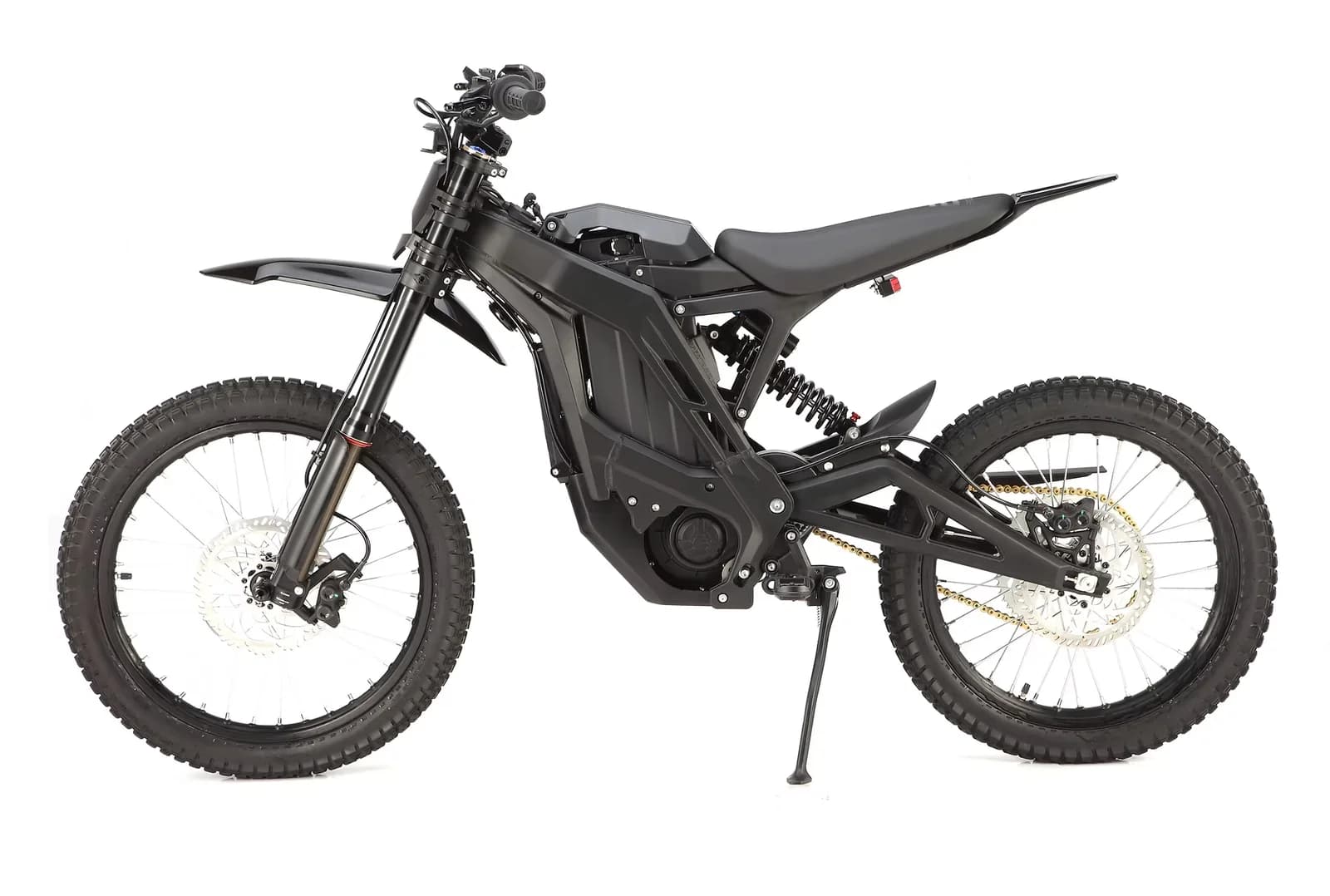
Verified product photo
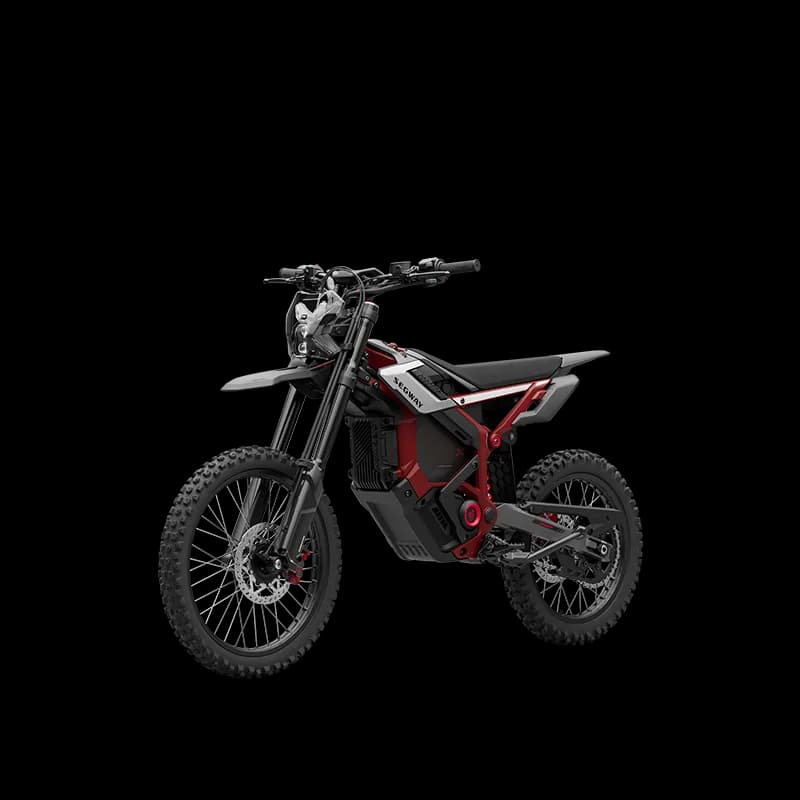
Verified product photo
Comparison table
Head-to-head spec winners
Awarded spec rows
2-1
E-Ride Pro SS 3.0 vs Segway Xaber 300
| Spec | E-Ride Pro SS 3.0 | Segway Xaber 300 | Winner |
|---|---|---|---|
| Power | 15.8 kW peak | 21 kW peak | Segway Xaber 300+5.2 kW |
| Top speed | 60 mph | 60 mph | TieSame 60 mph |
| Battery capacity | 3.6 kWh | 3.2 kWh | E-Ride Pro SS 3.0+432 Wh |
| Real range | Not published | 35 mi | No winner awardedNeeds both published values |
| Weight | 167 lb | 187 lb | E-Ride Pro SS 3.020 lb lighter |
| Brakes | Dual Hydraulic | Dual Hydraulic | TieSame Dual Hydraulic |
| Suspension | Full | Full | TieSame Full |
| Warranty | Not published | Not published | No winner awardedNeeds both published values |
| Delivered price | $4,999 delivered ($4,699 + $300 shipping) | $5,299 street + shipping unknown | No winner awardedShipping unknown |
Power
- E-Ride Pro SS 3.0
- 15.8 kW peak
- Segway Xaber 300
- 21 kW peak
Top speed
- E-Ride Pro SS 3.0
- 60 mph
- Segway Xaber 300
- 60 mph
Battery capacity
- E-Ride Pro SS 3.0
- 3.6 kWh
- Segway Xaber 300
- 3.2 kWh
Real range
- E-Ride Pro SS 3.0
- Not published
- Segway Xaber 300
- 35 mi
Weight
- E-Ride Pro SS 3.0
- 167 lb
- Segway Xaber 300
- 187 lb
Brakes
- E-Ride Pro SS 3.0
- Dual Hydraulic
- Segway Xaber 300
- Dual Hydraulic
Suspension
- E-Ride Pro SS 3.0
- Full
- Segway Xaber 300
- Full
Warranty
- E-Ride Pro SS 3.0
- Not published
- Segway Xaber 300
- Not published
Delivered price
- E-Ride Pro SS 3.0
- $4,999 delivered ($4,699 + $300 shipping)
- Segway Xaber 300
- $5,299 street + shipping unknown
Score breakdown
Power
/22 pts
Range
/20 pts
Chassis
/18 pts
Value
/15 pts
Support
/12 pts
Ergonomics
/8 pts
Versatility
/5 pts
Value-and-battery vs power-and-polish
These bikes agree on the basics and disagree on emphasis. The SS 3.0 optimizes for value and usable range: it's cheaper, lighter, and carries a bigger battery that you can actually remove — a genuinely useful feature for charging or carrying a spare. The Xaber 300 optimizes for power and refinement: Segway threw a bigger motor, a name-brand fork, four-piston brakes, and consumer-grade fit-and-finish at it, backed by a dealer network a boutique brand can't match. One gives you more range and less weight for less money; the other gives you more power and polish for a bit more.
The core matchup
| E-Ride Pro SS 3.0 | Segway Xaber 300 | |
|---|---|---|
| VoltRipper Score | 92 | 89 |
| Price | $4,699 | $5,299 |
| Peak power | 15.8 kW | 21 kW |
| Torque | 520 N·m | 600 N·m |
| Battery | 3,600 Wh (50Ah) | 3,168 Wh (44Ah) |
| Swappable battery | Yes | No |
| Top speed | 60 mph | 60 mph |
| Weight | 167 lb | 187 lb |
| App | Yes | Yes |
| Chassis | Standard | Marzocchi fork, 4-piston brakes |
| Skill level | Expert | Intermediate |
Head-to-head, factor by factor
Power & torque → Xaber. The Xaber makes 21 kW peak to the SS3's 15.8 kW — about 33% more — and 600 N·m to 520 (about 15% more torque). It's the harder-pulling bike with more grunt everywhere. If straight-line muscle is your priority, the Xaber has it.
Top speed → a tie. Both claim 60 mph. We previously gave this to the SS3 on a 62 mph figure that was our transcription error — E-Ride publishes 60. Nothing separates these two on top speed, so decide on the things that do.
Battery → SS3, decisively. The SS3 carries a 3,600 Wh (50Ah) pack to the Xaber's 3,168 Wh (44Ah) — about 14% more — and the SS3's battery is swappable where the Xaber's is fixed. More capacity plus a removable pack (carry a spare, charge indoors) is the SS3's standout practical edge and a real range advantage.
Weight → SS3. At 167 lb the SS3 is 20 lb lighter than the 187 lb Xaber. That's a meaningful difference in flickability, lifting, and loading — the SS3 is the more manageable bike at a standstill and on tight trails.
Chassis & refinement → Xaber. The Xaber brings a Marzocchi inverted fork and 4-piston hydraulic brakes — genuine premium hardware — plus consumer-grade fit and finish. The SS3 is well-equipped for its price, but the Xaber is the more polished, better-braked machine.
Approachability → Xaber. Despite its extra power, we rate the Xaber intermediate and the SS3 expert. Segway tuned the Xaber for accessibility, and its premium chassis helps manage the output; the SS3's delivery is more demanding. For a rider still building skill, the Xaber is the friendlier bike — an unusual case where the more powerful machine is also the more forgiving.
Support & brand → Xaber. Segway is a major consumer brand with a real US dealer and retail network; E-Ride Pro is newer and smaller, with thinner parts and support. Neither matches Sur-Ron's aftermarket depth, but the Xaber is the safer bet for dealer-backed service and availability.
Price → SS3, and by more than it used to be. $4,699 vs $5,299 — $600 less after E-Ride's August 2026 price move. The SS3 is the cheaper bike and the lighter one with the bigger battery — value stacked on value.
Score → SS3 (92 vs 89). The SS3's bigger swappable battery, lighter weight, lower price, and higher top speed outweigh the Xaber's power, torque, chassis, and support on our Score. Read it as value edging power — the Xaber's advantages are real, but they cost more and add weight.
Which should you buy?
- You want the best value, a bigger swappable battery, and less weight — and you're an experienced rider: E-Ride Pro SS 3.0. (Full review → · vs the Talaria MX5 Pro →)
- You want more power, a premium chassis, dealer-backed support, and an easier tune: Segway Xaber 300. (Full review → · across Segway's lineup →)
- Cross-shopping the class benchmark? Both go up against the Sur-Ron Light Bee X and its unmatched ecosystem (Xaber vs Light Bee X →).
Not sure which fits your skill and budget? Run the Find Your Ride configurator.
The honest bottom line
The E-Ride Pro SS 3.0 out-scores the Segway Xaber 300 (92 vs 89) by being the smarter value — $600 cheaper, 20 lb lighter, a 14% bigger swappable battery, and a hair faster on top speed. But the Xaber earns its price with about 33% more power, more torque, a premium Marzocchi/4-piston chassis, an intermediate-friendly tune, and Segway's dealer network — a more powerful, more polished, better-supported bike that's also easier to ride. Buy the SS3 if value, weight, and a removable battery lead your list; buy the Xaber if power, build quality, and mainstream support matter more. Two good ~$5k bikes — one leads on value, the other on muscle and polish.
VoltRipper is independent — we don't sell E-Ride Pro, Segway, or any bike, and our Score is based on verified specs, not commissions. Affiliate disclosure is included on monetized pages, and we're spec-verified/data-driven rather than hands-on until first-hand testing exists.
FAQ
E-Ride Pro SS 3.0 or Segway Xaber 300 — which should you buy?
They're two ~$5k dirt bikes optimized differently, three Score points apart (SS3 92, Xaber 89). The E-Ride Pro SS 3.0 ($4,699) is the value-and-battery pick — $600 cheaper, 20 lb lighter, a 14% bigger swappable battery, and a slightly higher top speed. The Segway Xaber 300 ($5,299) is the power-and-refinement pick — about 33% more peak power, more torque, a premium Marzocchi/4-piston chassis, Segway's real US dealer network, and an intermediate-friendly tune (versus the SS3's expert rating). Both run an app. Buy the SS3 for value, weight, and a removable battery; buy the Xaber for power, build quality, and dealer support.
Which is more powerful, the Segway Xaber 300 or the E-Ride SS3?
The Segway Xaber 300 — 21 kW peak to the SS3's 15.8 kW (about 33% more) and 600 N·m of torque to the SS3's 520 (about 15% more). It pulls harder and has more grunt. Oddly, the SS3 still edges it on claimed top speed (62 vs 60 mph), likely a gearing choice, but the Xaber is the stronger-pulling machine.
Which has the better battery, the SS3 or the Xaber?
The E-Ride Pro SS 3.0. It carries a 3,600 Wh (50Ah) pack to the Xaber's 3,168 Wh (44Ah) — about 14% more energy — and, crucially, the SS3's battery is swappable while the Xaber's is not. More capacity plus the option to carry or swap a spare (or charge it indoors) is a real practical advantage for range and convenience.
Which is better built and better supported?
The Segway Xaber 300 leads here. It brings a premium chassis — a Marzocchi inverted fork and 4-piston hydraulic brakes — plus Segway's standing as a major consumer brand with a real US dealer and retail network. E-Ride Pro is a newer, smaller brand with thinner support and parts availability. The Xaber is also the more approachable bike to ride: we rate it intermediate where the SS3 is expert. If build quality, dealer backing, and an easier tune matter, the Xaber is the pick.
Sources
Specification sources
- E-Ride Pro SS 3.0E-Ride Pro - Pro SS 3.0 official product pageChecked
- Segway Xaber 300Segway - Xaber 300 official specificationsChecked
- Sur-Ron Light Bee XATV Wholesale Outlet - 2026 Sur-Ron Light Bee X (72V/35Ah, 10 kW), $4,699 from $4,999Checked