Tracked price checks
Bikes in this guide
E-Ride Pro
SS 3.0
15.8 kW peak output and 62 mph top speed put it above the SS 2.0 and Light Bee class
Trade-off: Real trail range still needs verified owner or test data; claimed range is a low-speed figure
We may earn a commission if you buy through this link, at no extra cost to you.
Check price at VoroMotorsApollo (RFN)
RFN Ares Rally Pro
Marketed as a 'Sur-Ron killer' — 12.5 kW peak 'rocket mode' is big power for the money
Trade-off: Newer brand with a smaller aftermarket than Sur-Ron/Talaria
We may earn a commission if you buy through this link, at no extra cost to you.
Check price at REVRidesThe short answer
These two are as close as comparisons get: three VoltRipper Score points separate them (92 to 89), both are feature-loaded 72V value bikes priced within a couple hundred dollars, and both are pitched as ways to out-spec a Sur-Ron for less money. The gap is small — but it hides a clean split in why each one earns it.
- Buy the E-Ride Pro SS 3.0 ($4,699) if you want the most power, speed and battery — it is the faster, punchier bike.
- Buy the Apollo RFN Ares ($4,799) if you want the lighter, slightly cheaper bike with the only real-world range figure we could actually verify.
They score within three points of each other because they are strong in opposite places. Here's the split.
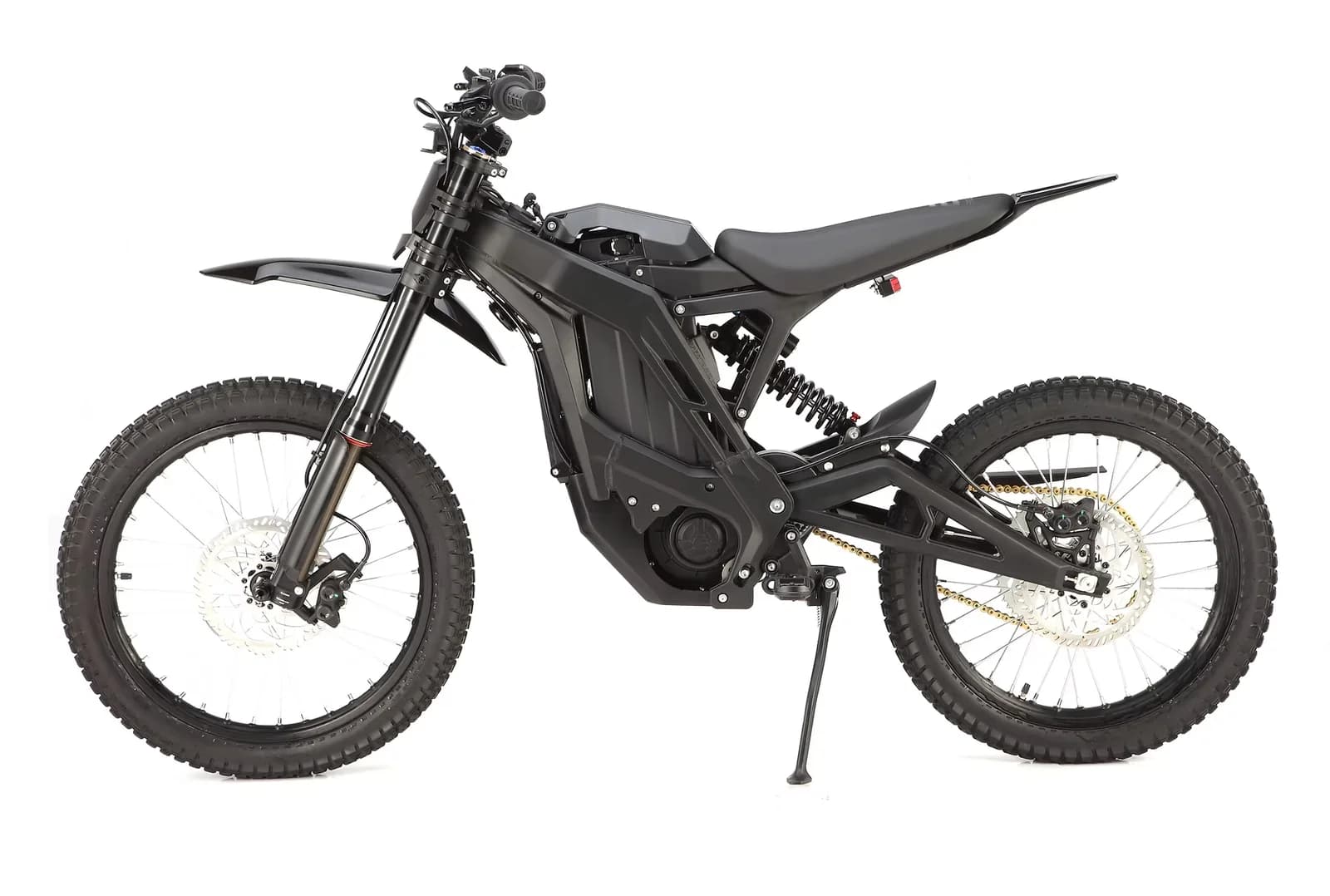
Verified product photo
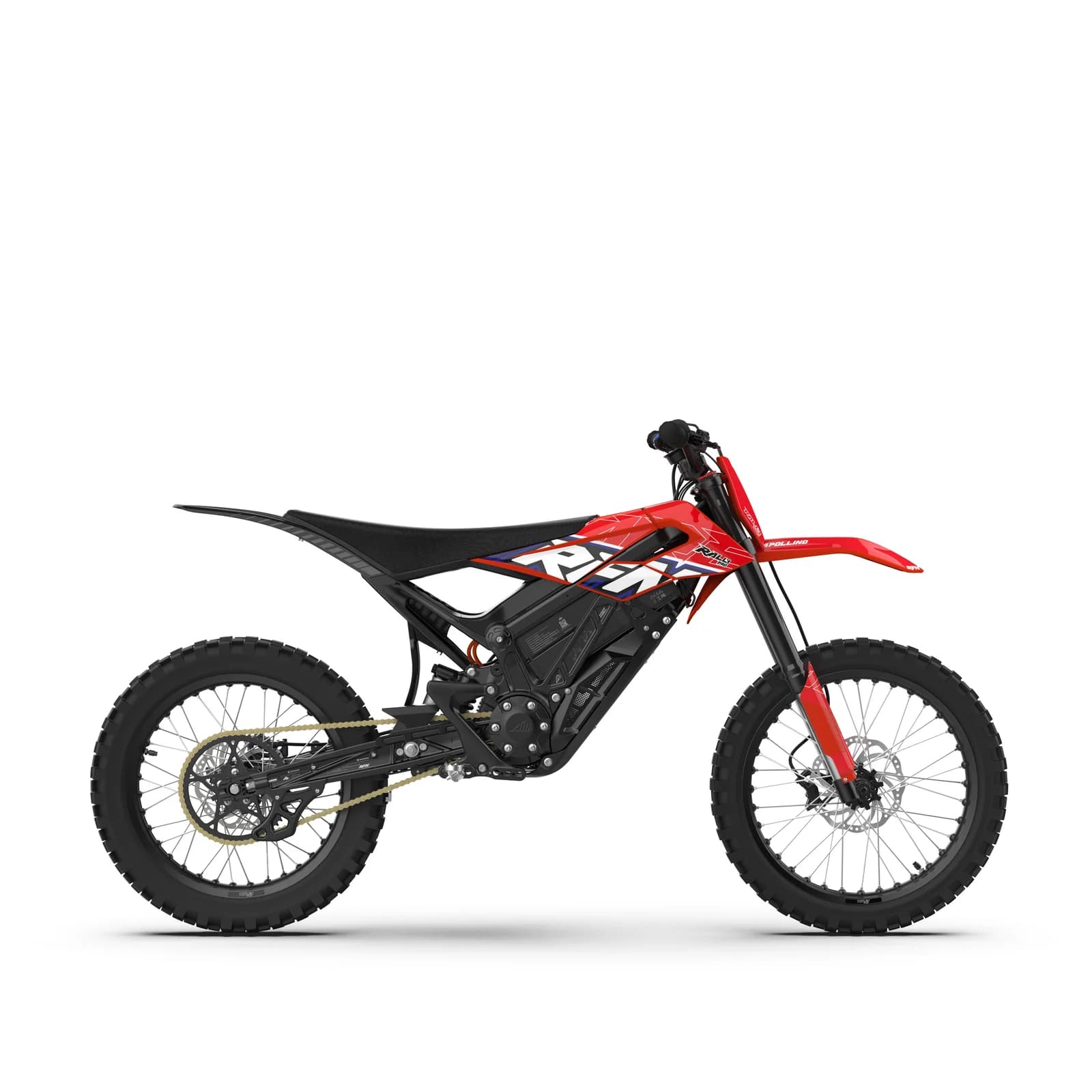
Verified product photo
Comparison table
Head-to-head spec winners
Awarded spec rows
3-1
E-Ride Pro SS 3.0 vs Apollo (RFN) RFN Ares Rally Pro
| Spec | E-Ride Pro SS 3.0 | Apollo (RFN) RFN Ares Rally Pro | Winner |
|---|---|---|---|
| Power | 15.8 kW peak | 12.5 kW peak | E-Ride Pro SS 3.0+3.3 kW |
| Top speed | 60 mph | 50 mph | E-Ride Pro SS 3.0+10 mph |
| Battery capacity | 3.6 kWh | 3.1 kWh | E-Ride Pro SS 3.0+468 Wh |
| Real range | Not published | 40 mi | No winner awardedNeeds both published values |
| Weight | 167 lb | 149 lb | Apollo (RFN) RFN Ares Rally Pro18 lb lighter |
| Brakes | Dual Hydraulic | Dual Hydraulic | TieSame Dual Hydraulic |
| Suspension | Full | Full | TieSame Full |
| Warranty | Not published | 24 mo | No winner awardedNeeds both published values |
| Delivered price | $4,999 delivered ($4,699 + $300 shipping) | $4,799 street + shipping unknown | No winner awardedShipping unknown |
Power
- E-Ride Pro SS 3.0
- 15.8 kW peak
- Apollo (RFN) RFN Ares Rally Pro
- 12.5 kW peak
Top speed
- E-Ride Pro SS 3.0
- 60 mph
- Apollo (RFN) RFN Ares Rally Pro
- 50 mph
Battery capacity
- E-Ride Pro SS 3.0
- 3.6 kWh
- Apollo (RFN) RFN Ares Rally Pro
- 3.1 kWh
Real range
- E-Ride Pro SS 3.0
- Not published
- Apollo (RFN) RFN Ares Rally Pro
- 40 mi
Weight
- E-Ride Pro SS 3.0
- 167 lb
- Apollo (RFN) RFN Ares Rally Pro
- 149 lb
Brakes
- E-Ride Pro SS 3.0
- Dual Hydraulic
- Apollo (RFN) RFN Ares Rally Pro
- Dual Hydraulic
Suspension
- E-Ride Pro SS 3.0
- Full
- Apollo (RFN) RFN Ares Rally Pro
- Full
Warranty
- E-Ride Pro SS 3.0
- Not published
- Apollo (RFN) RFN Ares Rally Pro
- 24 mo
Delivered price
- E-Ride Pro SS 3.0
- $4,999 delivered ($4,699 + $300 shipping)
- Apollo (RFN) RFN Ares Rally Pro
- $4,799 street + shipping unknown
Score breakdown
Power
/22 pts
Range
/20 pts
Chassis
/18 pts
Value
/15 pts
Support
/12 pts
Ergonomics
/8 pts
Versatility
/5 pts
The head-to-head
| E-Ride Pro SS 3.0 | Apollo RFN Ares | |
|---|---|---|
| VoltRipper Score | 92 | 89 |
| Price | $4,699 | $4,799 |
| Peak power | 15.8 kW (72V) | 12.5 kW (72V) |
| Top speed | 60 mph | 50 mph |
| Battery | 3,600 Wh | 3,132 Wh |
| Weight | 167 lb | 149 lb |
| Seat height | 32.7 in | 33.86 in |
| Real-world range | not yet verified | ~40 mi (verified) |
| Availability | Limited | Limited |
Where the SS 3.0 wins: power, speed, battery
The E-Ride Pro SS 3.0 is the more bike of the two on raw performance. Its 15.8 kW peak and 60 mph top speed clearly beat the Apollo's 12.5 kW and 50 mph, and its 3,600 Wh pack is the biggest here — all in a still-compact trail format with reverse, app support, adjustable suspension and four ride modes. If you are cross-shopping these because you want the fastest, punchiest bike for around $5,000, the SS 3.0 is the answer, and it comfortably out-specs the Sur-Ron Light Bee X class it is aimed at.
The catch is that the SS 3.0's real-world range is still unverified — its published number is a low-speed figure, and until we have owner or test data, treat range as an unknown rather than a strength. It is also the heavier bike at 167 lb.
Where the Apollo wins: weight, price, and proven range
The Apollo RFN Ares makes its case on the numbers that do not show up in a spec-sheet horsepower contest:
- It is 18 lb lighter (149 vs 167 lb), which matters more than a spec sheet suggests — a lighter bike is easier to handle, pick up, and ride at trail pace.
- It costs $4,799, a little less than the SS 3.0.
- It has the only verified real-world range of the two: about 40 miles. In a class where nearly every range claim is a low-speed fantasy, a figure we can stand behind is worth real weight. (Ignore the "100 mi" marketing — that is an eco number; expect far less ridden hard.)
The Apollo is marketed as a "Sur-Ron killer," and its 12.5 kW "rocket mode" is genuinely big power for the money — but its top-speed claims vary between about 46 and 55 mph depending on the source, so verify the exact model and figure before you buy on speed.
What they share — and the shared caveat
Both are 72V, both are feature-rich for the money, both come from newer brands with smaller aftermarket and support networks than Sur-Ron or Talaria, and both were limited-availability at our last check. That last point is not a tiebreaker so much as a warning: confirm current stock and parts support before you commit to either, and weigh the thinner ecosystem if you plan to keep the bike for years or resell it. It is the same trade the whole value class asks you to make — more spec per dollar, less of the deep support that the benchmark brands are built on.
How to choose between them
- You want the fastest, most powerful bike for ~$5,000 → E-Ride Pro SS 3.0. More power, more speed, bigger battery.
- You want lighter, a little cheaper, and range you can trust → Apollo RFN Ares. 18 lb less and the only verified range figure.
- Range is your top priority → Apollo, on the strength of a real number rather than a big battery with an unverified result.
- You'll ride hard and want the most performance headroom → SS 3.0.
- Still torn → run the Find Your Ride configurator, and read how both stack up against the benchmark in Sur-Ron vs Talaria MX5 Pro.
The bottom line
The E-Ride Pro SS 3.0 (92) edges the Apollo RFN Ares (89) by three points, because they are strong in opposite places — the SS 3.0 on power, speed and battery, the Apollo on weight, price and the one range figure anyone can verify. Neither is the wrong choice; the gap is honest. Take the SS 3.0 if you want the most performance for your money, or the Apollo if you want a lighter, slightly cheaper bike whose range you can actually count on. Just confirm both are in stock and go in clear-eyed about the smaller support networks behind these newer brands — that is the price of admission for out-speccing a Sur-Ron on a value budget.
VoltRipper is independent — our Scores come from verified specs and the transparent VoltRipper Score, not commissions. Where a range figure is unverified we say so. Both bikes were limited-availability at our last check; confirm current stock. We are spec-verified and data-driven rather than hands-on. Affiliate disclosure is included on monetized pages.
FAQ
Is the E-Ride Pro SS 3.0 or the Apollo RFN Ares better?
Three points separate them — the E-Ride Pro SS 3.0 scores 92 and the Apollo RFN Ares 89 — so 'better' depends on what you weigh. The E-Ride Pro SS 3.0 is the more powerful bike — 15.8 kW peak, 60 mph, and a bigger 3,600 Wh battery — while the Apollo RFN Ares is lighter (149 vs 167 lb) and has the only verified real-world range of the two at about 40 miles — though after E-Ride's August 2026 price move it is no longer the cheaper bike ($4,799 against $4,699). Pick power or pick weight-and-value.
Which is faster, the E-Ride Pro SS 3.0 or the Apollo RFN Ares?
The E-Ride Pro SS 3.0, clearly: 60 mph and 15.8 kW peak against the Apollo's 50 mph and 12.5 kW. The Apollo's top-speed claims vary between about 46 and 55 mph depending on the source, so verify the exact model, but on our figures the SS 3.0 is the faster and more powerful of the two.
Which has better range, the SS 3.0 or the Apollo RFN Ares?
The Apollo is the safer bet on range because it is the only one with a figure we could verify — about 40 real-world miles. The SS 3.0 has the larger 3,600 Wh battery, but its real range is still unverified and its published number is a low-speed figure. On battery size the SS 3.0 leads; on proven range the Apollo does.
Are the E-Ride Pro SS 3.0 and Apollo RFN Ares available?
Both were limited-availability at our last check, so confirm current stock before you set your heart on either. They are also both newer brands with smaller aftermarket and support networks than Sur-Ron or Talaria — a real consideration if long-term parts and resale matter to you.
Sources
Specification sources
- E-Ride Pro SS 3.0E-Ride Pro - Pro SS 3.0 official product pageChecked
- Apollo (RFN) RFN Ares Rally ProRFN by Apollo — Rally ProChecked