Tracked price checks
Bikes in this guide
Apollo (RFN)
RFN Ares Rally Pro
Marketed as a 'Sur-Ron killer' — 12.5 kW peak 'rocket mode' is big power for the money
Trade-off: Newer brand with a smaller aftermarket than Sur-Ron/Talaria
We may earn a commission if you buy through this link, at no extra cost to you.
Check price at REVRidesTalaria
Sting MX5 Pro
72V/2.88 kWh Samsung-cell platform is a real power and range step up from the 60V Sting and X3 family
Trade-off: Ships limited to 20 mph, so the high-speed numbers assume derestriction and local-law risk
We may earn a commission if you buy through this link, at no extra cost to you.
Check price at Luna CycleSur-Ron
Light Bee X
Enormous aftermarket and parts ecosystem — the most-supported e-dirt-bike platform
Trade-off: Advertised range collapses at speed — plan for real-world miles well under the claim
We may earn a commission if you buy through this link, at no extra cost to you.
Check price at ATV Wholesale OutletThe short answer
Two of the strongest sub-$5,000 72V value bikes of 2026, and they split cleanly on priorities:
- Buy the Apollo RFN Ares ($4,799, Score 89) if you want range, warranty, and street-readiness — a bigger battery, more claimed range, a 24-month warranty (double the Talaria's), and a factory headlight for a kit-based street conversion.
- Buy the Talaria Sting MX5 Pro (~$4,990, Score 89) if you want speed and power — faster (59 vs 50 mph), more peak power and torque, and a lighter chassis from a more-established brand. (July 2026 repricing note: it's no longer cheaper than the Apollo — now ~$191 more.)
The Scores are dead even — 94 each — because each bike wins a different half of the spec sheet. Neither is a mistake; it comes down to what you weight.
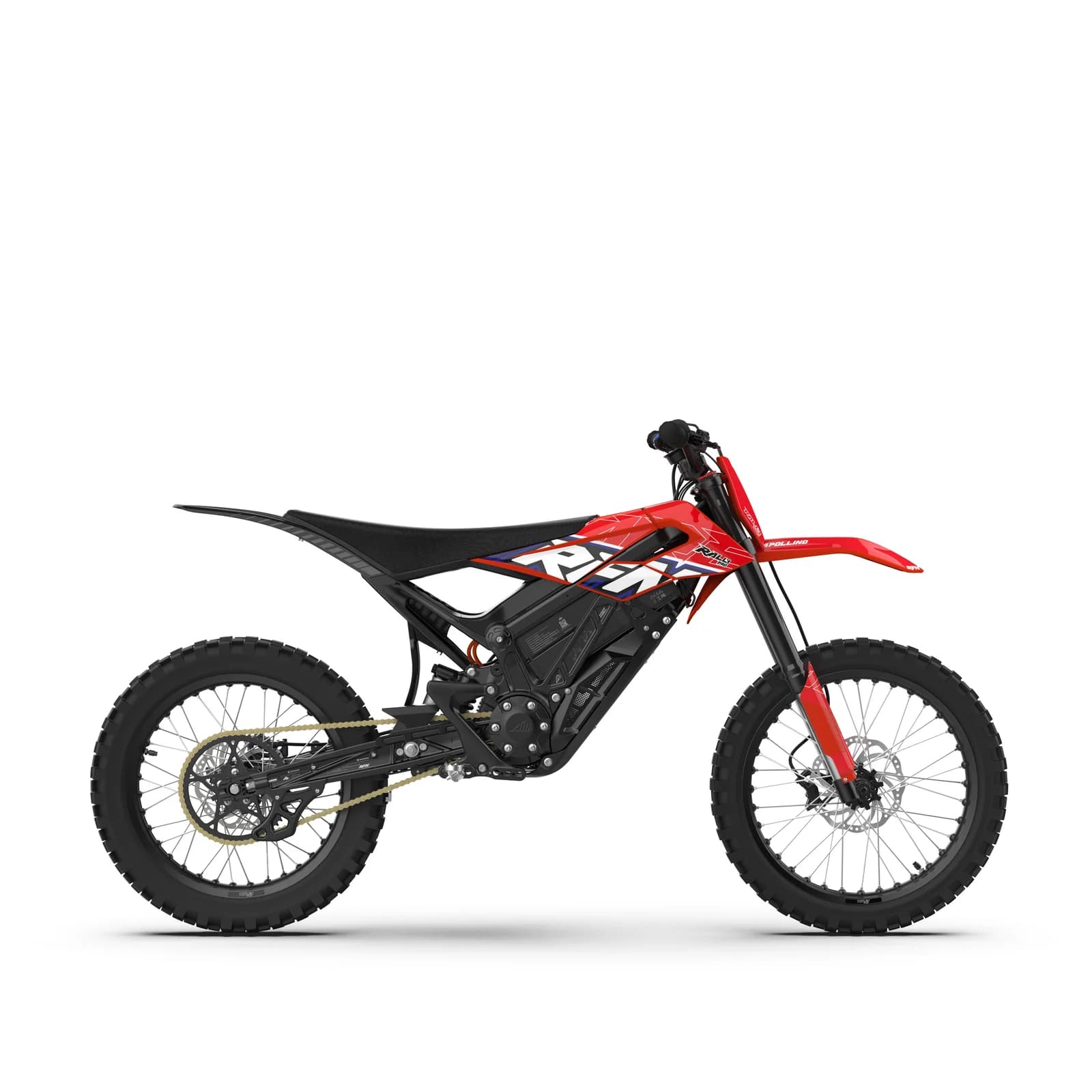
Verified product photo
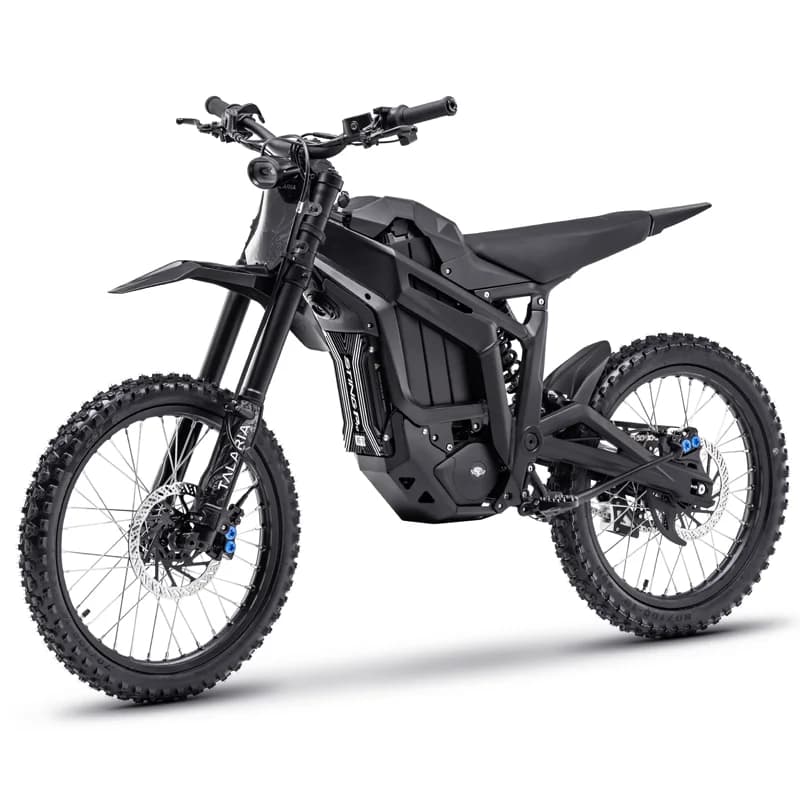
Verified product photo
Comparison table
Head-to-head spec winners
Awarded spec rows
4-2
Apollo (RFN) RFN Ares Rally Pro vs Talaria Sting MX5 Pro
| Spec | Apollo (RFN) RFN Ares Rally Pro | Talaria Sting MX5 Pro | Winner |
|---|---|---|---|
| Power | 12.5 kW peak | 13.4 kW peak | Talaria Sting MX5 Pro+0.9 kW |
| Top speed | 50 mph | 59 mph | Talaria Sting MX5 Pro+9 mph |
| Battery capacity | 3.1 kWh | 2.9 kWh | Apollo (RFN) RFN Ares Rally Pro+252 Wh |
| Real range | 40 mi | 35 mi | Apollo (RFN) RFN Ares Rally Pro+5 mi |
| Weight | 149 lb | 165 lb | Apollo (RFN) RFN Ares Rally Pro16 lb lighter |
| Brakes | Dual Hydraulic | Dual Hydraulic | TieSame Dual Hydraulic |
| Suspension | Full | Full | TieSame Full |
| Warranty | 24 mo | 12 mo | Apollo (RFN) RFN Ares Rally Pro+12 mo |
| Delivered price | $4,799 street + shipping unknown | $4,990 street + shipping unknown | No winner awardedShipping unknown |
Power
- Apollo (RFN) RFN Ares Rally Pro
- 12.5 kW peak
- Talaria Sting MX5 Pro
- 13.4 kW peak
Top speed
- Apollo (RFN) RFN Ares Rally Pro
- 50 mph
- Talaria Sting MX5 Pro
- 59 mph
Battery capacity
- Apollo (RFN) RFN Ares Rally Pro
- 3.1 kWh
- Talaria Sting MX5 Pro
- 2.9 kWh
Real range
- Apollo (RFN) RFN Ares Rally Pro
- 40 mi
- Talaria Sting MX5 Pro
- 35 mi
Weight
- Apollo (RFN) RFN Ares Rally Pro
- 149 lb
- Talaria Sting MX5 Pro
- 165 lb
Brakes
- Apollo (RFN) RFN Ares Rally Pro
- Dual Hydraulic
- Talaria Sting MX5 Pro
- Dual Hydraulic
Suspension
- Apollo (RFN) RFN Ares Rally Pro
- Full
- Talaria Sting MX5 Pro
- Full
Warranty
- Apollo (RFN) RFN Ares Rally Pro
- 24 mo
- Talaria Sting MX5 Pro
- 12 mo
Delivered price
- Apollo (RFN) RFN Ares Rally Pro
- $4,799 street + shipping unknown
- Talaria Sting MX5 Pro
- $4,990 street + shipping unknown
Score breakdown
Power
/22 pts
Range
/20 pts
Chassis
/18 pts
Value
/15 pts
Support
/12 pts
Ergonomics
/8 pts
Versatility
/5 pts
Two value bikes, opposite emphases
Both bikes exist to undercut Sur-Ron on price while matching it on hardware — 72V systems, ~$4,000–$5,000, real removable batteries. But they chase it differently. The Apollo RFN Ares (sold as the Rally Pro) leans into battery, range, and ownership peace of mind: the biggest pack of the two, the longest warranty in this price band, and factory lights that make a street conversion realistic. The Talaria MX5 Pro — Talaria's first bike to out-spec the Sur-Ron Light Bee X on paper — leans into speed, power-to-weight, and price. One is the long-haul value bike; the other is the quick, light one.
The core matchup
| Apollo RFN Ares | Talaria MX5 Pro | |
|---|---|---|
| VoltRipper Score | 89 | 89 |
| Price | $4,799 | $4,990 |
| Peak power | 12.5 kW | 13.4 kW |
| Top speed | ~50 mph | 59 mph |
| Torque | 364 Nm | 500 Nm |
| Battery | 3,132 Wh (72V/43Ah) | 2,880 Wh (72V/40Ah) |
| Real-world range | ~40 mi | ~35 mi |
| Warranty | 24 months | 12 months |
| Street path | Kit + register (factory headlight) | Kit + register |
| Brand / support | Newer (RFN by Apollo) | More established (Talaria) |
Head-to-head, factor by factor
Speed, power & torque → MX5 Pro. The Talaria is the quicker, punchier bike: 59 mph vs ~50, slightly more peak power (13.4 vs 12.5 kW), and notably more torque (500 vs 364 Nm). If outright pace and snap off the line are what you're after, it's the clear pick. (Both ship factory-limited — the MX5 Pro to 20 mph — and need derestricting to hit these figures.)
Battery & range → Apollo. The Ares carries the bigger pack (3,132 Wh vs 2,880 Wh) and claims up to ~90 miles to the Talaria's ~62 — call it ~40 vs ~35 real miles ridden hard. It's a modest but genuine edge, and the removable pack makes a charged spare an option for longer days.
Price → Apollo, narrowly. ~$4,990 vs $4,799 after the MX5's July 2026 repricing. The Talaria still wins performance-per-dollar on hardware (more speed and power for ~$191 more), but the old it-costs-less clincher is gone.
Warranty → Apollo, decisively. A 24-month warranty against the Talaria's 12 is a real ownership advantage on a newer-brand bike, where factory coverage matters more than on a proven platform. If peace of mind ranks high, this is a meaningful gap.
Street-conversion readiness → Apollo. Both take a street kit and registration where state law allows, but the Ares ships with a factory headlight, which makes a dual-sport conversion less work. If you're eyeing any road use, that's a practical head start. (Always check your state's rules first.)
Brand & support → MX5 Pro, slightly. Neither is Sur-Ron, but Talaria is the more-established name with a wider US dealer footprint and a larger owner community — even if the MX5-specific aftermarket is still young. The Apollo counters with the warranty, but on sheer network depth the Talaria edges it.
Score → a dead tie (94 each). The Apollo's bigger battery, longer warranty, and street-ready lighting are matched point-for-point by the Talaria's speed, power, price, and lighter weight. Read the dead heat as "these are genuinely close," not "one is clearly better."
Which should you buy?
- More range, the longest warranty, and a factory headlight for street use: Apollo RFN Ares — the ownership-and-range value pick, level with the MX5 Pro on Score. (Full review →)
- More speed and power, lighter, cheaper, from a more-established brand: Talaria Sting MX5 Pro — the performance-per-dollar pick. (Full review →)
- Want the proven benchmark instead of either newcomer? Cross-shop the Sur-Ron Light Bee X — see Ares vs Light Bee X and Light Bee X vs MX5 Pro.
Not sure whether range, speed, or warranty matters most for your riding? Run the Find Your Ride configurator.
The honest bottom line
This is one of the closest calls in the sub-$5,000 class, and the right answer is genuinely about priorities. The Apollo RFN Ares wins on the things you appreciate over years of ownership — a bigger battery and more range, a 24-month warranty, and a factory headlight that makes street-legalizing it realistic — which is why it lands level on the Score and earns a spot among our best value picks. The Talaria Sting MX5 Pro wins on the things you feel every ride — more speed, more power, less weight, and a lower price, backed by a more-established brand. Buy the Apollo for range, warranty, and road-readiness; buy the MX5 Pro for pace, punch, and price. Just remember both ship factory-limited and give up Sur-Ron's ecosystem for their value.
VoltRipper is independent — we don't sell Apollo, Talaria, or any bike, and our Score is based on verified specs, not who pays us. Affiliate disclosure is included on monetized pages, and we're spec-verified/data-driven rather than hands-on until first-hand testing exists.
FAQ
Is the Apollo RFN Ares or the Talaria MX5 Pro better?
It's a dead tie — Apollo 94, MX5 Pro 94 — with a clear character split. The Apollo RFN Ares is the range-and-warranty pick: a bigger battery (3.1 vs 2.9 kWh), more claimed range, a 24-month warranty (double the Talaria's), and a factory headlight for a kit-based street conversion. The Talaria MX5 Pro is the speed-and-value pick: $191 cheaper, faster (59 vs 50 mph), more power and torque, and a lighter chassis from a more-established brand. Buy the Apollo for range, warranty, and street-readiness; buy the MX5 Pro for speed, power, and price.
Which is faster, the Apollo RFN Ares or the Talaria MX5 Pro?
The Talaria MX5 Pro — about 59 mph versus the Apollo's ~50, with slightly more peak power (13.4 vs 12.5 kW) and more torque (500 vs 364 Nm). The Apollo trades top-end speed for a bigger battery and more range. Note the MX5 Pro ships factory-limited to 20 mph and needs derestricting to reach its full speed, which is on you and can affect warranty and legality.
Which has better range, the Apollo or the MX5 Pro?
The Apollo, modestly. Its 72V/43Ah (3,132 Wh) pack is bigger than the MX5 Pro's 72V/40Ah (2,880 Wh), and it claims up to ~90 miles to the Talaria's ~62 — plan for roughly ~40 vs ~35 real miles ridden hard. It's a real edge if you ride longer, though neither is a long-range touring machine.
Which is the safer long-term buy?
Both are newer-brand 72V value bikes, so neither matches Sur-Ron's decade-deep aftermarket. Between them, the Apollo carries a longer warranty (24 vs 12 months), while Talaria is the more-established brand with a wider US dealer footprint — though the MX5-specific aftermarket is still young. If proven ecosystem is your priority over either, cross-shop the Sur-Ron Light Bee X instead.
Sources
Specification sources
- Apollo (RFN) RFN Ares Rally ProRFN by Apollo — Rally ProChecked
- Talaria Sting MX5 ProTalaria Canada - Sting MX5 Pro specificationsChecked
- Sur-Ron Light Bee XATV Wholesale Outlet - 2026 Sur-Ron Light Bee X (72V/35Ah, 10 kW), $4,699 from $4,999Checked