Tracked price checks
Bikes in this guide
Apollo (RFN)
RFN Ares Rally Pro
Marketed as a 'Sur-Ron killer' — 12.5 kW peak 'rocket mode' is big power for the money
Trade-off: Newer brand with a smaller aftermarket than Sur-Ron/Talaria
We may earn a commission if you buy through this link, at no extra cost to you.
Check price at REVRidesSur-Ron
Light Bee X
Enormous aftermarket and parts ecosystem — the most-supported e-dirt-bike platform
Trade-off: Advertised range collapses at speed — plan for real-world miles well under the claim
We may earn a commission if you buy through this link, at no extra cost to you.
Check price at ATV Wholesale OutletTalaria
Sting MX5 Pro
72V/2.88 kWh Samsung-cell platform is a real power and range step up from the 60V Sting and X3 family
Trade-off: Ships limited to 20 mph, so the high-speed numbers assume derestriction and local-law risk
We may earn a commission if you buy through this link, at no extra cost to you.
Check price at Luna CycleThe short answer
Apollo markets the RFN Ares as a "Sur-Ron killer," and on the spec sheet it makes a real case:
- Buy the Apollo RFN Ares ($4,799, Score 89) if you want the most hardware for the money — more power, a bigger battery, and about 33% more real range than the Light Bee X.
- Buy the Sur-Ron Light Bee X ($4,499, Score 89) if you want the lighter bike and the ecosystem — flickable handling, the deepest aftermarket and resale in the class, and the proven benchmark.
The honest read: the Apollo genuinely delivers on the hardware half of "Sur-Ron killer." It's the ecosystem half where the Sur-Ron still can't be beaten.
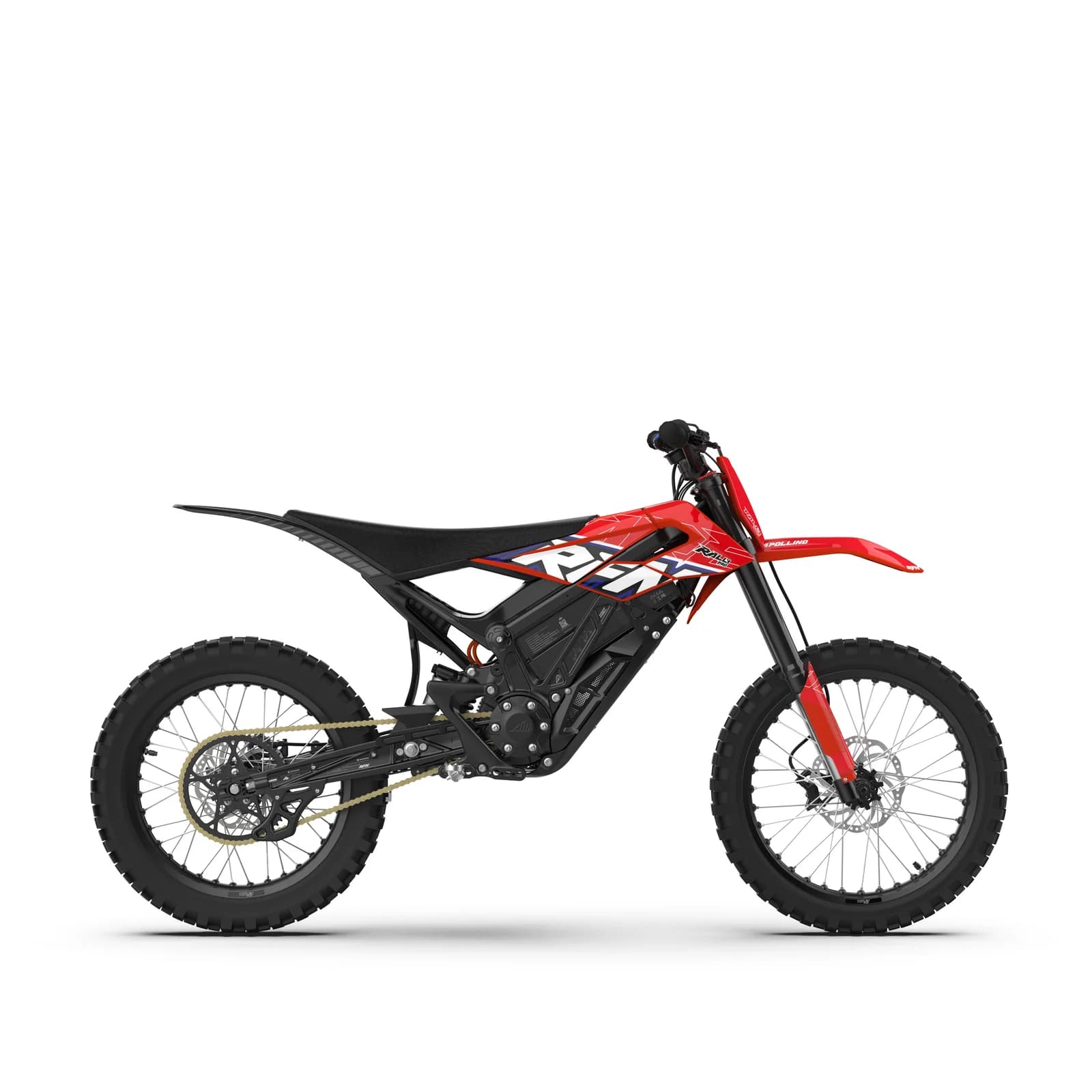
Verified product photo
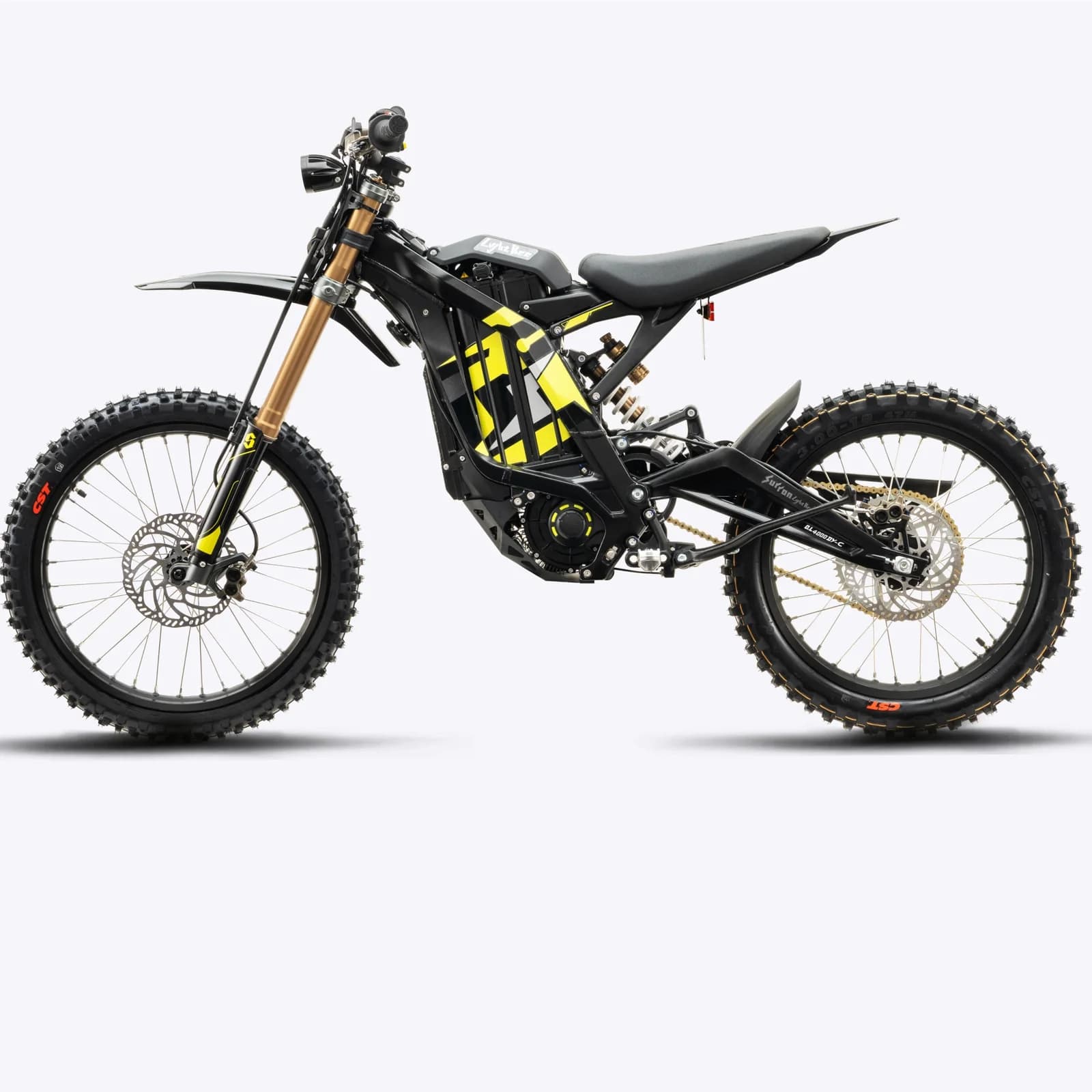
Verified product photo
Comparison table
Head-to-head spec winners
Awarded spec rows
3-1
Apollo (RFN) RFN Ares Rally Pro vs Sur-Ron Light Bee X
| Spec | Apollo (RFN) RFN Ares Rally Pro | Sur-Ron Light Bee X | Winner |
|---|---|---|---|
| Power | 12.5 kW peak | 10 kW peak | Apollo (RFN) RFN Ares Rally Pro+2.5 kW |
| Top speed | 50 mph | 50 mph | TieSame 50 mph |
| Battery capacity | 3.1 kWh | 2.5 kWh | Apollo (RFN) RFN Ares Rally Pro+612 Wh |
| Real range | 40 mi | 30 mi | Apollo (RFN) RFN Ares Rally Pro+10 mi |
| Weight | 149 lb | 130 lb | Sur-Ron Light Bee X19 lb lighter |
| Brakes | Dual Hydraulic | Dual Hydraulic | TieSame Dual Hydraulic |
| Suspension | Full | Full | TieSame Full |
| Warranty | 24 mo | Not published | No winner awardedNeeds both published values |
| Delivered price | $4,799 street + shipping unknown | $4,499 street + shipping unknown | No winner awardedShipping unknown |
Power
- Apollo (RFN) RFN Ares Rally Pro
- 12.5 kW peak
- Sur-Ron Light Bee X
- 10 kW peak
Top speed
- Apollo (RFN) RFN Ares Rally Pro
- 50 mph
- Sur-Ron Light Bee X
- 50 mph
Battery capacity
- Apollo (RFN) RFN Ares Rally Pro
- 3.1 kWh
- Sur-Ron Light Bee X
- 2.5 kWh
Real range
- Apollo (RFN) RFN Ares Rally Pro
- 40 mi
- Sur-Ron Light Bee X
- 30 mi
Weight
- Apollo (RFN) RFN Ares Rally Pro
- 149 lb
- Sur-Ron Light Bee X
- 130 lb
Brakes
- Apollo (RFN) RFN Ares Rally Pro
- Dual Hydraulic
- Sur-Ron Light Bee X
- Dual Hydraulic
Suspension
- Apollo (RFN) RFN Ares Rally Pro
- Full
- Sur-Ron Light Bee X
- Full
Warranty
- Apollo (RFN) RFN Ares Rally Pro
- 24 mo
- Sur-Ron Light Bee X
- Not published
Delivered price
- Apollo (RFN) RFN Ares Rally Pro
- $4,799 street + shipping unknown
- Sur-Ron Light Bee X
- $4,499 street + shipping unknown
Score breakdown
Power
/22 pts
Range
/20 pts
Chassis
/18 pts
Value
/15 pts
Support
/12 pts
Ergonomics
/8 pts
Versatility
/5 pts
Does the "Sur-Ron killer" claim hold up?
Half of it does. On raw hardware, the Apollo wins: 12.5 kW vs 10 kW, a 3,132 Wh battery vs 2,520 Wh, and ~40 real miles vs ~30 — for just $300 more. That's a genuine step up in power and range, and it's why the Apollo draws level with the Light Bee X (89 apiece) on our board.
But "killer" implies beating the Sur-Ron at everything, and it doesn't. The Light Bee X is lighter and more flickable (130 lb against roughly 149 lb), and it carries the one thing you can't spec your way to: Sur-Ron's ecosystem — a decade of parts, dealers, resale value, and the biggest owner community in electric dirt. The Apollo is the newer brand with a thinner support network. So it's less a "killer" than a genuinely strong challenger that wins on paper and loses on ownership.
The core matchup
| Apollo RFN Ares | Sur-Ron Light Bee X | |
|---|---|---|
| VoltRipper Score | 89 | 89 |
| Price | $4,799 | $4,499 |
| Peak power | 12.5 kW | 10 kW |
| Battery | 3,132 Wh | 2,520 Wh |
| Real-world range | ~40 mi | ~30 mi |
| Top speed | 50 mph | 50 mph |
| Weight | ~149 lb | 130 lb (lighter) |
| Aftermarket & resale | Newer, thinner | Deepest in class |
Head-to-head, factor by factor
Range → Apollo, decisively. ~40 real miles vs ~30 is a ~33% advantage, and range is one of the things riders most wish they had more of. The bigger 3,132 Wh battery is the Apollo's standout practical win.
Power → Apollo. 12.5 kW vs 10 kW — a real, felt step up in acceleration for $300 more.
Top speed → a tie at 50 mph. We previously had the Light Bee X at 53 mph and called this a narrow Sur-Ron win; Sur-Ron publishes 50 mph (80 km/h), so the two are level. Worth noting the Apollo reaches the same speed with more power, which is a gearing choice rather than a shortfall — neither bike is the faster one here.
Weight & handling → Sur-Ron. At 130 lb the Light Bee X is the lighter, more flickable bike — easier to loft, corner, and pick up. RFN's own spec sheet puts the Apollo's complete-bike net weight at 68 kg, about 149 lb, and a US dealer lists 149 lb net / 154 lb curb. That ~19 lb gap is what you feel lofting the front end or picking the bike up, so on tight, technical trails the Sur-Ron is the more playful tool.
Aftermarket, resale & support → Sur-Ron, decisively. This is the whole ballgame long-term. Sur-Ron's parts catalog, dealer network, resale, and community are unmatched; the Apollo is a newer brand you'll lean on more yourself. If you mod, tune, or plan to resell, this matters more than a spec.
Price → Sur-Ron. $4,499 vs $4,799 — $300 less, though the Apollo arguably gives more hardware for that extra spend. Call it a wash weighted by what you value.
Which should you buy?
- Most range and power for the money, and you don't need a deep aftermarket: Apollo RFN Ares — the hardware win, and the higher Score. (Full review →)
- Lighter handling, deepest used demand, deepest ecosystem, proven benchmark: Sur-Ron Light Bee X — the safer long-term buy. (Full review →)
- Want to weigh other challengers too? See our full Sur-Ron alternatives — the Talaria MX5 Pro is another strong option at this price (Apollo vs MX5 Pro head-to-head).
Not sure which fits your riding? Run the Find Your Ride configurator.
The honest bottom line
The Apollo RFN Ares earns the "Sur-Ron killer" label where it counts on paper: more power, a bigger battery, ~33% more real range, and a higher Score, for $400. If you want the most hardware for your money and aren't tied to a deep aftermarket, it's a legitimately smart buy. But the Sur-Ron Light Bee X keeps what the spec sheet doesn't show — lighter, more flickable handling and an ecosystem of parts, resale, and community nothing else matches. Buy the Apollo for the range and power; buy the Sur-Ron for the handling and the long game.
VoltRipper is independent — we don't sell Apollo, Sur-Ron, or any bike, and our Score is based on verified specs, not who pays us. Affiliate disclosure is included on monetized pages, and we're spec-verified/data-driven rather than hands-on until first-hand testing exists.
FAQ
Is the Apollo RFN Ares better than the Sur-Ron Light Bee X?
On hardware, the Apollo out-specs it — more power (12.5 vs 10 kW), a bigger battery, about 33% more real range (40 vs 30 mi), and a higher Score (91 vs 90), for $300 more. But the Light Bee X is lighter and more flickable, and it has the Sur-Ron ecosystem — the deepest aftermarket, resale, and community in the class — which the newer Apollo can't match. Apollo for the hardware; Sur-Ron for the ownership.
Is the Apollo RFN Ares really a 'Sur-Ron killer'?
On paper, largely yes — it beats the Light Bee X on power, battery, range, and our Score. Where the 'killer' claim falls short is the ecosystem: Sur-Ron's decade of parts, dealers, resale, and community is the one thing more power can't replace. The Apollo wins the spec sheet; the Sur-Ron wins the long-term ownership. Both things are true.
Which has more range, the Apollo or the Light Bee X?
The Apollo, clearly — about 40 real-world miles versus the Light Bee X's ~30, thanks to a bigger 3,132 Wh battery (vs 2,520 Wh). That ~33% range advantage is one of the Apollo's strongest, most practical wins over the Sur-Ron.
Which is lighter, the Apollo or the Sur-Ron?
The Sur-Ron Light Bee X, at 130 lb against roughly 149 lb for the Apollo. That ~19 lb makes the Sur-Ron the more flickable, easier-to-loft bike for tight, technical trails. If light, playful handling matters most to you, that's a point for the Light Bee X.
Sources
Specification sources
- Apollo (RFN) RFN Ares Rally ProRFN by Apollo — Rally ProChecked
- Sur-Ron Light Bee XATV Wholesale Outlet - 2026 Sur-Ron Light Bee X (72V/35Ah, 10 kW), $4,699 from $4,999Checked
- Talaria Sting MX5 ProTalaria Canada - Sting MX5 Pro specificationsChecked