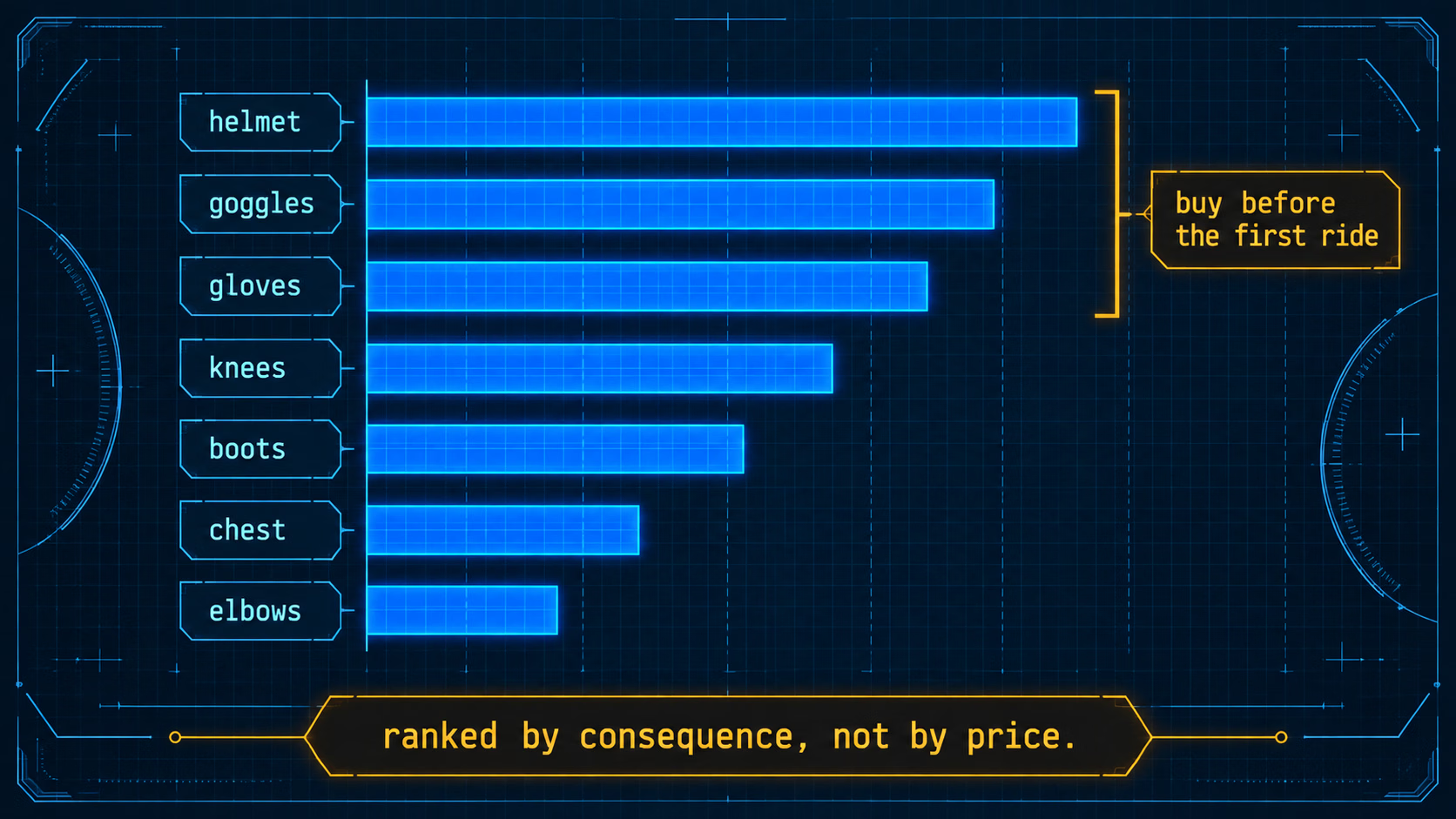
Parents are usually given this list sorted by price. Sorted by what actually changes an outcome, it looks different — and the cheapest two items sit at the top.
Here are seven pieces in the order they matter, with the certified youth items we track and price-verify.
1. A full-face helmet — before the first ride
Nothing else on this list substitutes for it, and a bicycle helmet is not a substitute either: no chin bar, a lower certified impact energy, and a design built around cycling speeds.
Measure the head, do not use the age, and fit it snug now rather than buying one to grow into. A loose helmet rotates or leaves the head in an impact, which means a helmet bought to last two years protects in neither. The full method is on our kids helmet page.
2. Goggles — the same day as the helmet
An off-road helmet has an open eye port by design. A child riding behind another bike is riding into roost, and an eye injury ends far more than a ride.
Adult and youth frames are effectively one size within their category, so this is the one item on the list you can buy without measuring. Try them in the helmet — a goggle that does not seat in the eye port gets left at home.
3. Gloves — cheap, and they change every ride
Hands go down first in almost every fall. MX gloves carry no impact certification, which is normal for the category — you are buying palm protection, grip and lever feel rather than armour.
4. Knees — the most-injured joint off-road
A soft CE EN 1621-1 guard is the right product for a child. Rigid knee braces are fitted ligament devices costing several times as much, sized to a specific leg, and they are a racing purchase rather than a starting one.
5. Boots — the injury that ends a season
A foot trapped between the peg and the ground is the classic dirt-bike injury and a trainer does nothing against it. Buy to the current shoe size; a boot too large moves on the foot and defeats the ankle restraint that is the whole point.
6. Chest and back
Check the label carefully in this category. A roost deflector meets EN 14021 and stops flying debris; an impact protector carries EN 1621 ratings and absorbs a fall. Both are sold as "chest protectors" and the difference is not visible from the photograph. If the listing does not name EN 1621, it is the former.
7. Elbows
Last on the list because elbows are less frequently and less severely injured than knees, not because they do not matter. At $44.95 there is no reason to skip it once the six above are covered.
The thing to avoid
The five-piece kids gear set at $40 to $70. Helmet, gloves, knee, elbow and chest in one box, at a price that cannot include a certified helmet, described in safety language throughout.
The failure mode is specific: the parent believes the child is fully equipped, and the single most important item in the box is the one that is uncertified. One certified piece at a time beats a complete set of unrated gear, and the order above is the order to buy them in.
Sizing, once
Everything here is sized by measurement, not age:
- Helmet — head circumference, about a centimetre above the eyebrows
- Chest protector — chest circumference, and most are two-band adjustable so the tolerance is wide
- Knee and elbow — around the joint
- Boots — current shoe size
- Goggles and gloves — effectively one size within youth ranges
Children of the same age differ by more than a full size in both directions. The full method is in the gear sizing guide.
What the guidance says
Worth knowing, whatever you decide. The CPSC advises that children aged 9 to 12 should not operate any product capable of more than 10 mph. The American Academy of Pediatrics recommends no e-bikes under 12 years.
Most families riding these machines are past that line to some degree. The gear on this page is what makes that decision less consequential, and it is not a substitute for matching the bike's speed and weight to the child — which is covered in the kids bike picks.
The bottom line
Helmet and goggles before the first ride, gloves immediately after, then knees, boots, chest and elbows as the budget allows. Buy certified pieces one at a time rather than an uncertified set, size everything by measurement, and replace the helmet when it stops fitting rather than buying ahead.
VoltRipper is independent and spec-verified. Prices are what we verified at the retailer on the date shown — confirm before you buy.
FAQ
What protective gear does a child need for an electric dirt bike?
A certified full-face helmet and goggles before the first ride, gloves immediately after, then knee protection, boots and a chest protector. That order is by consequence rather than by cost — the helmet and the eyes are the two things where the absence changes an outcome rather than a comfort level.
Are the cheap kids dirt bike gear sets any good?
Generally no. The five-piece sets sold at $40 to $70 for helmet, gloves, knee, elbow and chest are typically uncertified plastic described in safety language, and the helmet is the part you least want uncertified. One properly certified piece at a time beats a complete set of unrated gear.
How do I size youth protective gear?
By measurement, never by age. Head circumference for the helmet, height and chest for armour, shoe size for boots. Children of the same age routinely differ by more than a full size in both directions, and the age printed on a box is a marketing convenience rather than a fit statement.
Should a child wear a neck brace?
It is a personal decision, and honestly framed there is less evidence behind it than the price suggests: no neck-specific efficacy standard exists, so a CE mark certifies general protective equipment compliance rather than proving injury prevention. Many racing families use them. It is not on this checklist because the six items above it matter more first.