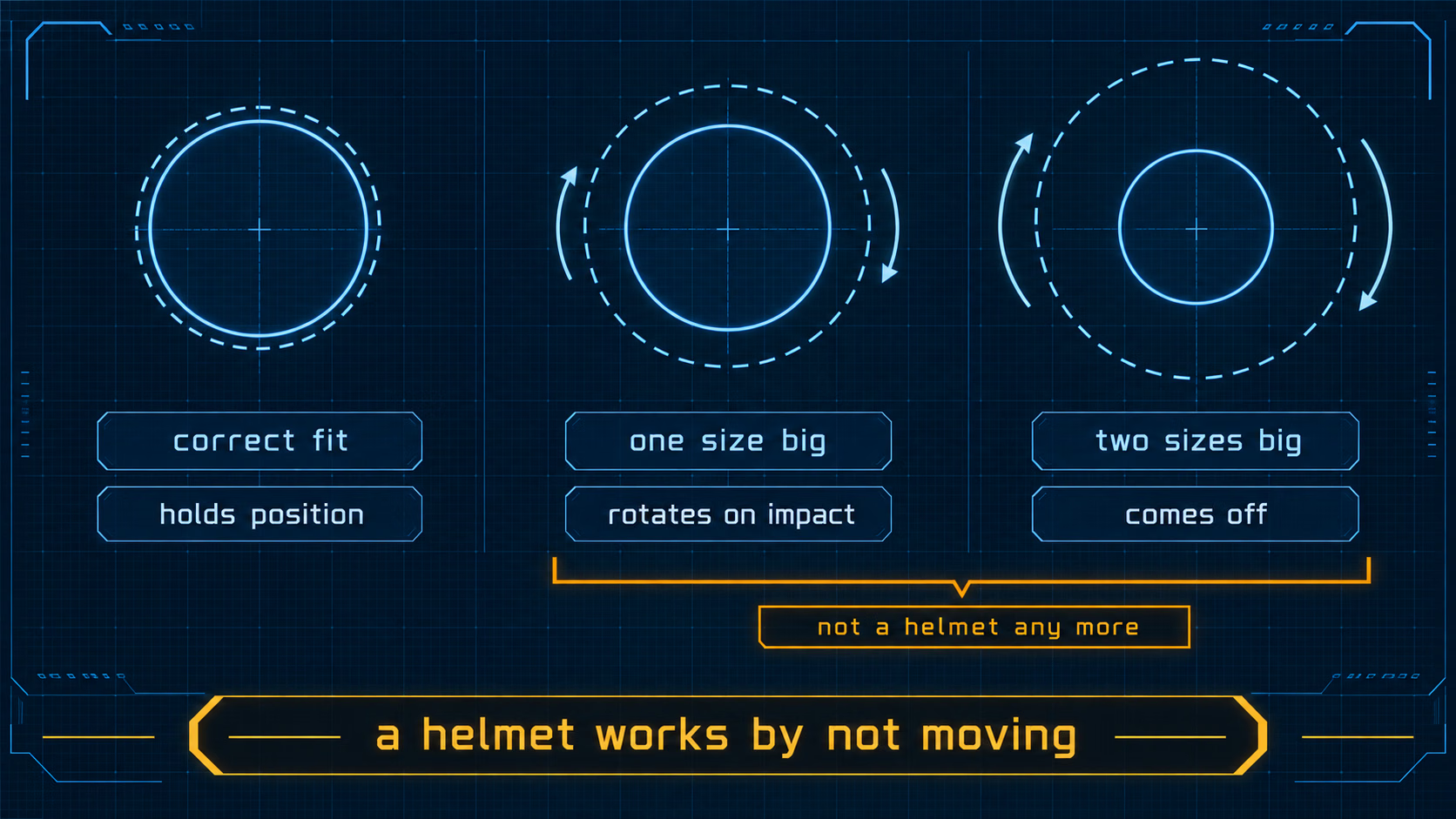
There is one rule for a child's helmet that overrides everything else on this page: you cannot buy it a size big.
A helmet does its job by staying in position. A loose one rotates on impact or leaves the head entirely, which means a helmet bought to last two years is a helmet that does not work in either of them. That is the whole reason youth helmets are replaced rather than grown into, and it is why the measurement matters more than the brand.
How to measure, in one minute
A soft tape measure, or a length of string against a ruler. Around the head about a centimetre above the eyebrows and around the widest part of the back of the skull. That number, in centimetres or inches, goes against the manufacturer's own chart — and charts differ between brands, so use the chart for the helmet you are buying rather than a general one.
Never buy by age. Children of the same age routinely differ by more than a full helmet size. The age on the box is a marketing convenience.
Check the fit when it arrives. The helmet should sit level, the cheek pads should press the cheeks firmly enough to feel snug without pain, and when the child shakes their head the helmet should move the skin of the forehead rather than sliding on it. If it rocks front to back with the strap done up, it is too big.
The certifications, at youth sizes
DOT is the US federal standard, FMVSS 218. It is a manufacturer's self-certification rather than an independent test, which is a genuine limitation — and it is still the line between a motorcycle helmet and a costume.
ECE 22.06 is the European standard and is independently tested, including for rotational impact. If a youth helmet carries it, that is a meaningful step up.
Rotational systems — MIPS and the brand-specific equivalents — reduce the twisting forces transmitted in an angled impact. MIPS is one licensed system among several; a helmet using a manufacturer's own equivalent is not worse for lacking the MIPS logo. Shop the certification, not the sticker.
Not a bicycle helmet. No chin bar, a lower certified impact energy, and a design built around cycling speeds. It is the wrong tool for a machine that does 15 to 26 mph in youth trim and far more in adult trim.
What we track
The youth V1 is the mainstream answer: a genuine youth-sized shell from a maker that builds adult MX helmets, rather than a scaled-down toy. Buy it to the measured size and from a retailer with free returns, because head shape decides comfort once circumference has decided size.
For a smaller or younger rider who also needs eye protection — and they do, because a full-face off-road helmet has an open eye port by design:
Goggles and helmet should be bought together and tried together. A goggle that does not sit in the helmet's eye port is a goggle that gets left at home.
The rest of the head-to-toe kit
A helmet without the rest is the most common half-measure, and the pieces that follow it are cheaper than it is.
Size all of it by measurement rather than age, and prefer one certified piece to a five-piece uncertified set. Those sets — typically $40 to $70 for helmet, gloves, knee, elbow and chest — are where uncertified plastic hides behind safety language, and the helmet in them is the part you least want to be uncertified.
What the guidance actually says
Worth knowing where the professional bodies draw the line, whatever you decide.
The CPSC advises that children aged 9 to 12 should not operate any product capable of more than 10 mph. The American Academy of Pediatrics goes further and recommends no e-bikes under 12 years. Most families riding these machines are past that line to some degree. It is better to know that and decide than to discover it afterwards.
The bottom line
Measure the head, buy that size, and replace the helmet when it stops fitting rather than buying ahead. Pair it with goggles from the start. And if the budget is tight, buy a correctly-sized certified helmet and add the rest of the kit over the following months — one properly fitted helmet beats a full set of gear that includes a loose one.
For sizing the rest of the kit, see the gear sizing guide. For bikes matched to age and weight, see the kids picks.
VoltRipper is independent and spec-verified. Always size against the specific brand's chart, and confirm current pricing at the retailer.
FAQ
What size helmet does my child need?
Measure head circumference with a soft tape about a centimetre above the eyebrows and around the widest part of the back of the head, then buy to that brand's own chart. Never buy by age — children of the same age vary by more than a full helmet size, and the age on the box is a rough guide rather than a fit statement.
Can I buy a kids' helmet a size big so they grow into it?
No, and it is the most common mistake parents make. A helmet works by staying in position during an impact. One that is loose enough to grow into rotates or comes off at exactly the moment it is needed, which means the year you bought it is a year with no head protection.
What certification should a kids' dirt bike helmet have?
DOT at minimum, which is the US federal standard for motorcycle helmets, and ECE 22.06 if you can get it because it is independently tested rather than self-certified. Avoid anything sold as a bicycle helmet: those are tested for a different, lower-speed impact and have no chin bar.
Is a bicycle helmet enough for an electric dirt bike?
No. A bicycle helmet has no chin bar, is certified to a lower impact energy, and is designed around falls at cycling speeds. Electric dirt bikes for children run to 15 to 26 mph and adult models far beyond that. A full-face motorcycle helmet is the correct category.