Tracked price checks
Bikes in this guide
Sur-Ron
Hyper Bee
8 kW peak and 40 mph in an 86 lb chassis - genuinely quick for a small-wheel bike
Trade-off: Official carrying capacity is only 121 lb - most adults exceed it
We may earn a commission if you buy through this link, at no extra cost to you.
Check price at RonhackSegway
Dirt eBike X160
Lighter (106 lb) and slower-topped (31 mph) — the most approachable bike here for smaller/newer riders
Trade-off: 31 mph ceiling is quickly outgrown by confident riders
We may earn a commission if you buy through this link, at no extra cost to you.
View official pageTriumph/OSET
TXP-20
Current Triumph/OSET TXP-20 keeps the youth-trials focus with four rider modes and PIN lock
Trade-off: Premium price: $3,295 MSRP - real money for a youth trials bike
We may earn a commission if you buy through this link, at no extra cost to you.
Check price at JSC MotorsportsThe short answer
These are the two strongest youth electric dirt bikes near $3,000, and they sit $100 apart — which is the least interesting thing about them. On almost every other axis they are opposites:
- Buy the Sur-Ron Hyper Bee ($2,899, Score 96) for a light, skilled rider — 8 kW, 40 mph, 86 lb, and Sur-Ron's dealer network. Rated to carry 121 lb.
- Buy the Segway Dirt eBike X160 ($2,999, Score 90) for a bigger or newer rider — 3 kW, 31 mph, a swappable battery, IP67 sealing, and a taller 29.9 in seat. Rated to carry 176 lb.
Here is the part most comparisons miss: the faster bike is the one built for the smaller rider. The Hyper Bee makes 2.7× the power and goes 9 mph quicker, yet carries 55 lb less and sits 3.7 inches lower. So the rider who is big enough to look ready for 40 mph is often the rider the Hyper Bee is not rated to carry.
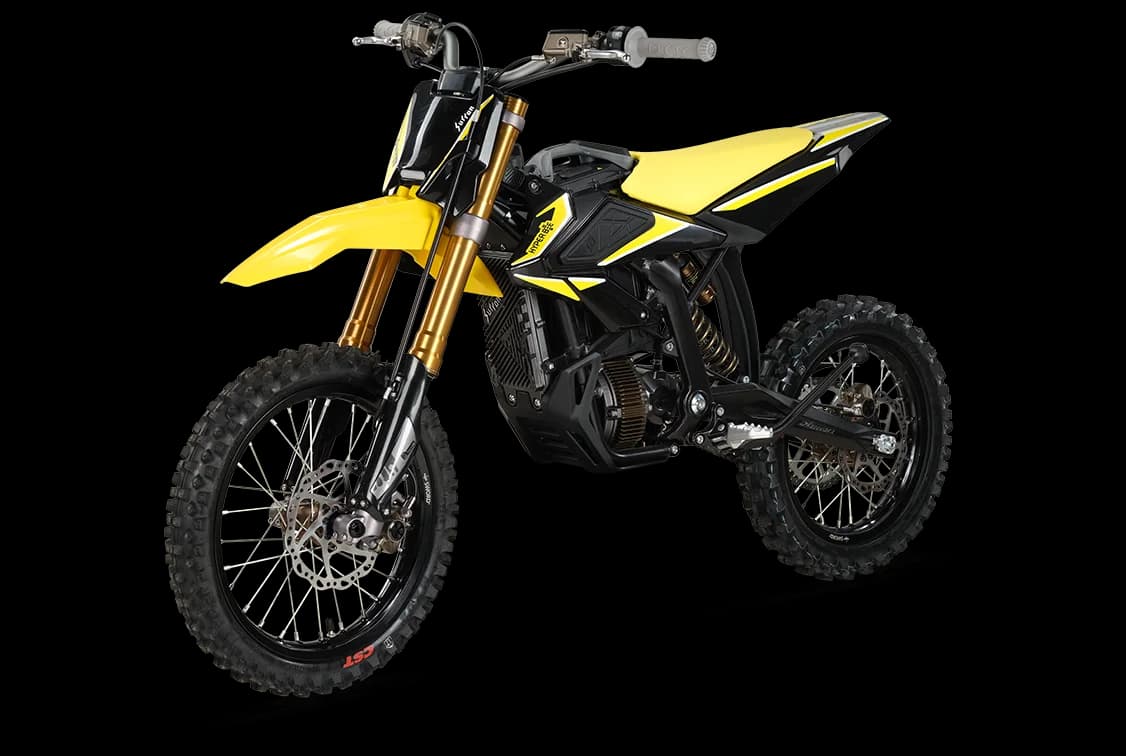
Verified product photo
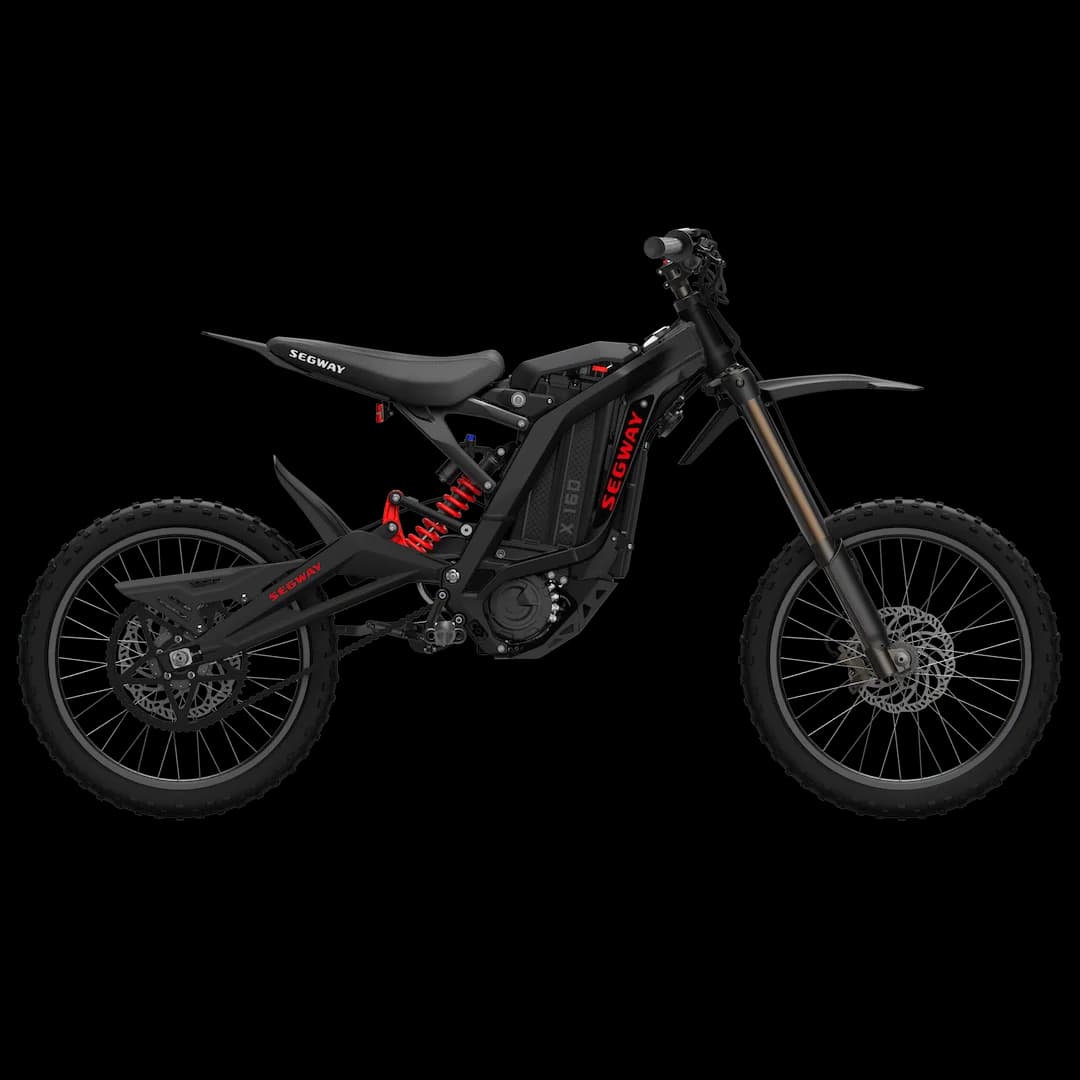
Verified product photo
Comparison table
Head-to-head spec winners
Awarded spec rows
4-0
Sur-Ron Hyper Bee vs Segway Dirt eBike X160
| Spec | Sur-Ron Hyper Bee | Segway Dirt eBike X160 | Winner |
|---|---|---|---|
| Power | 8 kW peak | 3 kW peak | Sur-Ron Hyper Bee+5 kW |
| Top speed | 40 mph | 31 mph | Sur-Ron Hyper Bee+9 mph |
| Battery capacity | 1.3 kWh | 960 Wh | Sur-Ron Hyper Bee+316 Wh |
| Real range | Not published | 22 mi | No winner awardedNeeds both published values |
| Weight | 86 lb | 106 lb | Sur-Ron Hyper Bee20 lb lighter |
| Brakes | Dual Hydraulic | Dual Hydraulic | TieSame Dual Hydraulic |
| Suspension | Full | Full | TieSame Full |
| Warranty | Not published | Not published | No winner awardedNeeds both published values |
| Delivered price | $2,899 street + shipping unknown | $2,999 street + shipping unknown | No winner awardedShipping unknown |
Power
- Sur-Ron Hyper Bee
- 8 kW peak
- Segway Dirt eBike X160
- 3 kW peak
Top speed
- Sur-Ron Hyper Bee
- 40 mph
- Segway Dirt eBike X160
- 31 mph
Battery capacity
- Sur-Ron Hyper Bee
- 1.3 kWh
- Segway Dirt eBike X160
- 960 Wh
Real range
- Sur-Ron Hyper Bee
- Not published
- Segway Dirt eBike X160
- 22 mi
Weight
- Sur-Ron Hyper Bee
- 86 lb
- Segway Dirt eBike X160
- 106 lb
Brakes
- Sur-Ron Hyper Bee
- Dual Hydraulic
- Segway Dirt eBike X160
- Dual Hydraulic
Suspension
- Sur-Ron Hyper Bee
- Full
- Segway Dirt eBike X160
- Full
Warranty
- Sur-Ron Hyper Bee
- Not published
- Segway Dirt eBike X160
- Not published
Delivered price
- Sur-Ron Hyper Bee
- $2,899 street + shipping unknown
- Segway Dirt eBike X160
- $2,999 street + shipping unknown
Score breakdown
Power
/22 pts
Range
/20 pts
Chassis
/18 pts
Value
/15 pts
Support
/12 pts
Ergonomics
/8 pts
Versatility
/5 pts
Decide on weight first — it settles most of these
Before power, price, or brand, put your rider's weight against the two ratings:
| Sur-Ron Hyper Bee | Segway X160 | |
|---|---|---|
| Rated carrying capacity | 121 lb | 176 lb |
| Seat height | 26.2 in (adjustable to 27.8) | 29.9 in |
| Curb weight | 86 lb | 106 lb |
A rider between 121 and 176 lb fits one bike and not the other, whatever their age or ability. That single fact resolves this comparison for a large share of buyers before any other spec matters — and it is why "which is better?" is the wrong opening question.
Two practical consequences:
- A growing teenager will outgrow the Hyper Bee's rating long before the X160's. If you are buying a bike to last a few years, the Segway has far more headroom.
- A small, light rider gets a better fit from the Hyper Bee — 3.7 inches lower and 20 lb lighter to pick up — but also gets a much faster bike as part of the deal.
One warning while you shop: at least one major US dealer publishes 180 lb as the Hyper Bee's capacity. Sur-Ron's own spec table says 121 lb. If a listing implies a 175 lb rider is fine on the Hyper Bee, it contradicts the manufacturer.
The core matchup
| Sur-Ron Hyper Bee | Segway X160 | |
|---|---|---|
| VoltRipper Score | 96 | 90 |
| Price | $2,899 | $2,999 |
| Peak power | 8 kW | 3 kW |
| Top speed | 40 mph | 31 mph |
| Battery | 58V / 22Ah | 48V / 20Ah |
| Swappable battery | No | Yes |
| Weather sealing | Not published | IP67 |
| Wheels | 14 in / 12 in | 17 in |
| Rider capacity | 121 lb | 176 lb |
| Skill level | Intermediate | Beginner |
| Rider aids | 3 modes + reverse, regen, SAWC anti-wheelie | 3 modes, app |
Where each one wins
Performance → Hyper Bee, by a wide margin. 8 kW and 40 mph against 3 kW and 31 mph is not a trim difference, it is a different class of machine. The Hyper Bee also brings 185 N·m at the wheel, three-stage throttle mapping, reverse, regen, and SAWC anti-wheelie control. Nothing else in the youth class performs like it.
Fit and headroom → X160. More capacity, a taller seat, bigger 17-inch wheels that roll over ruts and roots more easily, and a beginner rating. It is the bike a rider grows into rather than out of.
Practicality → X160, clearly. The swappable battery is the one that matters day to day — a charged spare turns a 22-mile real-world range into a longer afternoon, and the Hyper Bee's pack is not quick-swappable. Add IP67 sealing (Sur-Ron publishes no IP rating for the Hyper Bee) and the Segway is the easier bike to live with in wet, muddy conditions.
Honest range comparison → X160, because it is the only one we can state. Segway's claim is 40 miles and our real-world estimate is ~22. Sur-Ron claims 35 miles for the Hyper Bee, measured at a steady 25 mph with a 165 lb rider on dry flat road — a best-case cruising figure. No independent measured test of the Hyper Bee exists, so we publish no real-world number for it rather than invent one. Treat the two claims as not directly comparable.
Support → close, edge Sur-Ron for parts. Both have real dealer networks. Sur-Ron's aftermarket is deeper across the brand, though the Hyper Bee is a newer, smaller-volume platform within it.
Which should you buy?
- Rider over ~121 lb, or still growing: Segway X160. The Hyper Bee's rating rules it out, and no amount of skill changes that.
- Light, experienced rider who has genuinely outgrown a 20-something-mph bike: Sur-Ron Hyper Bee. This is exactly the rider it was built for, and nothing else in the class does what it does.
- First real dirt bike, or a cautious rider: Segway X160. Beginner-rated, gentler, sealed, and swappable.
- Not sure the rider is ready for 40 mph: they probably aren't — buy the X160 and let them outgrow it.
The honest bottom line
The Hyper Bee is the better bike and the X160 is the right bike for more riders. Both statements are true, and the $100 between them is noise.
The Sur-Ron wins on our Score (96 to 92) because it is genuinely more capable, and if you have a light, skilled young rider it is a special machine with no direct competitor. But its 121 lb rating is a hard ceiling, its seat is over three inches lower, and its 40 mph is real. The Segway carries 55 lb more, seals against weather, swaps batteries in seconds, and is rated for beginners — which describes far more of the kids these bikes get bought for.
Match the bike to the rider you actually have, in that order: weight, then readiness, then speed. And if you go Sur-Ron, confirm you're getting the 8 kW 2026 bike — the 5 kW previous generation is still selling under the same name.
Still deciding? The Find Your Ride configurator matches by rider size and experience, and our kids' guide covers the full age ladder.
VoltRipper is independent — we don't sell Sur-Ron, Segway, or any bike, and our Score comes from verified specs rather than commissions. Specs here are from each manufacturer's published data, captured 2026-07-19; where a figure is unpublished we say so rather than estimate.
FAQ
Sur-Ron Hyper Bee or Segway X160 — which should I buy?
Decide on the rider's weight before anything else. The Hyper Bee is rated to carry 121 lb and the X160 is rated for 176 lb, so a rider between those figures fits one bike and not the other, regardless of age or skill. If both fit, the Hyper Bee is the faster and more capable machine (8 kW, 40 mph, VoltRipper Score 96) and the X160 is the gentler, more practical one (3 kW, 31 mph, swappable battery, IP67), scoring 90 against the Hyper Bee's 96. They are only $100 apart, so price should not decide this.
Which is better for a bigger or heavier kid?
The Segway X160, and it is not close. It carries 176 lb to the Hyper Bee's 121 lb, and its seat is 29.9 in against the Hyper Bee's 26.2 in, so it physically suits a larger rider. This is the counterintuitive part of the matchup: the faster bike is the one for the smaller rider. A growing teenager will exceed the Hyper Bee's rating well before they outgrow the X160's.
Which is better for a beginner?
The X160. We rate it beginner-level and the Hyper Bee intermediate. At 31 mph with a swappable battery, IP67 sealing and 17-inch wheels, the Segway is the more forgiving machine to learn on. The Hyper Bee makes 8 kW and 185 N·m and ships with electronic anti-wheelie control — Sur-Ron's own explanation is that it helps younger riders keep the front wheel down under hard acceleration, which tells you what kind of bike it is.
Is the Hyper Bee worth $100 less than the X160?
Price is the least useful thing here. At $2,899 versus $2,999 the gap is about 3%, and the bikes differ enormously in power, speed, rider capacity, seat height and wheel size. Buy on fit and readiness, not on the $100 — whichever bike matches your rider is worth the difference either way.
Sources
Specification sources
- Sur-Ron Hyper BeeSur-Ron USA - Hyper Bee (rendered official spec table)Checked
- Segway Dirt eBike X160Segway Store — Dirt eBike X160Checked
- Triumph/OSET TXP-20RideApart - Triumph/OSET TXP youth e-dirt-bikes launch (US pricing $3,995)Checked